Ad: this guide contains affiliate links. If you buy through them we may earn commission, at no extra cost to you.
Home & Kitchen
A 3-Day Home Essentials Kit for UK Households: A Calm Checklist
A calm, practical checklist for keeping three days of home essentials in a UK household: water, food, light, power, first aid and documents, built up steadily.
By Daily Offer Deals editorial teamUpdated 7 min read
On this page 8 sections
Quick answer
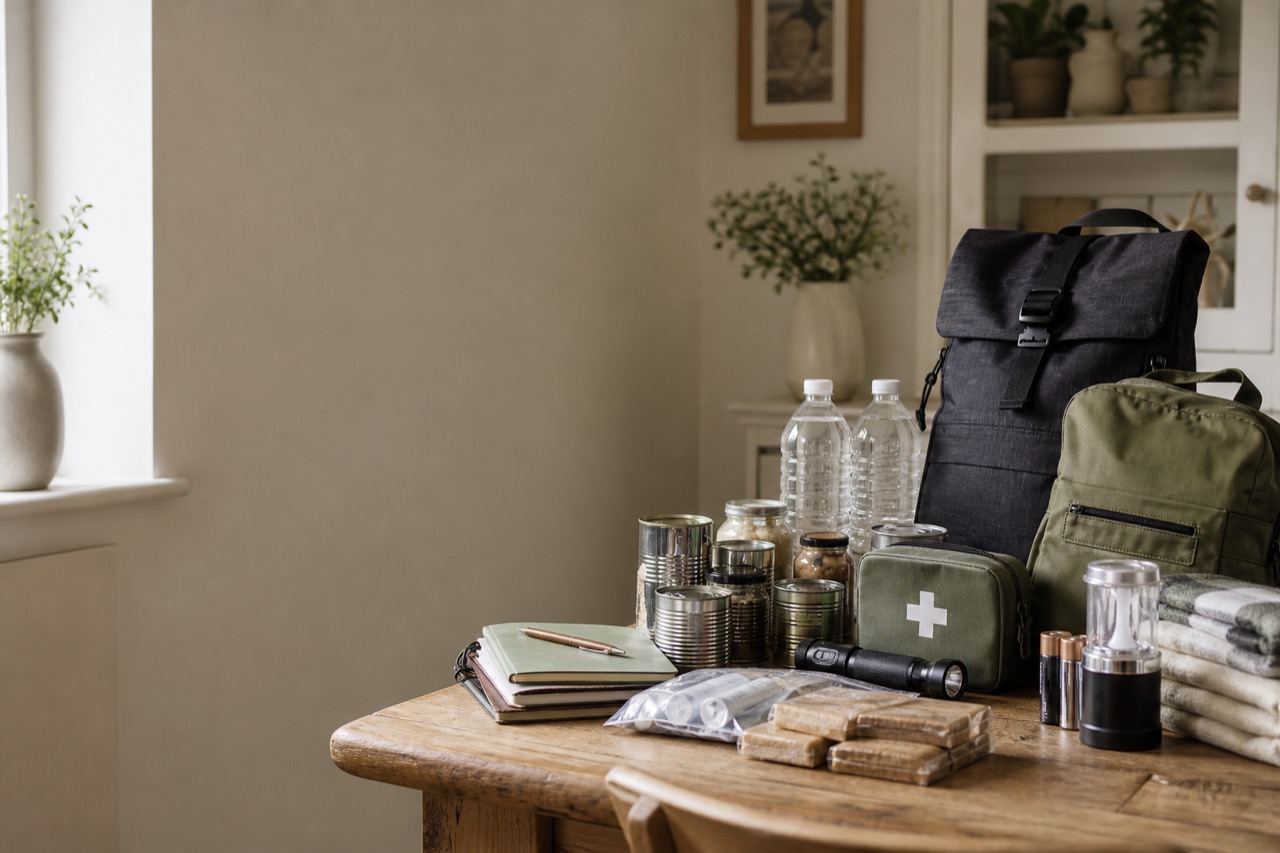
UK government preparedness advice is to be ready to look after your household for three days if something like a power cut, flooding or a water supply problem disrupts normal life. In practice that means drinking water (at least three litres per person per day is the commonly quoted minimum), food that keeps and needs little or no cooking, a torch and a radio that work without mains power, spare batteries, a charged power bank, a first aid kit, any medicines you rely on, and copies of important documents. You can build it gradually over a few weeks, with no need for a big shop. Our essentials hub brings the relevant categories together in one place.
Why three days, and why it is not about panic
The UK government’s Be Ready campaign frames three days as the window in which most households can manage on their own while emergency services and local support reach the people who need them most. That is a useful way to think about it. A kit is not a prediction that something bad will happen; it is the household version of keeping a spare tyre in the car.
It also helps everyone else. When most homes already have a few days of basics, there is no rush on shops the moment the weather turns, and supplies stay available for people who could not prepare in advance. So the aim is a steady, modest kit, bought over time, with some left on the shelf for others.
The core checklist
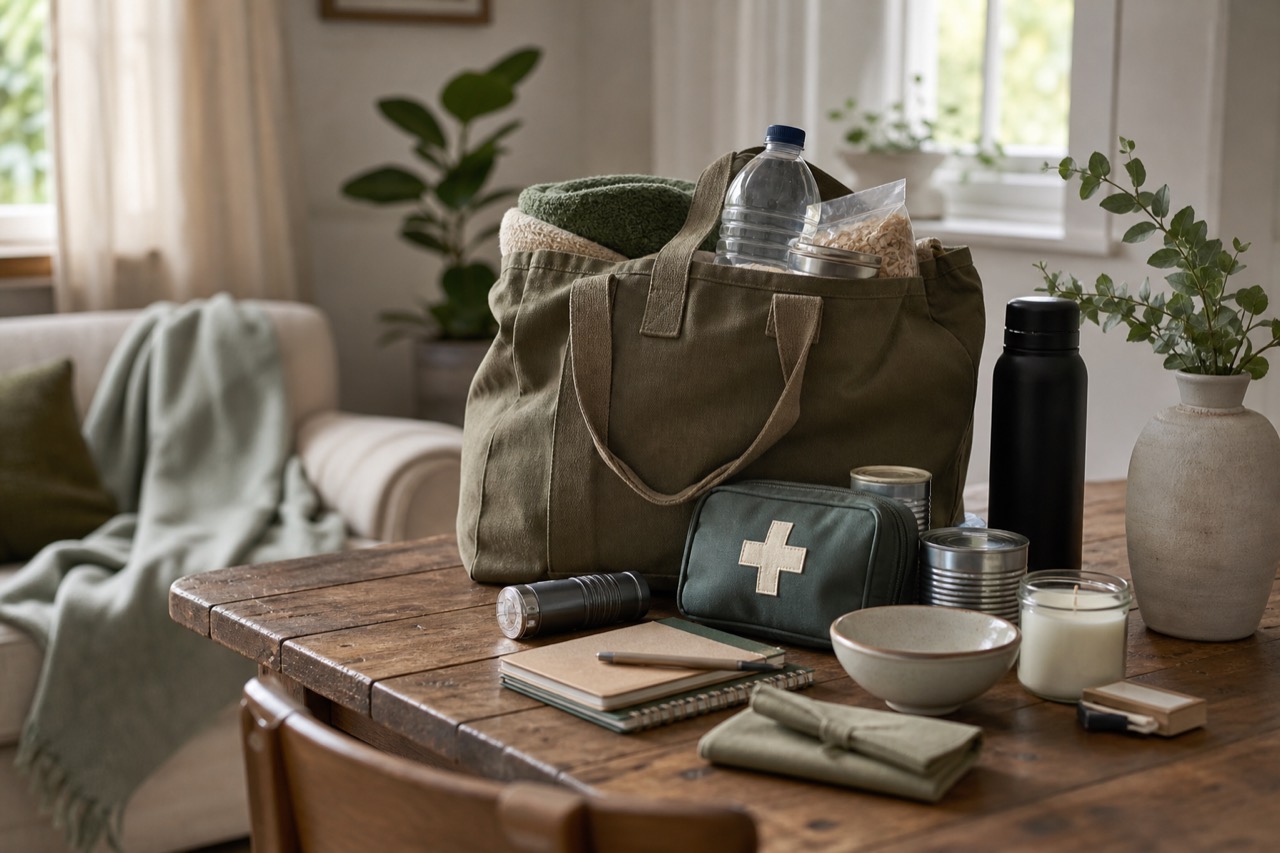
Work through this list room by room. You will probably find you already own half of it.
Water
- Bottled drinking water: plan on at least three litres per person per day for drinking alone, so a minimum of nine litres each for three days.
- Extra for cooking, washing and pets if you have space. Many households simply keep a few multipacks in a cupboard and rotate them.
- Note the “best before” dates and use and replace older bottles in normal life.
Food that keeps
- Tins and pouches you actually like eating: soups, beans, fish, fruit, vegetables.
- Ready-to-eat options that need no cooking, such as crackers, oatcakes, nut butter, cereal bars and dried fruit.
- A manual tin opener (easy to forget, very hard to do without).
- Baby formula, nappies and pet food if they apply to your home.
Light and information
- A torch for each adult, plus a spare. Battery or wind-up both work; head torches leave your hands free.
- A radio that runs on batteries or a wind-up mechanism, so you can hear local updates during a power cut. A portable digital radio such as the Roberts PLAY11 Portable DAB/DAB+/FM Digital Radio is one option; check how it is powered before you rely on it for outages.
- Spare batteries in the sizes your torch and radio use. Multipacks like Energizer Alkaline Power AA Batteries, 32 Pack and Energizer Advanced AAA Batteries, 12 Pack cover most household devices.
Power for phones
- A charged power bank, so you can keep a phone alive to check updates and stay in touch. A higher-capacity unit such as the INIU 20000mAh Power Bank, 45W Fast Charging can top up a phone more than once.
- The right cables for every phone in the house, kept with the power bank.
- A reminder to recharge the power bank every few months, because they slowly lose charge in a drawer.
First aid and medicines
- A stocked first aid kit. Ready-made kits such as the 220-Piece First Aid Kit Bag for Travel, Car and Home or the Lewis-Plast Premium First Aid Kit for Home, Car and Travel save you assembling one from scratch.
- A few days of any regular prescription medicines, if your pharmacist or GP says that is appropriate. Never stockpile beyond what is advised.
- Basic painkillers, plasters, hand sanitiser and any glasses or hearing aid batteries you need.
Warmth, hygiene and paperwork
- Blankets, sleeping bags or extra layers in case the heating is off.
- Wet wipes, bin bags, toilet roll and any sanitary products.
- Some cash in small amounts, since card machines may not work during a power cut.
- Copies of key documents (insurance, ID, prescriptions) in a waterproof bag, plus a written list of important phone numbers.
Comparison: kit items at a glance
| Item | Best for | What to look for | Deal |
|---|---|---|---|
| Portable radio | Hearing updates in a power cut | Battery or wind-up power, FM as a fallback | Roberts PLAY11 DAB/DAB+/FM Radio |
| Power bank | Keeping phones charged | Enough capacity for your phones, the right ports | INIU 20000mAh Power Bank |
| AA batteries | Torches, radios, remotes | Sizes that match your devices, a sensible pack size | Energizer AA, 32 Pack |
| AAA batteries | Small torches, smoke alarm testers, remotes | Fresh stock, kept cool and dry | Energizer Advanced AAA, 12 Pack |
| First aid kit | Minor injuries at home or in the car | Contents list, plasters, dressings, gloves | 220-Piece First Aid Kit Bag |
| Compact first aid kit | A second kit for the car or a bag | Size, sturdy case, easy-to-find items | Lewis-Plast Premium First Aid Kit |
How to build it steadily
You do not need to buy everything in one go. A gentle approach:
- Week one: check what you already have. Find the torches, test them, and note which battery sizes you need.
- Week two: add a few bottles of water and two or three extra tins to your normal shop.
- Week three: sort out light, radio and power. Charge the power bank and label the cable bag.
- Week four: check the first aid kit, gather copies of documents, and put a little cash aside.
After that, it is just maintenance. Eat older tins and replace them, rotate the water, and swap out batteries when you check your smoke alarms.
Where to keep it
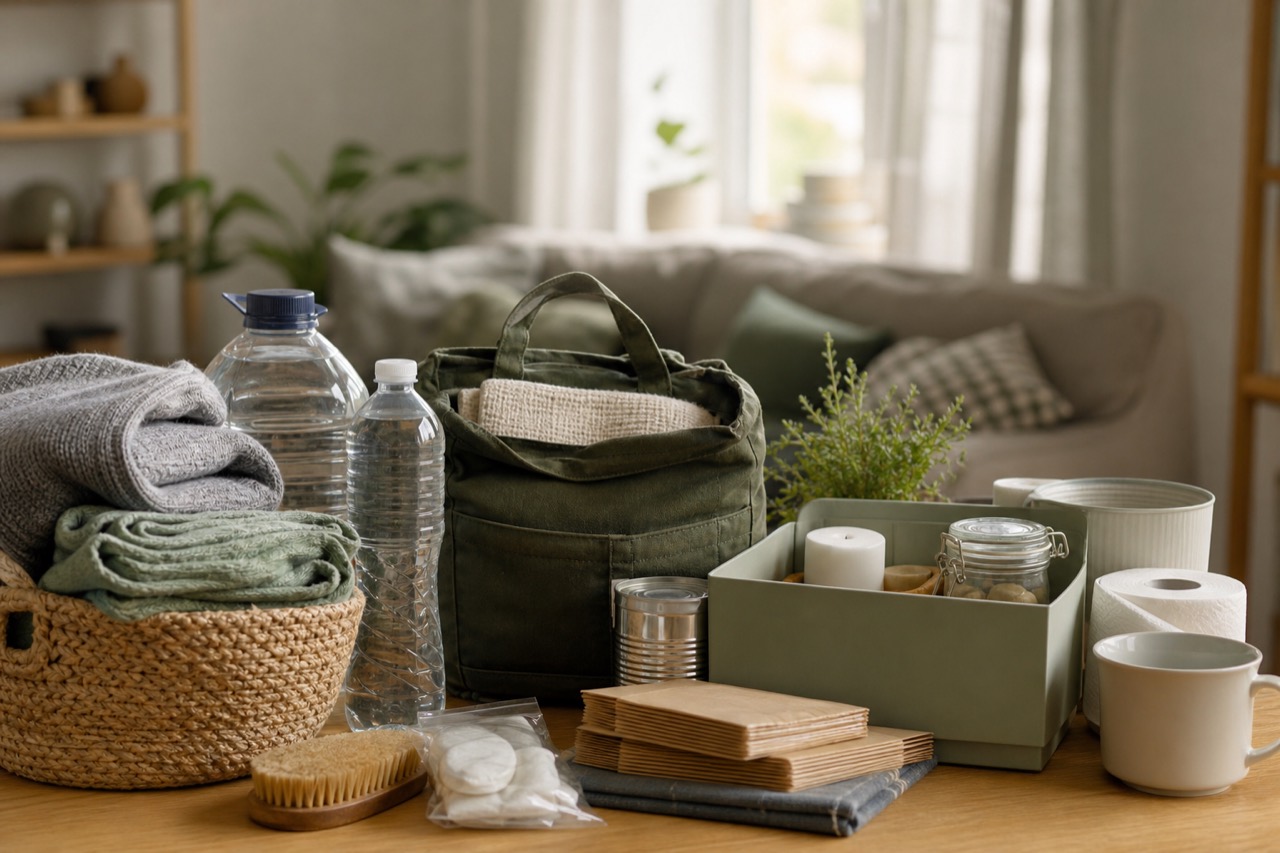
Choose a spot everyone in the house knows about, ideally on the ground floor and easy to reach in the dark. A large plastic box or a couple of bags-for-life in the bottom of a cupboard works well. Keep the torch on top. If you live somewhere prone to flooding, store the box higher up and keep documents in a waterproof pouch.
Think about the people around you
A kit is easier to plan when you think about who relies on you, and who you might check on. Older neighbours, people living alone and families with young children may need a knock on the door during a cold snap or power cut. Sharing your phone number with a neighbour costs nothing and can make a real difference.
Frequently asked questions
How much water should I keep for three days?
Commonly quoted UK guidance is at least three litres of drinking water per person per day, which works out at nine litres each for three days. More is useful for cooking and washing if you have space.
Do I need to buy a ready-made emergency kit?
No. Most households can build a kit from things they already own plus a few additions such as batteries, a power bank and some extra tins. Ready-made first aid kits are handy, but everything else can be gathered gradually.
How often should I check my kit?
Every few months is a sensible rhythm. Many people do it when the clocks change: test torches, recharge the power bank, check dates on food and water, and replace anything you have used.
Is a three-day kit the same as stockpiling?
No. A three-day kit is a small, steady buffer that you rotate through normal use. Stockpiling large amounts in a rush is unnecessary and can leave shelves empty for others. See our essentials hub for a calm overview.
About the author
Daily Offer Deals editorial team
The Daily Offer Deals team checks UK deals by hand and writes practical buying guides. We never claim hands-on testing we have not done.