Ad: this guide contains affiliate links. If you buy through them we may earn commission, at no extra cost to you.
Home & Kitchen
Cheapest ways to heat one room: heated throws, oil radiators and fan heaters compared
What it costs per hour to run a heated throw, oil-filled radiator, fan heater or halogen heater at the current price cap rate, and when gas central heating is still cheaper.
By Daily Offer Deals editorial team7 min read
On this page 9 sections
Quick answer
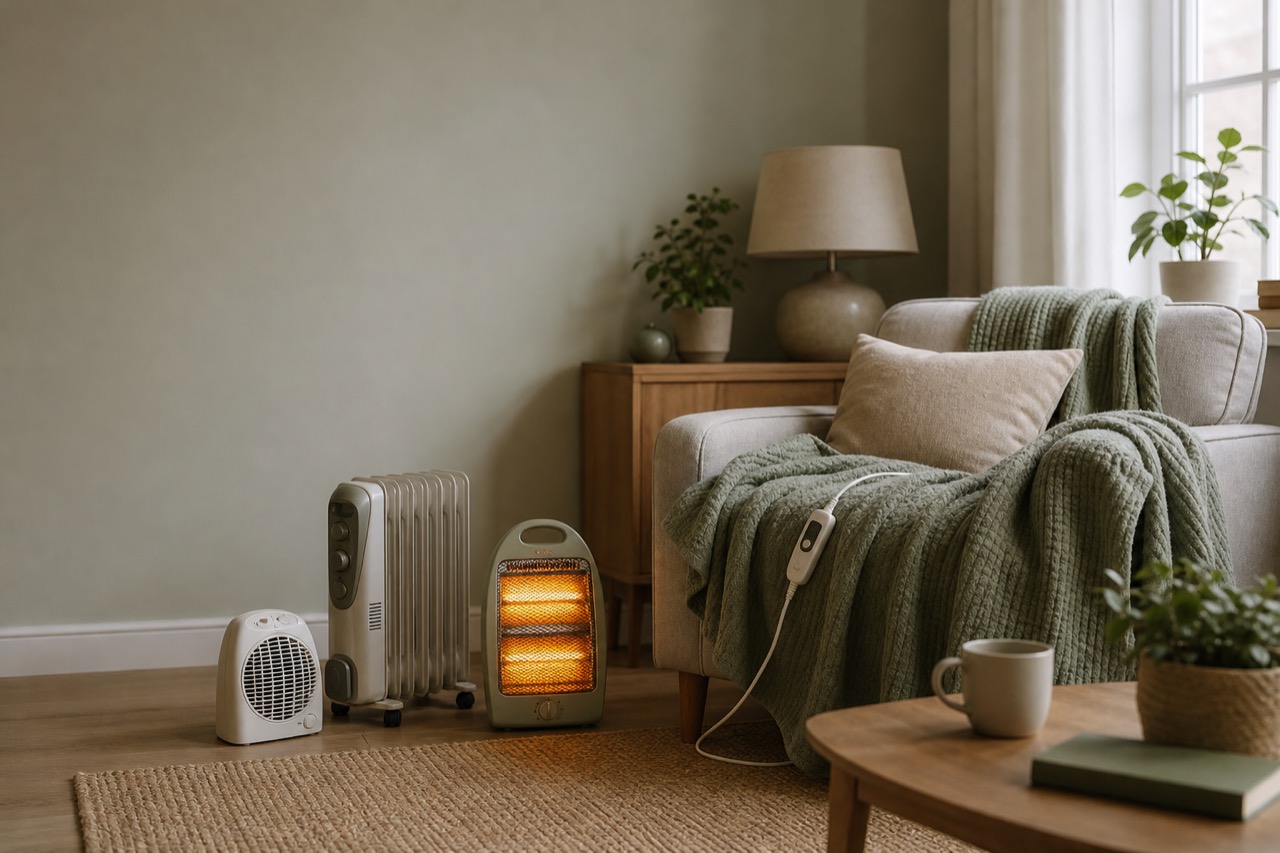
Warming yourself is far cheaper than warming a room. At the current price cap electricity rate of 26.32p per kWh, a 100W heated throw costs about 2.6p an hour, while a 2kW fan heater costs about 52.6p an hour at full power. If you need to heat the space, an oil-filled radiator with a thermostat is usually the steadier, cheaper option of the plug-in heaters for long sessions, but heating a whole house with plug-in heaters almost always costs more than gas central heating.
How to work out running costs
Every electric heater follows the same simple sum:
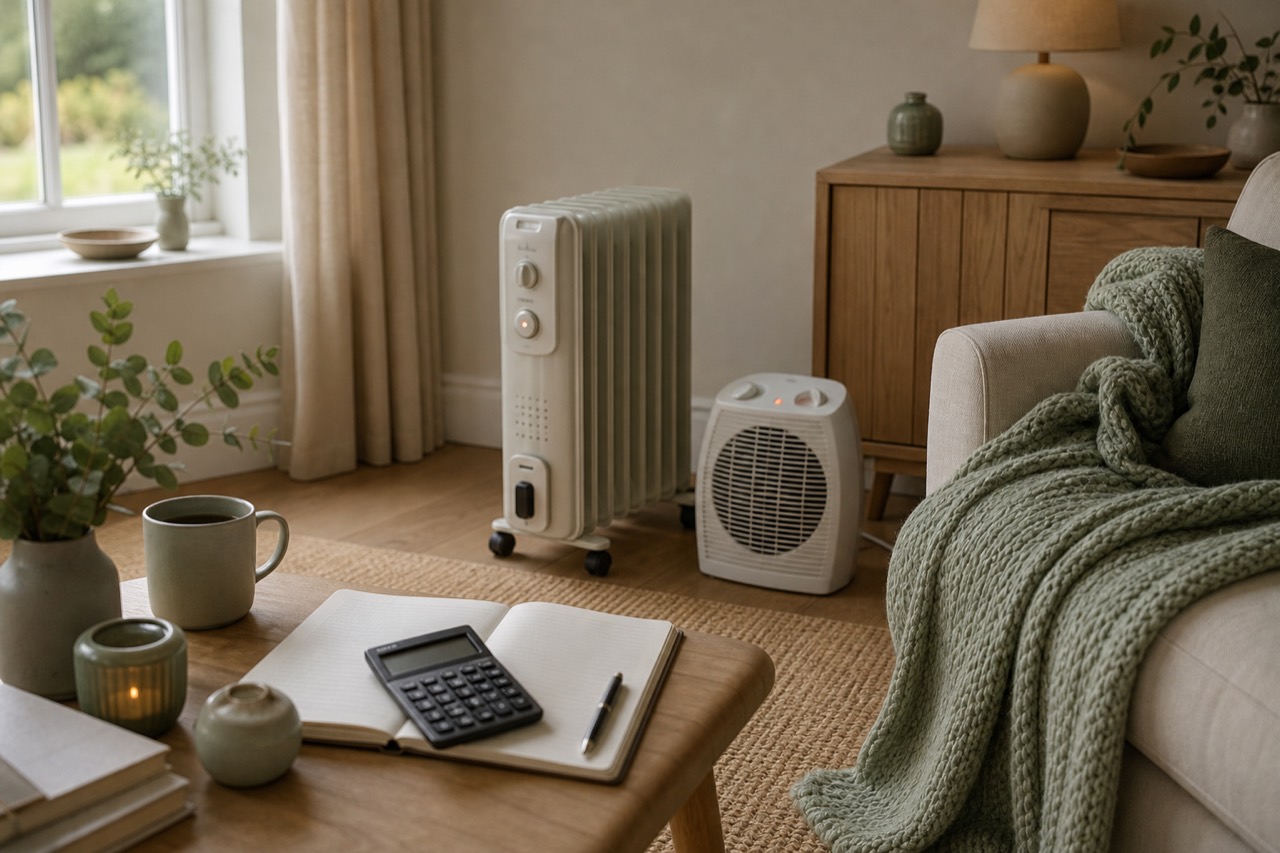
Cost per hour = power in kilowatts (kW) × price per kWh
The power rating is on the label or in the manual, usually in watts (W). 1,000W is 1kW. The figures in this guide use the Ofgem price cap average Direct Debit electricity rate for 1 October to 31 December 2026: 26.32p per kWh. Your rate may be slightly different depending on your region and tariff, so check your bill and swap in your own number.
Two important points:
- All electric heaters turn electricity into heat at essentially the same efficiency. A 2kW fan heater and a 2kW oil radiator produce the same amount of heat per hour at full power. The differences are in how they deliver it and how well their thermostats control it.
- Thermostats cut costs. Once a room reaches the set temperature, a thermostat switches the heater off and on. A heater that’s only drawing power half the time costs half as much as the full-power figure.
Running costs at 26.32p per kWh
These are worked examples by power rating. Check the rating of the model you own or are looking at.
| Heater type | Example power | Cost per hour at full power | Cost per hour if running half the time |
|---|---|---|---|
| Electric blanket (pre-heating a bed) | 60W | 1.6p | 0.8p |
| Heated throw | 100W | 2.6p | 1.3p |
| Heated throw | 150W | 3.9p | 2.0p |
| Halogen heater | 1.2kW | 31.6p | 15.8p |
| Oil-filled radiator | 1.5kW | 39.5p | 19.7p |
| Oil-filled radiator or convector | 2kW | 52.6p | 26.3p |
| Fan heater | 2kW | 52.6p | 26.3p |
| Fan heater | 3kW | 79.0p | 39.5p |
What that looks like over a month
Using 4 hours a day for 30 days:
| Scenario | Energy used | Cost for the month |
|---|---|---|
| 100W heated throw, full power | 12 kWh | about £3.16 |
| 1.5kW oil radiator, thermostat cutting power half the time | 90 kWh | about £23.69 |
| 2kW fan heater, full power | 240 kWh | about £63.17 |
The gap is large because a heated throw only warms you, not the air around you.
The options compared
Heated throws and electric blankets
Best for: sitting still on the sofa, working at a desk, warming a bed before you get in.
They use a tiny fraction of the power of a room heater because the heat goes straight into you. Many have several heat settings and auto shut-off timers. The trade-off is that the room itself stays cold, which isn’t ideal for anyone vulnerable to the cold, and doesn’t help with damp.
Browse electric heated throws on Amazon. Look for overheat protection and an auto-off timer, and check the instructions on washing and storing it.
Oil-filled radiators
Best for: keeping one room warm for several hours.
They heat oil sealed inside the fins, which then gives off heat slowly and keeps radiating for a while after the element switches off. That makes them gentle and quiet. They take a while to warm up, so they’re not ideal for a quick blast. Choose one with a thermostat and a timer, and pick a sensible size for the room: a smaller wattage model that runs most of the time can be no worse than a bigger one cycling on and off.
Browse oil-filled radiators on Amazon.
Fan heaters
Best for: short bursts, such as taking the chill off a bathroom or home office for 20 minutes.
They warm a room fast because they push hot air around, but they’re often the most expensive to run for long periods and can be noisy. The heat disappears soon after you switch them off. Never leave them unattended or near curtains and bedding.
Halogen heaters
Best for: feeling warmth on you quickly in one spot.
They give radiant heat you feel straight away, at a lower wattage than most fan heaters. They warm what’s in front of them rather than the whole room, and the bright glow isn’t to everyone’s taste.
Gas central heating
At 7.97p per kWh, gas costs roughly three times less than electricity per unit. Even after allowing for some energy lost by the boiler, heat from gas is usually much cheaper per unit than heat from a plug-in heater. The catch is that central heating usually warms the whole house. If you’re home alone and only use one room, turning the radiators down in other rooms (using thermostatic radiator valves) and closing doors may beat a plug-in heater. If you only need warmth for an hour or two in one room, a plug-in option can be cheaper overall.
How to choose
- Just you, sitting still: heated throw or blanket.
- One room, several hours: oil-filled radiator with thermostat and timer.
- Quick warm-up, short time: fan or halogen heater.
- Several rooms or the whole home: central heating, with unused rooms turned down.
Cutting draughts makes any of these cheaper to run. A draught excluder at the bottom of the door keeps the warm air in the room you’ve paid to heat. Browse door draught excluders on Amazon. See our main guide to saving money on energy bills this winter for more.
Safety checklist
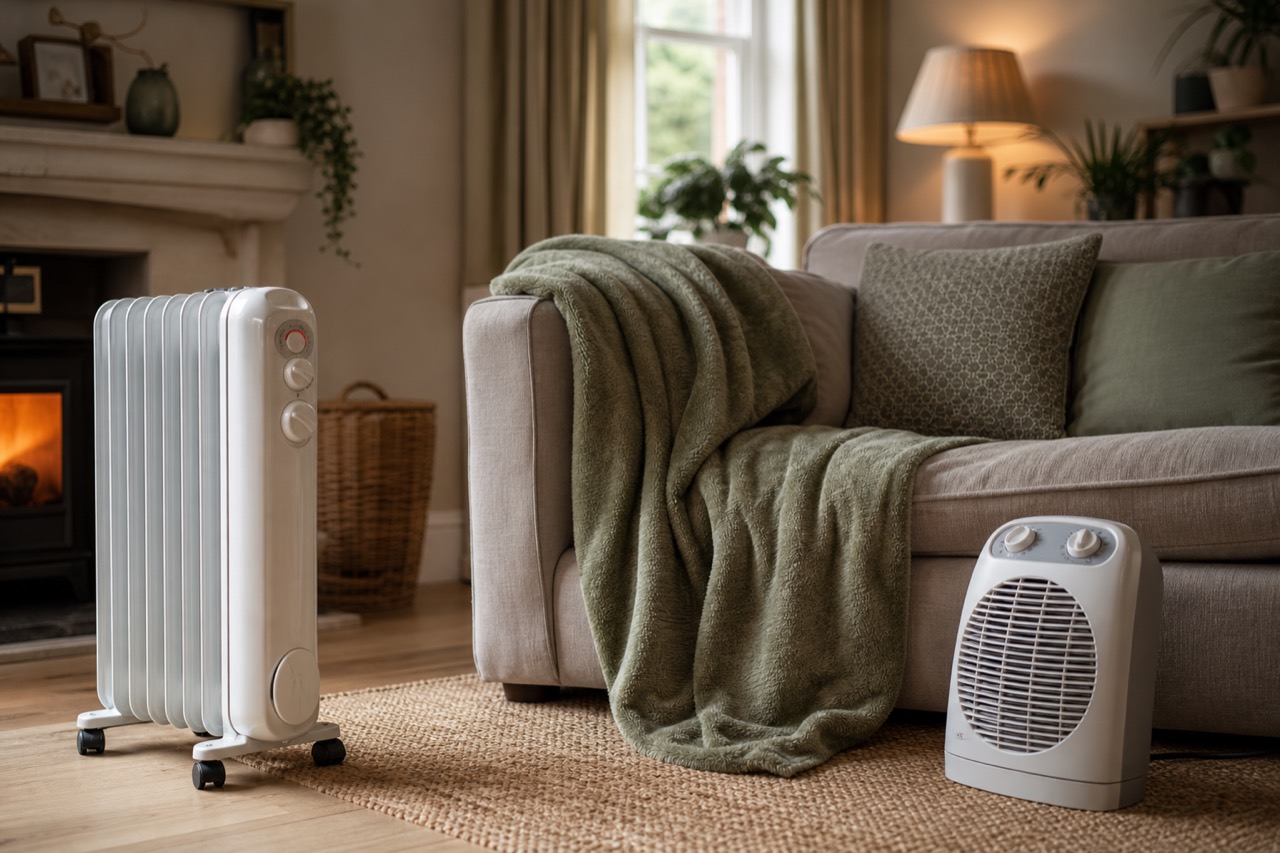
- Buy from reputable sellers, check for a UK plug and the UKCA or CE mark, and register the product so you hear about recalls.
- Plug heaters straight into a wall socket, not an extension lead, unless the manufacturer says otherwise.
- Keep heaters at least a metre from curtains, bedding, clothes and furniture.
- Don’t dry clothes on a heater.
- Never use a heated throw or electric blanket alongside a hot water bottle, and check it for damage before each use.
- Fit a working smoke alarm on every floor and test it monthly.
Don’t let one-room heating cause damp
Heating only one room can leave other rooms cold enough for condensation and mould. Keep the rest of the house from getting too cold, ventilate bathrooms and kitchens, and wipe condensation off windows in the morning.
Frequently asked questions
Is an oil-filled radiator cheaper to run than a fan heater?
At the same wattage and full power they cost the same per hour. An oil-filled radiator often works out cheaper in practice for long sessions because it holds heat and its thermostat cycles the element off once the room is warm. A fan heater is better for a quick warm-up.
How much does a heated throw cost per hour?
It depends on the power rating. At 26.32p per kWh, a 100W throw costs about 2.6p an hour and a 150W throw about 3.9p an hour at full power. Lower settings use less.
Is it cheaper to use an electric heater than central heating?
For one small room for a short time, often yes. For longer periods or more than one room, gas central heating is usually cheaper because gas costs 7.97p per kWh compared with 26.32p for electricity under the current cap.
Do ‘energy-saving’ heaters use less electricity?
Every electric heater converts electricity to heat at nearly 100% efficiency, so no heater makes more heat from the same electricity. Savings come from better thermostats, timers, and heating a smaller space or just yourself.
Will these costs change in January 2027?
Possibly. Ofgem will announce the price cap for 1 January to 31 March 2027 on 25 November 2026. Recalculate using the same formula with the new rate.
About the author
Daily Offer Deals editorial team
The Daily Offer Deals team checks UK deals by hand and writes practical buying guides. We never claim hands-on testing we have not done.