Ad: this guide contains affiliate links. If you buy through them we may earn commission, at no extra cost to you.
Home & Kitchen
Choosing an Air Purifier for a UK Bedroom: HEPA, Room Size and Noise Explained
How to choose a bedroom air purifier in the UK: what HEPA filters do, matching CADR to your room size, night-time noise, running costs and filter changes.
By Daily Offer Deals editorial teamUpdated 6 min read
On this page 11 sections
Quick answer
For a UK bedroom, choose an air purifier with a genuine HEPA filter (look for H13 or higher under the European EN 1822 standard), a clean air delivery rate (CADR) that suits your room size, and a quiet or sleep mode you can live with overnight. Check the price and availability of replacement filters before you buy, because filters are the main running cost. Place the purifier where air can flow freely around it, and keep doors and windows closed while it runs for the best effect. An air purifier can help with dust, pollen and pet dander, but it does not replace ventilation or fixing damp.
What an air purifier actually does
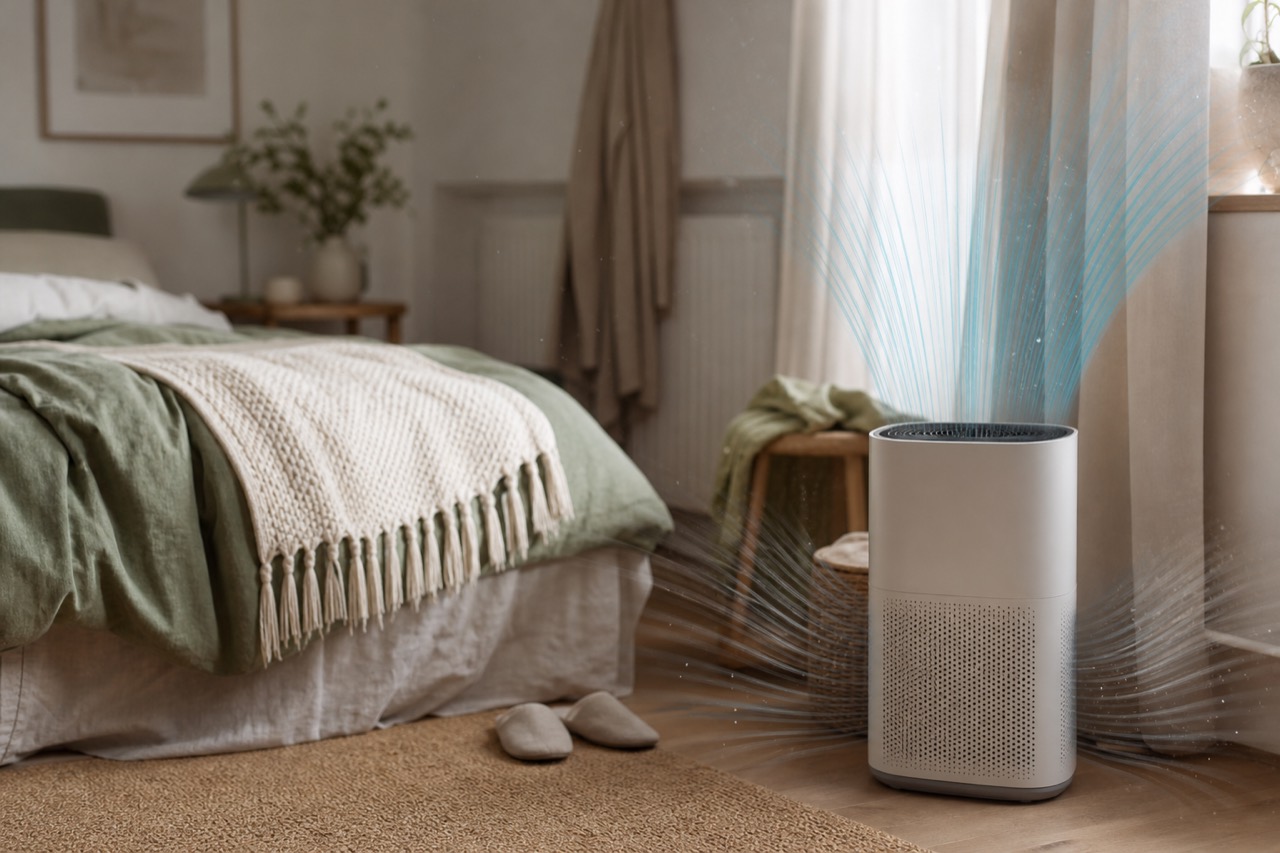
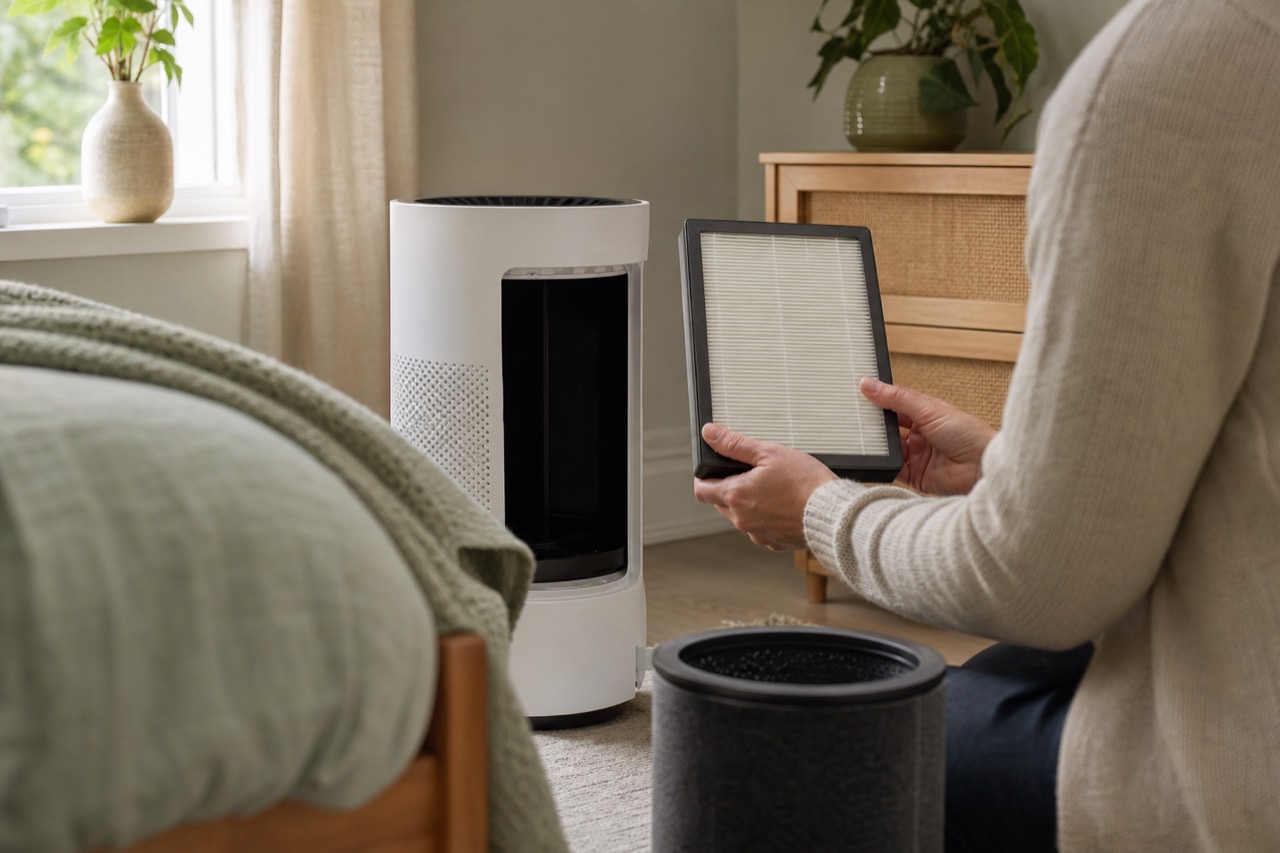
A typical home air purifier draws room air through a series of filters and blows cleaner air back out. Most combine:
- A pre-filter that catches larger particles such as hair and fluff. This is often washable or easy to vacuum.
- A HEPA filter that traps fine particles such as dust, pollen, pet dander and some smoke particles.
- An activated carbon layer in many models, which can help reduce some smells and gases.
What a purifier does not do is remove the source of a problem. If you have condensation and mould, the long-term fix is ventilation, heating and dealing with the damp. A purifier is a helpful extra, not a cure.
HEPA explained without the jargon
“HEPA” stands for high-efficiency particulate air. In the UK and Europe, filter grades are set by the EN 1822 standard, with H13 and H14 being the grades commonly described as true HEPA. Be careful with phrases such as “HEPA-type” or “HEPA-style”, which do not necessarily mean the filter meets that standard. If a listing does not state the grade, it is reasonable to look elsewhere or check the manufacturer’s information.
The filter only works if air passes through it, which is why the fan and the room size matter just as much as the filter grade.
Matching the purifier to your room size
Measure your bedroom
Multiply the length by the width of the room to get the floor area in square metres. Most UK bedrooms fall somewhere between small single rooms and larger main bedrooms, so the size really does vary.
Understand CADR
CADR, or clean air delivery rate, tells you how much filtered air a purifier delivers, usually in cubic metres per hour. A higher CADR cleans a room faster. Many manufacturers also give a recommended room size. As a rule of thumb:
- Choose a purifier rated for a room at least as big as yours, ideally a little bigger.
- That way you can run it on a lower, quieter setting overnight and still get a useful number of air changes.
Consider your home’s layout
If you want to clean air in a bedroom and an open-plan living space, one small purifier carried between rooms is an option, but a bedroom-sized unit will struggle in a large through-lounge.
Noise: the make-or-break factor for bedrooms
Noise is the thing most likely to make you switch a bedroom purifier off. Look for:
- A stated noise level in decibels (dB) on the lowest setting. Lower is quieter.
- A sleep or night mode that drops the fan speed and often dims the lights.
- A display that switches off fully, because even a small blue light can be distracting in a dark room.
Some people find a gentle fan sound soothing; others notice every hum. If you are a light sleeper, prioritise a low night-time noise level over raw cleaning power.
Smart features and auto modes
Some purifiers include an air quality sensor that speeds the fan up when it detects more particles, then slows it again. This can be handy, for example when you are cooking or the dog shakes off after a walk. App control and schedules are nice to have, but not essential. A simple, quiet machine you actually leave running will do more good than a feature-packed one you turn off.
Running costs and filters
The upfront price is only part of the story. Before you buy, check:
- How often the filter needs changing. This depends on usage and air quality, and manufacturers usually give a guide.
- The cost and availability of replacement filters, including whether genuine filters are easy to buy in the UK.
- Power use, which is usually listed in watts. Purifiers designed to run for long periods generally use modest amounts of power, but it still adds up over a year.
Comparison: two bedroom-friendly options
The table below compares the purifiers currently featured in our deals. We have not tested them hands-on, so use the “what to look for” column to check the listing details against your room.
| Product | Best for | What to look for | Deal |
|---|---|---|---|
| Levoit Core 300 Air Purifier | Smaller bedrooms and home offices | Stated filter grade, recommended room size, night-mode noise level | Levoit Core 300 Air Purifier |
| Shark Clean Sense IQ Air Purifier | Households wanting sensor-led auto adjustment | Recommended room size, sensor and auto mode, replacement filter availability | Shark Clean Sense IQ Air Purifier |
General checklist: features by priority
| Feature | Why it matters in a bedroom | Priority |
|---|---|---|
| True HEPA grade (H13 or higher) | Traps fine dust, pollen and dander | Essential |
| CADR or recommended room size | Makes sure it can actually clean your room | Essential |
| Low night-time noise | Lets you sleep with it running | Essential for light sleepers |
| Display off or dimmable | Avoids light disturbance | High |
| Air quality sensor | Adjusts automatically to cooking, pets, pollen | Nice to have |
| Affordable filters | Keeps running costs predictable | High |
Where to put it
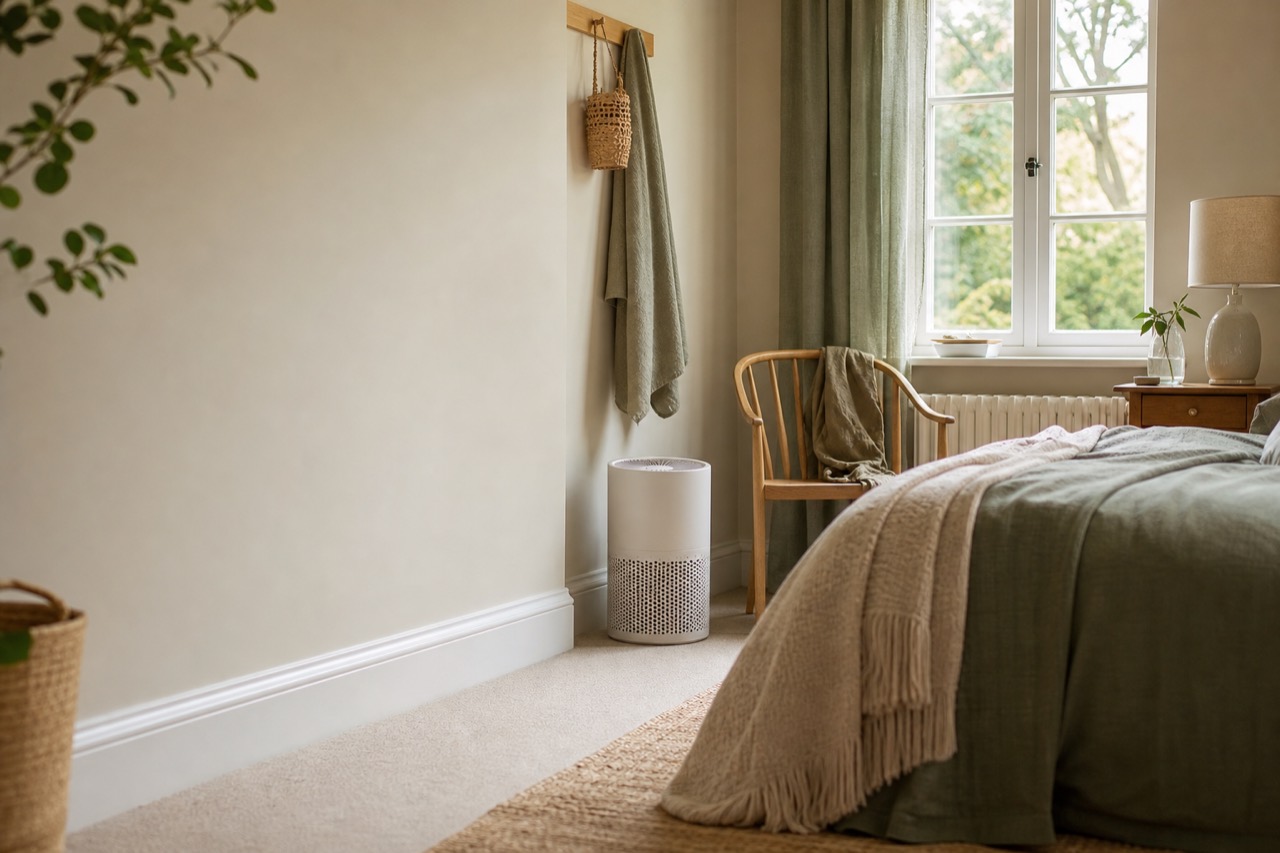
- Place it on the floor or a low, stable surface with space around it, following the manufacturer’s clearance guidance.
- Keep it away from curtains that could block the intake.
- Do not tuck it in a corner behind furniture, because it needs to pull air from the room.
- Run it with the door and windows closed for the most noticeable effect, then ventilate the room regularly as normal.
Frequently asked questions
Do air purifiers help with hay fever?
A HEPA purifier can reduce the amount of pollen in the air of a closed room, which some people with hay fever find helpful. It is not a medical treatment, so speak to a pharmacist or GP about managing symptoms.
Can I leave an air purifier on all night?
Most home purifiers are designed for long running periods. Follow the manufacturer’s guidance, keep the intake clear, and use a sleep mode if noise is an issue.
Will an air purifier fix mould or condensation?
No. It may catch some airborne particles, but mould and condensation need ventilation, heating and treating the source of the damp. A dehumidifier is often more relevant for condensation.
How often should I change the filter?
It depends on the model and how much you use it. Follow the manufacturer’s guidance, and check the price of replacement filters before you buy so there are no surprises.
About the author
Daily Offer Deals editorial team
The Daily Offer Deals team checks UK deals by hand and writes practical buying guides. We never claim hands-on testing we have not done.