Ad: this guide contains affiliate links. If you buy through them we may earn commission, at no extra cost to you.
Home & Kitchen
Choosing an Electric Kettle: Capacity, Speed and Limescale
How to choose an electric kettle in the UK: picking the right capacity, what affects boil speed, beating limescale in hard water areas and saving energy.
By Daily Offer Deals editorial teamUpdated 6 min read
On this page 10 sections
Quick answer
Choose a kettle with a capacity that suits your household, a clear water window with cup markings so you can boil only what you need, a low minimum fill line, and a removable limescale filter if you live in a hard water area. Boil speed depends mainly on the kettle’s power and how much water you put in, so filling only what you need is the simplest way to get a faster cup and use less energy. Descale regularly to keep it working well.
Why the kettle deserves a little thought
In most UK kitchens the kettle is used several times a day, every day. That makes it one of the most-used appliances you own, and small differences in design, such as a clear water gauge or an easy-pour spout, add up over years of use.
Capacity: how big should it be?
Kettle capacity is usually given in litres. A larger kettle is handy for big households, batch cooking and filling hot water bottles, but it is heavier when full and tempts you to boil more than you need.
Rough guide
| Household | Typical needs | What to look for |
|---|---|---|
| One or two people | A couple of mugs at a time | A smaller or compact kettle, low minimum fill |
| Family of three to four | Several drinks plus some cooking | A standard full-size kettle with cup markings |
| Large family or frequent hosting | Big rounds, pasta pans, hot water bottles | A larger kettle that is still comfortable to lift and pour |
Minimum fill
The minimum fill line matters as much as the maximum. A low minimum means you can safely boil just one mug’s worth, which is quicker and avoids waste. Never boil below the minimum line, as that can damage the kettle.
Speed: what makes a kettle “fast”?
Two things decide how quickly your kettle boils:
- Power. Many UK kettles are around the 3kW mark, which is close to the most a standard UK 13-amp plug can supply. Higher power generally means faster boiling.
- How much water you boil. This is the factor you control. Boiling a full kettle for one cup of tea is the slowest and most wasteful way to make a drink.
Limescale also slows things down. A layer of scale on the element or base acts like insulation, so a scaled-up kettle takes longer to boil and uses more energy.
Limescale: the hard water problem
Much of England, particularly the south and east, has hard water, which leaves chalky limescale in kettles. You can check how hard your water is on your water supplier’s website by entering your postcode.
How to keep limescale under control
- Choose a kettle with a removable limescale filter in the spout. It stops flakes of scale ending up in your mug, and you can rinse it out.
- Empty the kettle rather than leaving water standing in it overnight.
- Descale regularly. Use a kettle descaler or a method the manufacturer recommends, such as citric acid. Always follow the instructions, and rinse thoroughly before using it again.
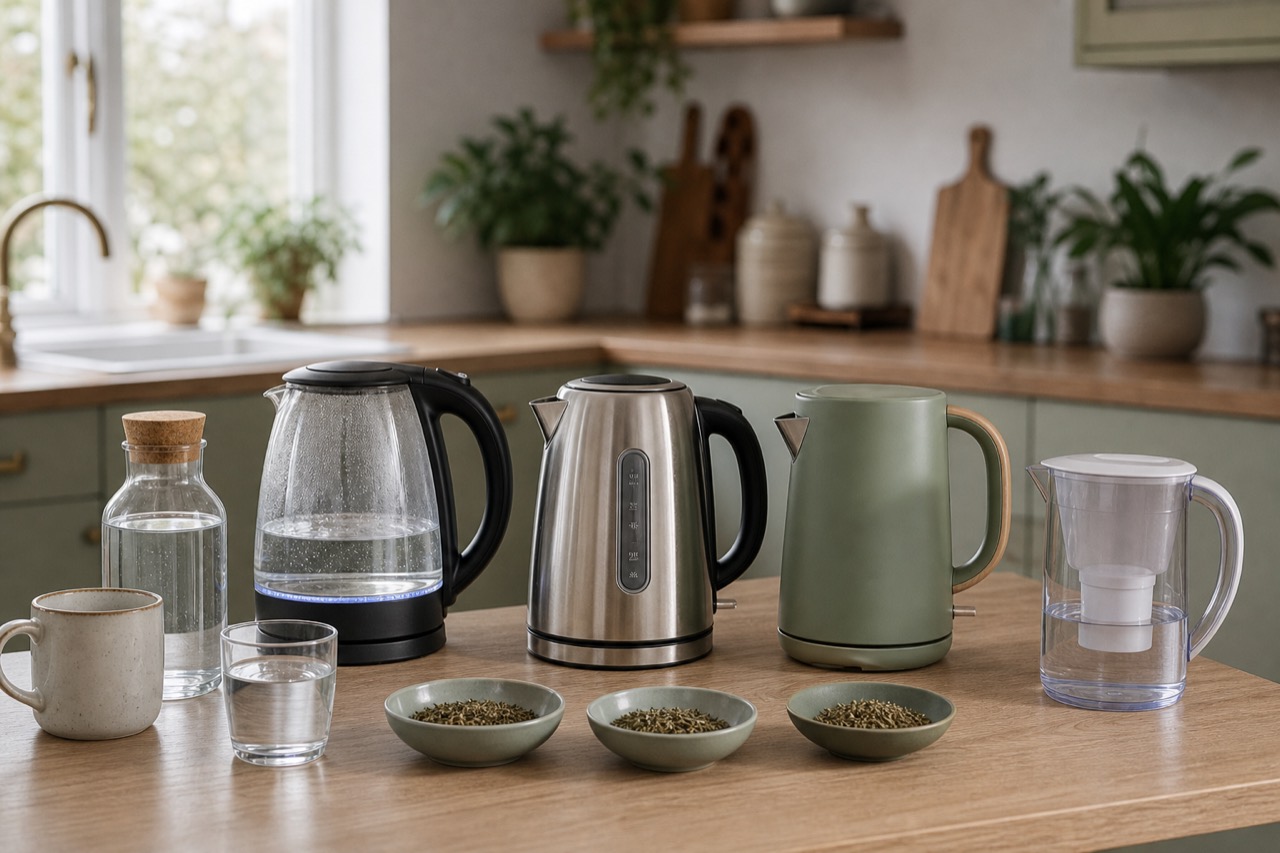
- Consider filtered water. A filter jug can reduce some of the minerals that cause scale, depending on the filter used. The Waterdrop ED61B Instant Electric 3.5L Water Filter Jug is one option if you want filtered water for drinks and the kettle. Check the listing for what its filter is designed to reduce.
Materials
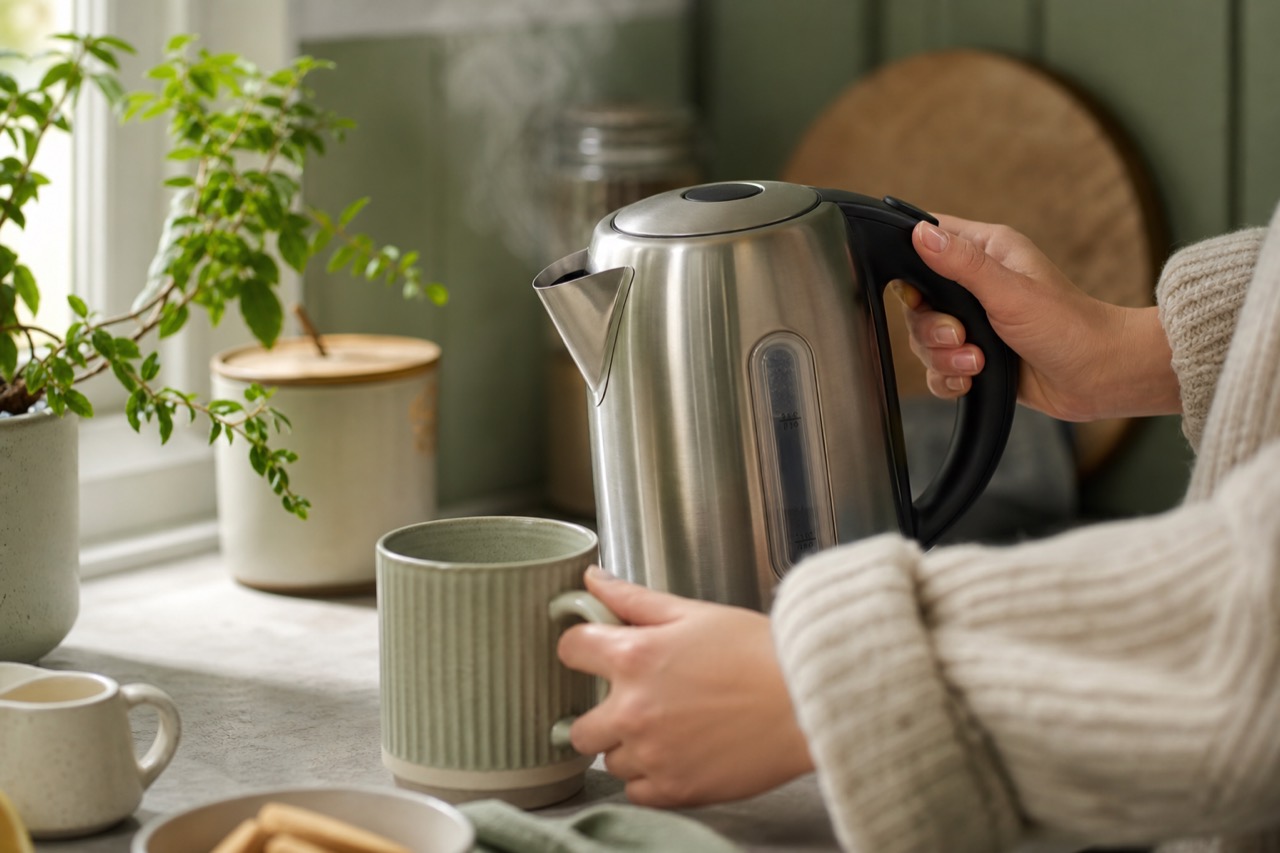
- Stainless steel kettles, such as the Russell Hobbs Brushed Stainless Steel Electric Kettle, are durable and a classic look for many kitchens. Brushed finishes can hide fingerprints better than polished ones.
- Glass kettles let you see the water boiling and how much scale has built up, but they can show limescale more obviously.
- Plastic kettles tend to be lighter, which can help anyone who finds a full kettle heavy.
Comparison: kettle and water options
We have not tested these hands-on. Use the “what to look for” column to check the listing details.
| Product | Best for | What to look for | Deal |
|---|---|---|---|
| Russell Hobbs Brushed Stainless Steel Electric Kettle | Everyday family use | Capacity, cup markings, limescale filter, minimum fill | Russell Hobbs Brushed Stainless Steel Kettle |
| Waterdrop ED61B Instant Electric 3.5L Water Filter Jug | Filtered water for drinks in hard water areas | What the filter reduces, filter life, fridge fit | Waterdrop ED61B Filter Jug |
Features worth having
| Feature | Why it helps | Priority |
|---|---|---|
| Clear water window with cup markings | Boil only what you need | High |
| Low minimum fill | Quick single cups, less waste | High |
| Removable, washable limescale filter | Fewer bits in your tea | High in hard water areas |
| Concealed element | Easier to clean and descale | Nice to have |
| 360-degree base | Easy to pick up from any angle | Nice to have |
| Automatic switch-off and boil-dry protection | Standard safety features to check for | Essential |
| Comfortable handle and lid | Safer pouring, easy filling | High |
Energy-saving habits
- Only boil what you need. This is the single most effective way to save energy with a kettle.
- Descale regularly, because scale makes boiling slower and less efficient.
- Do not reboil a full kettle repeatedly. If you are making several drinks, boil once and pour them together.
- Use the kettle for pans. Boiling water in the kettle before adding it to a pan is often quicker than heating cold water on the hob.
Safety basics
- Keep the cord away from the edge of the worktop so it cannot be pulled by children.
- Do not fill above the maximum line.
- Never switch it on empty.
- Unplug before cleaning, and never put the base or kettle in water.
Frequently asked questions
How often should I descale my kettle?
It depends on how hard your water is and how often you use the kettle. In hard water areas, many people descale every few weeks; in soft water areas, much less often. Descale whenever you see a build-up of scale.
Does a more powerful kettle use more energy?
A higher-powered kettle draws more power, but for a shorter time. The amount of water you heat matters most, so boiling only what you need saves the most energy.
Is it safe to drink water with limescale in it?
Limescale is mainly minerals from hard water and is not usually considered harmful, but it can affect taste and how well your kettle works. Regular descaling and a limescale filter keep it under control.
Should I use filtered water in my kettle?
It is optional. Filtered water can reduce how quickly scale builds up and some people prefer the taste of drinks made with it. It is not essential, and descaling still matters either way.
About the author
Daily Offer Deals editorial team
The Daily Offer Deals team checks UK deals by hand and writes practical buying guides. We never claim hands-on testing we have not done.