Ad: this guide contains affiliate links. If you buy through them we may earn commission, at no extra cost to you.
Home & Kitchen
Cordless stick vs robot vacuum vs corded upright: which should you buy?
Stick, robot or upright? Compare run time, carpets, stairs, pets, allergies and running costs at the Ofgem price cap rate before you buy a vacuum this Black Friday.
By Daily Offer Deals editorial team8 min read
On this page 11 sections
Quick answer
A cordless stick vacuum suits most flats and smaller homes: grab it, clean, put it back on the charger. A robot vacuum is best for keeping floors tidy day to day, especially with pets or hard floors, but it rarely replaces a main vacuum for stairs, corners and deep carpet cleaning. A corded upright is still the choice for larger homes with lots of carpet, because it never runs out of battery and usually has a bigger bin. Many households end up with a stick or upright as the main cleaner and a robot for maintenance.
How each type works
- Cordless stick: a lightweight vacuum powered by a rechargeable lithium-ion battery, usually with a detachable handheld section for sofas, stairs and the car.
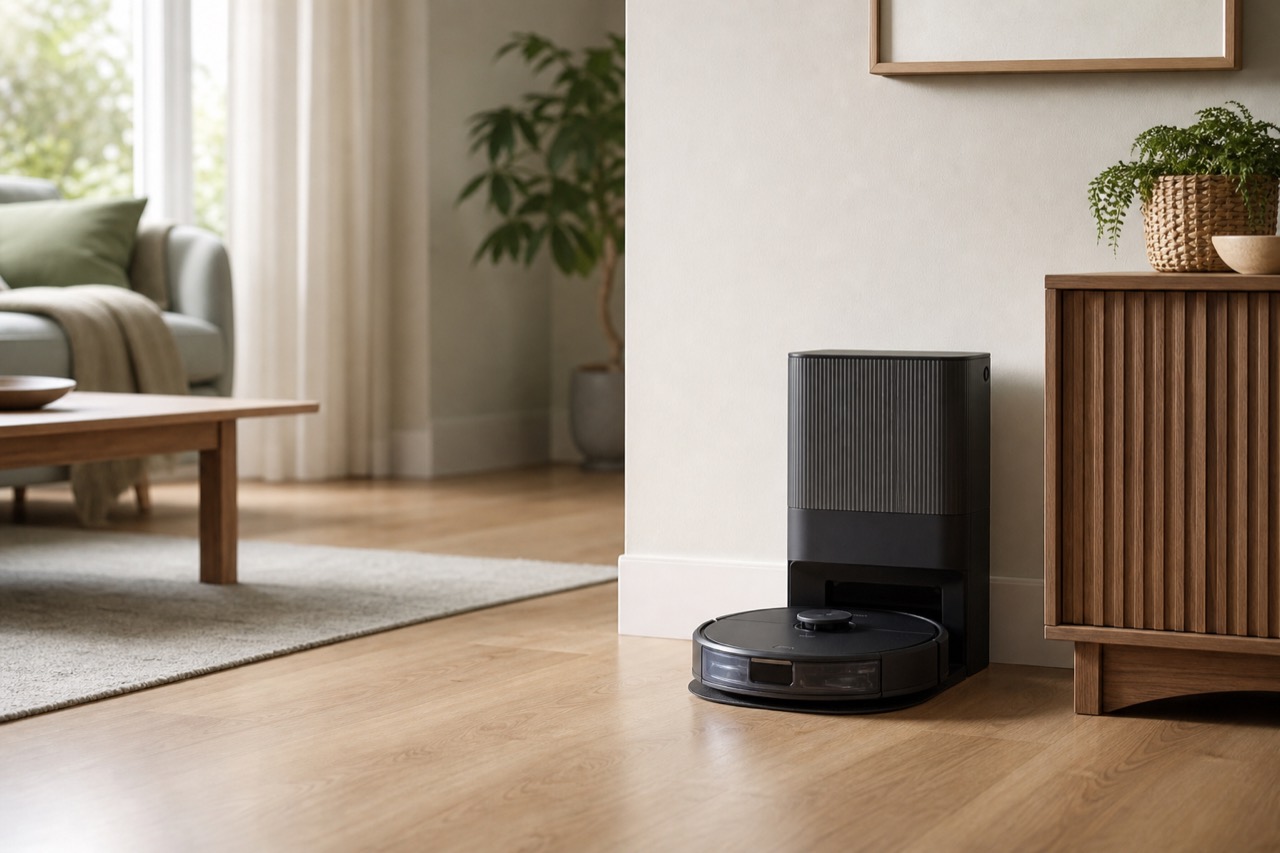
- Robot vacuum: a low, round or D-shaped unit that cleans on a schedule and returns to a charging dock. Navigation ranges from simple bump sensors to lidar or camera-based mapping. Some include mopping, and some docks empty the bin automatically.
- Corded upright: a traditional mains vacuum you push along. It runs as long as you need, and often has a wide brush bar suited to carpets.
If you are only choosing between two of these, our existing guides go deeper: cordless stick vs corded upright and how to choose a robot vacuum.
Side-by-side comparison
| Cordless stick | Robot vacuum | Corded upright | |
|---|---|---|---|
| Run time | Limited by battery; manufacturers quote run times that usually drop on the highest power setting | Limited by battery, but returns to the dock to recharge and can resume on many models | Unlimited while plugged in |
| Effort | Low; light to carry | Very low once set up | Higher; heavier to push and carry upstairs |
| Stairs | Good, especially in handheld mode | Can’t climb stairs | Possible, but awkward on many models |
| Deep carpet cleaning | Varies by model and power mode | Usually lighter cleaning | Usually strong |
| Bin size | Small | Very small (larger if the dock self-empties) | Usually largest |
| Storage | Wall dock or stand | Dock needs a spot near a socket | Needs a cupboard or corner |
| Upkeep | Battery wears over years; check if replaceable | Brushes, filters, sensors and dock bags | Belts, filters and bags (if bagged) |
These are general traits of each type, not results from our own testing. Check the manufacturer’s specification for the model you are considering.
Which suits which home?
| Home or situation | Usually a good fit | Why |
|---|---|---|
| Flat or small house, mostly hard floors | Cordless stick, optionally plus a robot | Quick cleans; robot keeps crumbs and dust down |
| Large house with lots of carpet | Corded upright, or a stick with a spare battery | No run-time worries for long sessions |
| Pets that shed | Robot for daily pickup plus a stick or upright | Little-and-often helps with hair; look for tangle-resistant brushes |
| Allergies | Any type with a sealed system and HEPA filter | Electrical Safety First lists HEPA filters as useful for allergens and fine dust |
| Limited mobility or a bad back | Robot plus a light stick | Less lifting and pushing |
| Lots of stairs | Cordless stick | Handheld mode makes stairs easier |
Running costs: how to work them out
The formula is the same for any appliance:
Cost = power in kW × hours used × unit rate
Under the Ofgem price cap for 1 October to 31 December 2026, the average electricity unit rate on Direct Debit is 26.32p per kWh. Battery vacuums are easier to estimate from the battery’s capacity in watt-hours (Wh), which is often printed on the battery or in the manual. If it shows volts and mAh instead, Wh = volts × mAh ÷ 1,000. Charging uses a little more energy than the battery holds, so we add a rough allowance for losses.
The figures below use example ratings, not any specific model:
| Example | Energy per use | Cost per use at 26.32p |
|---|---|---|
| Corded upright rated 0.75kW, used for 30 minutes | 0.75 × 0.5 = 0.375kWh | about 9.9p |
| Cordless stick, 25.2V 2,500mAh battery (about 63Wh), full charge with about 20% losses | about 0.076kWh | about 2p |
| Robot vacuum, 14.4V 5,200mAh battery (about 75Wh), full charge with about 20% losses | about 0.09kWh | about 2.4p |
In every case the electricity cost is small. The bigger long-term costs are usually replacement filters, brushes, dock bags and, for battery models, an eventual replacement battery. Robot docks also draw a little power while waiting, so check the standby figure if it is listed. Your own unit rate depends on region and tariff, and Ofgem will announce the January to March 2027 cap on 25 November 2026.
Safety points worth knowing
Electrical Safety First’s advice for vacuum cleaners and robot vacuums includes:
- Buy from a reputable retailer rather than an unknown third-party seller, and make sure the charger or dock has a UK 3-pin plug. Don’t use a travel adaptor for a robot vacuum’s charger.
- Only use the original charger or one the manufacturer confirms is suitable, and only use batteries approved by the manufacturer. Second-hand batteries and chargers can be a serious fire risk.
- Check plugs and cables for damage or scorch marks, and don’t use a vacuum with visible damage.
- Register the vacuum with the manufacturer so you can be told about any safety recall.
- Recycle old lithium-ion batteries properly; don’t put them in household bins.
Which should you buy?
- One vacuum for a flat or small home: a cordless stick with a removable battery if you can find one in your budget.
- Bigger home, lots of carpet, or you hate charging things: a corded upright.
- You want floors to stay tidy without thinking about it: a robot vacuum, plus a stick or upright for stairs and deeper cleans. Read robot vacuum and mop combos: are they worth it? if you have lots of hard floor.
- Pets or allergies: look for HEPA filtration, a sealed system and tangle-resistant brush rolls whichever type you choose.
You can search current listings on Amazon for cordless stick vacuums, robot vacuums and corded upright vacuums. We don’t quote prices because they change quickly during sales. You can also browse our robot vacuum deals.
Black Friday checklist for vacuums
- Check the battery spec, not just the headline run time. Quoted run times are usually on the lowest power mode. Look for the run time on the mode you’ll actually use.
- Ask whether the battery is replaceable and whether spare batteries and filters are sold in the UK.
- For robots, check navigation and app features. Lidar or camera mapping, no-go zones and obstacle avoidance make a big difference in a cluttered home. Our Black Friday robot vacuum guide has a fuller checklist.
- Compare model numbers carefully. Some ranges come in near-identical variants with different accessories.
- Watch “was” prices. See how “was” prices work, and check our Black Friday deals page. Small extras such as spare filters often turn up in deals under £10.
Deals we found this week
These were showing a deal badge on Amazon UK when we last checked. We don’t show prices because they change through the day.
- Shark Stratos Cordless Pet Pro Stick Vacuum Cleaner, White/Navy,: check today’s price on Amazon
- Cordless Vacuum Cleaner 650W 55Kpa 70Mins, Stick Vacuum with Hurricane Mode,: check today’s price on Amazon
- 650W 55kPa 70Mins Cordless Vacuum Cleaner, 1.8L Self-Standing Anti-Tangle: check today’s price on Amazon
- VACTechPro Cordless Vacuum Cleaner, 35KPa/45Mins Lightweight Stick: check today’s price on Amazon
- eufy Robot Vacuum and Mop, S1 Pro Omni, HydroJet System with Roller: check today’s price on Amazon
- eufy L60 Robot Vacuum Cleaner, Dust,iPath Laser: check today’s price on Amazon
Sources
- Ofgem: Changes to energy price cap between 1 October and 31 December 2026
- Ofgem: Energy price cap unit rates and standing charges
- Electrical Safety First: Vacuum cleaners
- Electrical Safety First: Robot vacuums
- Electrical Safety First: Recycling electricals and batteries
- Electrical Safety First: Product recalls
- GOV.UK: Product safety alerts, reports and recalls
Frequently asked questions
Can a robot vacuum replace my normal vacuum?
For some small homes with mostly hard floors, it can cover daily cleaning. Most people still need a stick or upright for stairs, sofas, corners and deeper carpet cleans, because robots have small bins and can’t climb stairs.
Are cordless vacuums as powerful as corded ones?
It depends on the model and power mode. Many cordless sticks have a boost mode, but it drains the battery quickly. A corded upright delivers its power for as long as it is plugged in, which helps on large carpeted areas.
How long do cordless vacuum batteries last?
Lithium-ion batteries gradually lose capacity with use and age. Manufacturers give their own guidance and warranty terms, so check these and whether a replacement battery is available before you buy.
Is it safe to leave a robot vacuum charging all the time?
Robot vacuums are designed to sit on their docks. Electrical Safety First advises using only the supplied charger, keeping an eye on charging, and making sure the dock has a UK plug. Follow the manufacturer’s instructions for your model.
How much electricity does a vacuum use?
Not much. Using example ratings at the 26.32p per kWh cap rate, a 30-minute clean with a 0.75kW corded upright is about 9.9p, and a full charge of a typical cordless or robot battery is about 2p to 2.5p.
About the author
Daily Offer Deals editorial team
The Daily Offer Deals team checks UK deals by hand and writes practical buying guides. We never claim hands-on testing we have not done.