Ad: this guide contains affiliate links. If you buy through them we may earn commission, at no extra cost to you.
Home & Kitchen
What to Keep in a First Aid Kit for Home and Car (UK Guide)
A calm, practical UK checklist for stocking a first aid kit at home and in the car, plus how to store it, check dates and keep it useful all year.
By Daily Offer Deals editorial teamUpdated 6 min read
On this page 9 sections
Quick answer
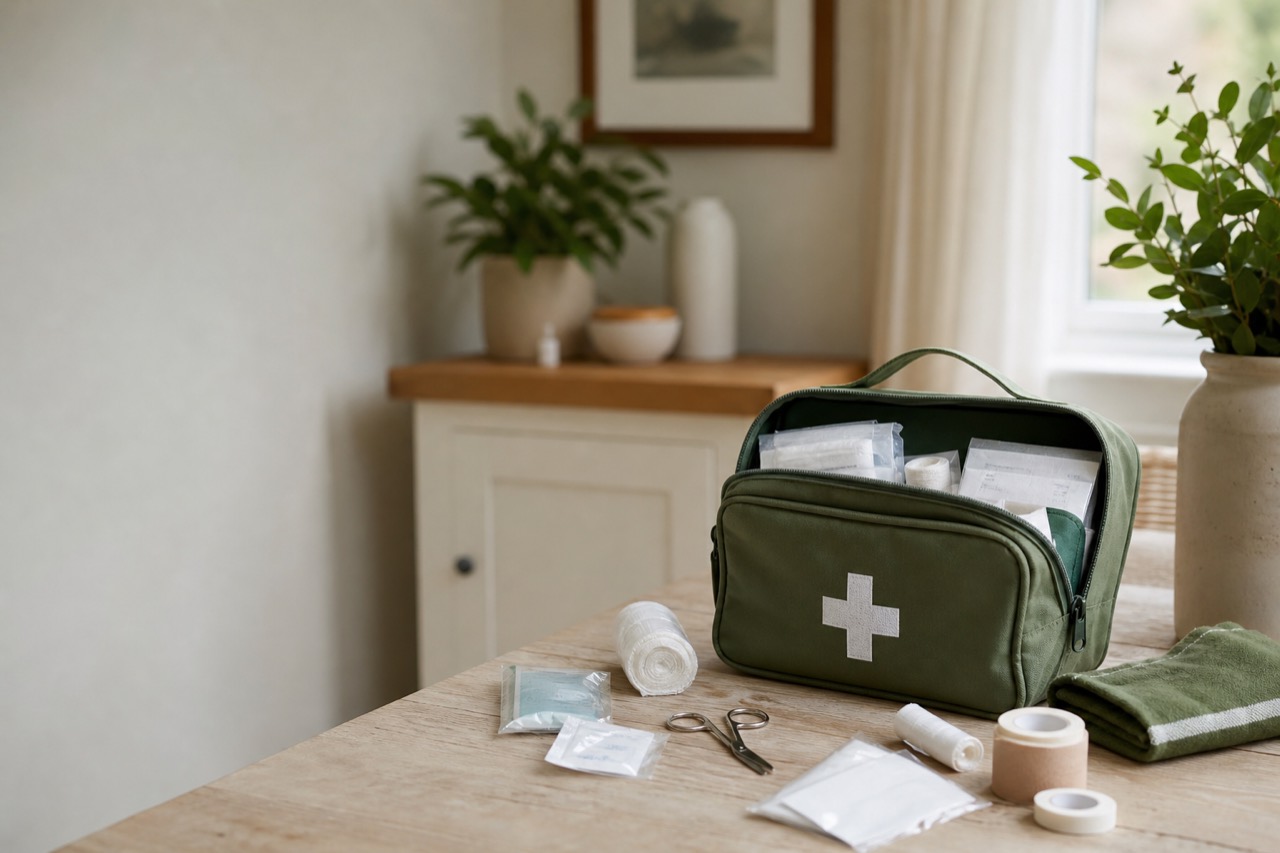
A good UK first aid kit covers the basics: plasters in mixed sizes, sterile dressings, bandages (including a triangular bandage), disposable gloves, tweezers, scissors, sticky tape, alcohol-free cleansing wipes, a digital thermometer and eyewash. Keep one at home and a smaller one in the car. Store it somewhere cool and dry, out of children’s reach, and check expiry dates every few months. A ready-made kit is a sensible starting point that you can top up with your own items.
Why every home needs a kit (and a plan)
Most household mishaps are minor: a kitchen cut, a grazed knee, a splinter, a bump on the head. Having the right supplies in one place means you can deal with small things calmly and quickly, and you will not be hunting through drawers when someone is upset.
A kit is not a substitute for training or professional help. For anything serious, call 999. For urgent advice that is not an emergency, contact NHS 111 online or by phone. If you would like more confidence, organisations such as St John Ambulance and the British Red Cross run first aid courses and publish free guidance online.
The core checklist
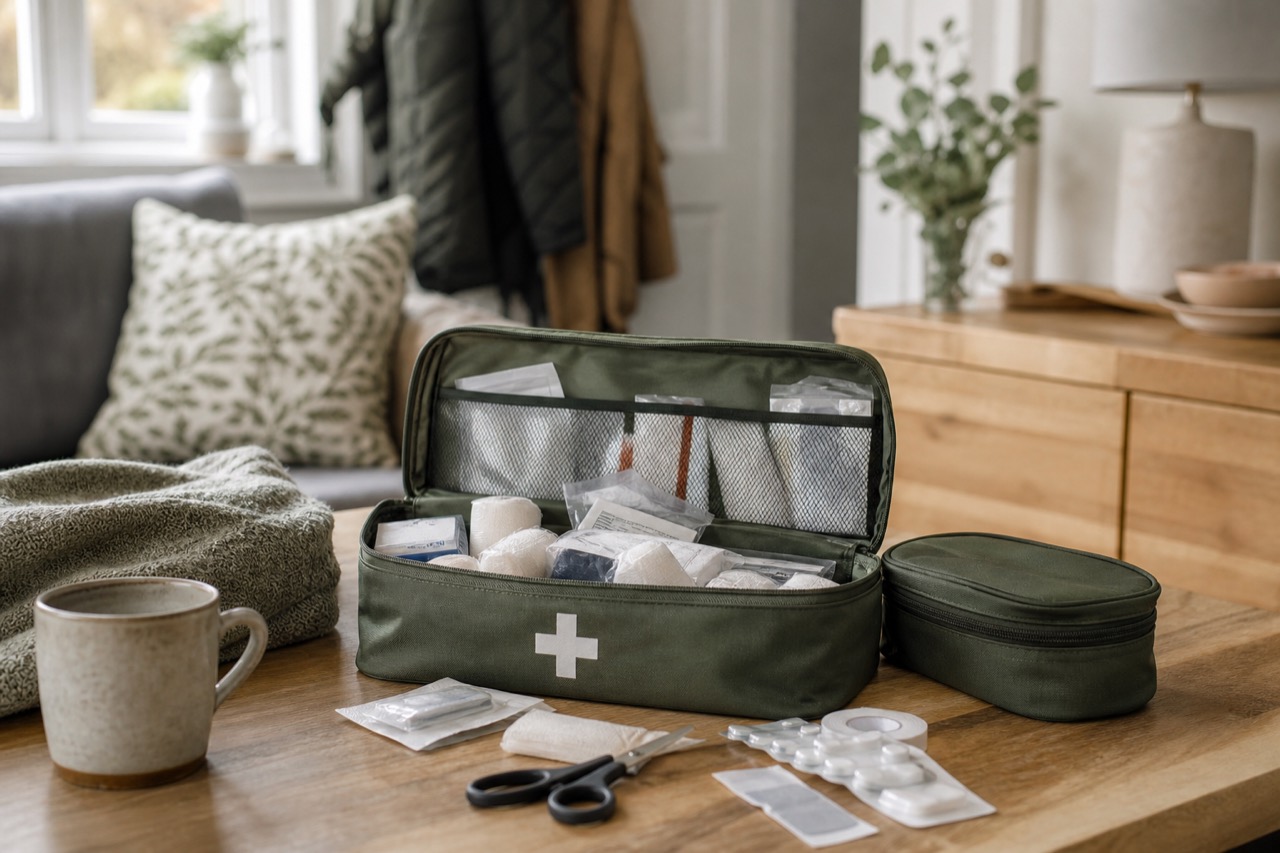
These are the items most UK guidance, including NHS and HSE advice, suggests a basic kit should contain. You do not need everything on day one, but aim to cover each group.
Wound care
- Plasters in a range of sizes and shapes, including fabric and waterproof types
- Sterile gauze dressings in small, medium and large sizes
- Alcohol-free cleansing wipes
- Sticky medical tape
- Sterile eyewash or saline, plus an eye pad
Bandages and support
- At least two crepe roller bandages for sprains and holding dressings in place
- Triangular bandages, which double as slings
- Safety pins or bandage clips
Tools
- Disposable non-latex gloves (several pairs)
- Tweezers for splinters
- Blunt-ended scissors
- A digital thermometer
- A foil emergency blanket
Household medicines (home kit only)
Many families keep a small medicine supply at home, such as paracetamol or ibuprofen, an antihistamine, antiseptic cream and something for insect bites. Always follow the dosage on the pack and the advice of a pharmacist, especially for children, pregnancy or existing conditions. Some guidance suggests keeping tablets separate from the main first aid box, so a locked medicine cabinet may be the better home for them.
Home kit vs car kit
Your home kit can be larger and include medicines. A car kit should be compact, sturdy and able to cope with temperature changes, so it is best kept to dressings, bandages, gloves and tools.
| Kit | Best for | What to look for | Where to keep it |
|---|---|---|---|
| Home kit | Everyday cuts, burns, splinters, sprains | Wide range of dressing sizes, thermometer, room to add medicines | High kitchen cupboard, out of reach of children |
| Car kit | Roadside scrapes, travel, days out | Compact zipped bag, gloves, foil blanket, scissors | Boot or under a seat, secured so it doesn’t roll |
| Travel or bag kit | Holidays, festivals, sports | Small and light, blister plasters, wipes | Day bag or suitcase |
Ready-made kits worth a look
Buying a ready-made kit is often the quickest way to get organised, and you can personalise it afterwards. A couple of current deals on the site:
| Product | Best for | What to look for | Deal |
|---|---|---|---|
| 220-Piece First Aid Kit Bag | Families who want plenty of supplies across home, car and travel | Check the contents list covers dressings, bandages and gloves, not just plasters | 220-Piece First Aid Kit Bag for Travel, Car and Home |
| Lewis-Plast Premium First Aid Kit | A tidy all-rounder to split between home and car | Clear compartments so you can find things quickly | Lewis-Plast Premium First Aid Kit |
A high piece count can look impressive, but much of it is often plasters. Read the contents list and check you are getting sterile dressings, crepe bandages, a triangular bandage and gloves. If anything is missing, add it from a pharmacy.
Don’t forget the extras
A few non-medical items make a kit far more useful:
- A small torch with spare batteries, for power cuts or roadside stops after dark. Keeping a spare pack such as Energizer Advanced AAA Batteries in the kitchen drawer means the torch and thermometer are never flat.
- A basic first aid leaflet or booklet, so anyone can follow the steps in a stressful moment.
- A list of emergency contacts and any allergies or medical conditions for each family member.
- Hand sanitiser, for when you cannot wash your hands before treating a cut.
Storing and maintaining your kit
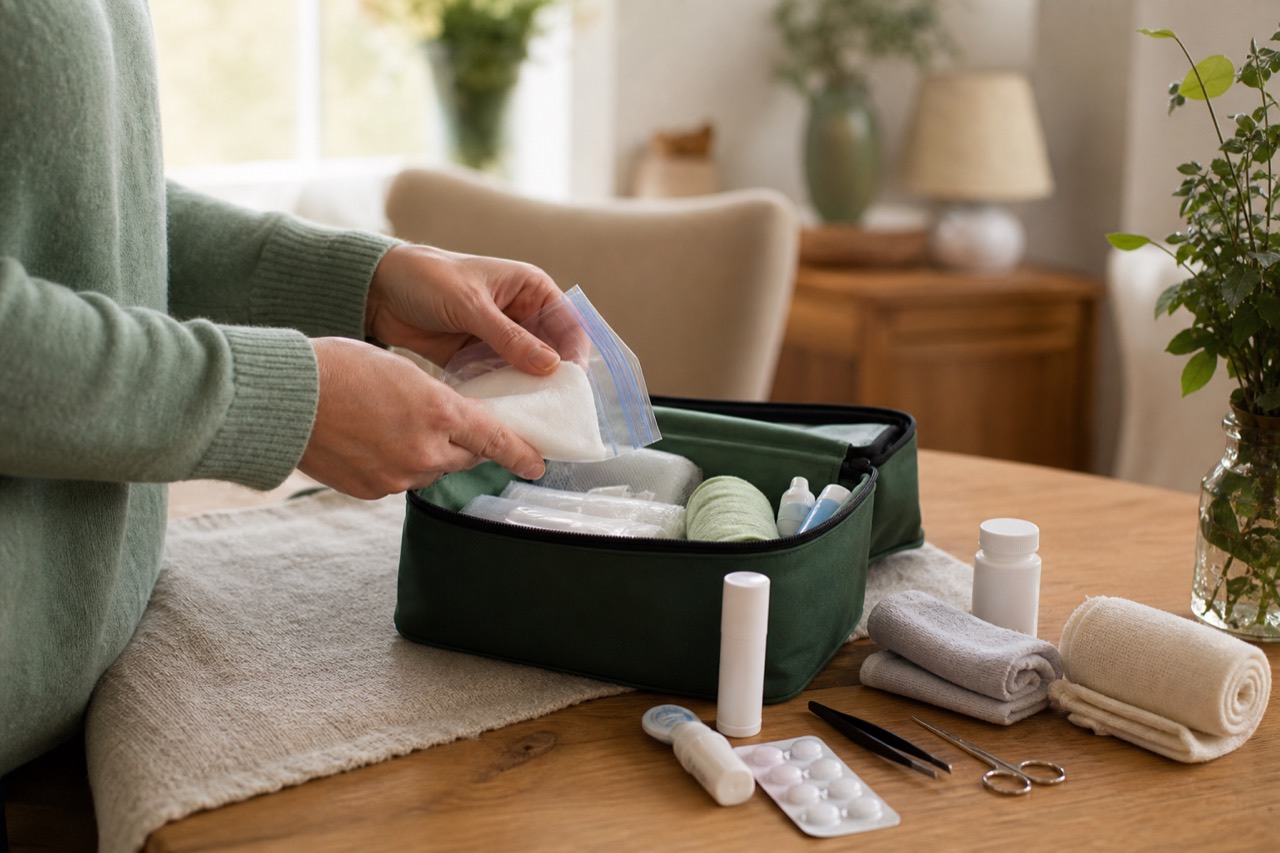
A kit only helps if it is complete and in date. Build these habits:
- Choose one spot and tell everyone where it is. Keep it cool, dry and out of children’s reach.
- Check it every three to six months. Sterile items and medicines carry expiry dates. Replace anything out of date and dispose of old medicines safely, for example by returning them to a pharmacy.
- Restock after every use. It is easy to take the last large plaster and forget about it.
- Check the car kit at the start of winter and summer, when heat and cold can affect packaging.
Who might need extra items?
- Babies and young children: a child-friendly digital thermometer and age-appropriate medicines, with a pharmacist’s advice.
- People with allergies: if someone has been prescribed an adrenaline auto-injector, it should go wherever they go, not just in the kit.
- Outdoor and sporty families: blister plasters, instant cold packs and extra crepe bandages.
- Pet owners: pet first aid is different; ask your vet what to keep.
FAQ
Is it a legal requirement to carry a first aid kit in my car in the UK?
No, it is not a legal requirement for private cars in the UK, although it is in some other European countries. Check the rules before driving abroad. The Highway Code lists a first aid kit among the items worth carrying in winter.
How often should I check my first aid kit?
Every three to six months is a good rhythm, and always after you have used it. Look for expiry dates on sterile dressings, eyewash and medicines, and replace anything damaged or past its date.
Should I keep medicines in my first aid kit?
At home many people do, but some guidance suggests keeping tablets in a separate, locked cabinet. Avoid keeping medicines in a car, where temperatures swing. Always follow the pack instructions or a pharmacist’s advice.
What should I do in a serious emergency?
Call 999 straight away. For non-emergency medical advice, use NHS 111. A first aid course from St John Ambulance or the British Red Cross is the best way to feel prepared.
About the author
Daily Offer Deals editorial team
The Daily Offer Deals team checks UK deals by hand and writes practical buying guides. We never claim hands-on testing we have not done.