Ad: this guide contains affiliate links. If you buy through them we may earn commission, at no extra cost to you.
Electronics
Refurbished vs new phones and laptops: what the grades mean and is it worth it
Grade A, B or C? Excellent or good? What refurbished grades really mean, the checks that matter more (battery, updates, warranty) and your rights when buying.
By Daily Offer Deals editorial team7 min read
On this page 10 sections
Quick answer
A refurbished phone or laptop has been used or returned, then checked, repaired where needed and resold, usually for noticeably less than new. Cosmetic grades (such as “excellent”, “very good” and “good”, or A, B and C) describe how it looks, not how it works, and there’s no single UK-wide grading standard, so each seller’s definitions differ. Refurbished is usually worth it if you buy from a business that gives a clear warranty and returns window, the battery health is stated, and the device still gets security updates.
Refurbished tech has become a mainstream way to save money and cut waste. But “refurbished” covers everything from a pristine returned handset to a well-used laptop with a new battery. Here’s how to tell what you’re getting.
What “refurbished” actually means
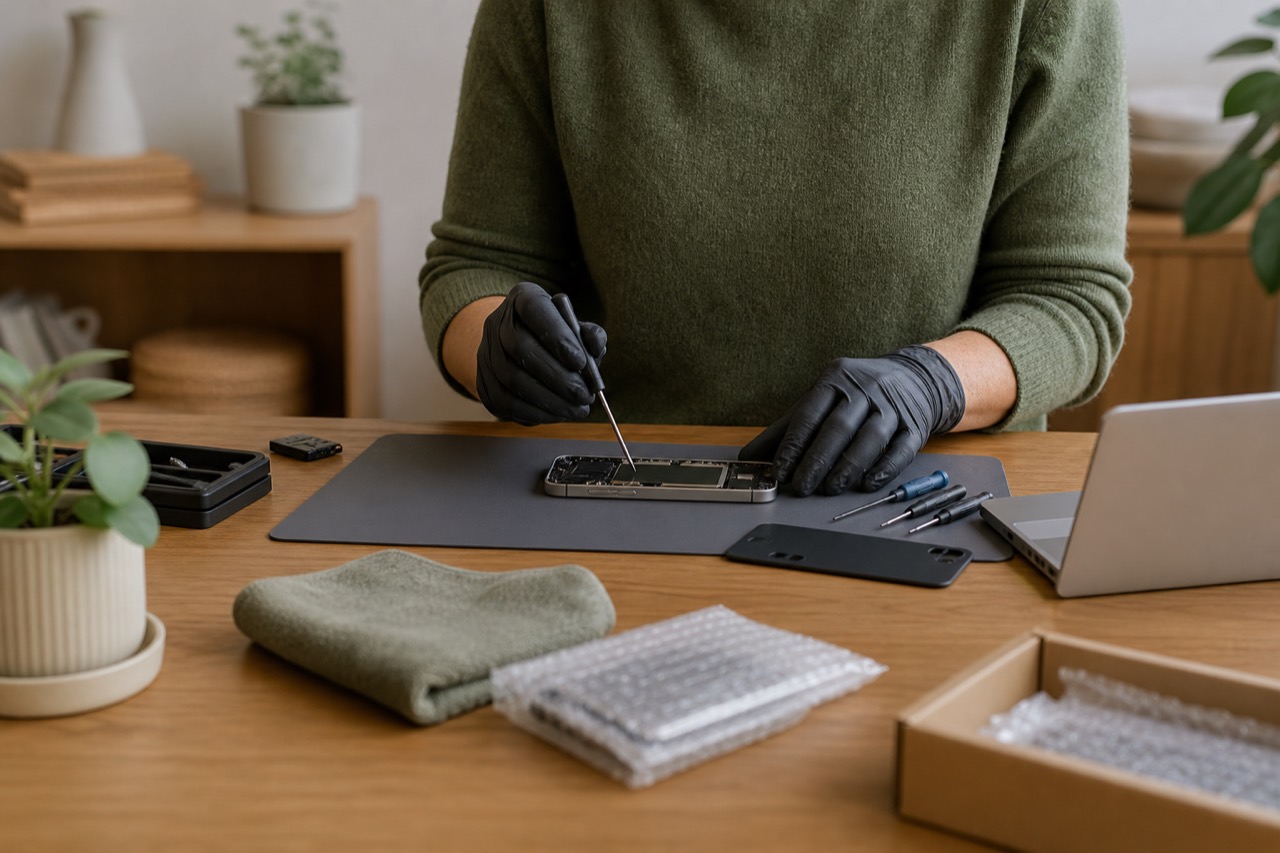
There’s no legal definition of “refurbished” in UK law. In practice, a refurbished device has typically been:
- inspected and tested (screen, battery, cameras, buttons, ports, speakers, connectivity)
- repaired where something failed, sometimes with replacement parts
- data-wiped and reset to factory settings
- cleaned and repackaged, sometimes with a charger and cable, sometimes not
The quality of that process varies a lot between sellers. A manufacturer’s own certified refurbished programme will usually replace more parts and offer a longer warranty than a small reseller. That’s why the seller matters as much as the grade.
Refurbished vs used vs “open box”
| Term | What it usually means | What to check |
|---|---|---|
| Manufacturer refurbished | Refurbished by the brand itself, often with new battery and outer shell | Warranty length; usually the closest to new |
| Seller refurbished | Refurbished by a third-party business | Grading definitions, warranty, returns policy |
| Open box / ex-display | Returned or display stock, often barely used | Whether accessories are included; any marks |
| Used / pre-owned | Sold as-is, possibly not tested or repaired | Condition, battery, whether it’s locked |
| Private sale | Sold by an individual | Far fewer legal rights; check carefully |
What the grades mean (and don’t)
Most sellers use three or four cosmetic grades. Common labels include:
| Typical label | Common alternative | What you’ll usually see |
|---|---|---|
| Pristine / Like new | Grade A+ | No visible marks at arm’s length |
| Excellent / Very good | Grade A | Very light marks, often only visible close up |
| Good | Grade B | Visible scratches or scuffs on the body or screen edge |
| Fair / Acceptable | Grade C | Obvious wear, dents or marks; fully working |
Key points:
- Grades are about appearance. A “good” grade device should work just as well as an “excellent” one from the same seller.
- Definitions vary. One seller’s “very good” might be another’s “excellent”. Read the seller’s own grading page.
- Screen marks matter more than body marks. A scuffed back under a case is easy to live with. A scratched screen isn’t.
The checks that matter more than the grade
1. Battery health
Batteries wear out with use, and it’s often the first thing to go on an older phone or laptop. Good sellers state a minimum battery health (for example, a percentage of original capacity) or replace the battery. On many phones you can check battery health in the settings once it arrives. If it’s lower than promised, contact the seller.
2. Software and security updates
This is easy to overlook. An old phone or laptop that no longer gets security updates is riskier to use for banking and shopping. Before buying, check the manufacturer’s support policy for that model. The newer the model, the longer it’s likely to stay supported.
3. Warranty and returns
Look for a written warranty from the seller, ideally a year or more, and a returns window. A seller offering a long warranty is signalling confidence in its refurbishment.
4. Is it unlocked and not blocked?
For phones, check it’s network unlocked (unless you’re happy with one network) and isn’t reported lost or stolen. Reputable sellers check the IMEI number. Also make sure any previous owner’s account lock has been removed, or you won’t be able to set it up.
5. What’s in the box
Many refurbished devices now ship without a charger. Factor in a USB-C charger if you need one. A phone case and screen protector are worth adding too, especially for a lower grade.
6. Exact specification
Match the model, storage, RAM (for laptops), colour and region. A laptop listed as “16GB” should mean RAM, but double-check it isn’t referring to storage.
Your legal rights when you buy refurbished
When you buy from a business, the Consumer Rights Act 2015 still applies. Goods must be of satisfactory quality, fit for purpose and as described. “Satisfactory quality” takes into account the price and that the item isn’t new, so you can’t expect a “good” grade phone to look perfect. But it should work properly and match the description.
If you buy online, you also get the 14-day cancellation right under the Consumer Contracts Regulations. If it’s faulty, you can reject it within 30 days for a refund. Buying from a private individual gives you far fewer rights, which is why a refurbished seller with a warranty is usually safer than a private sale. Citizens Advice explains your rights on second-hand goods in more detail.

Is refurbished worth it?
Pros
- Lower price, often for a model that’s only a year or two old.
- Less waste. Extending a device’s life is better for the environment than making a new one.
- Good value on premium models. You may get higher build quality and a better camera for the price of a new mid-range device.
Cons
- Shorter remaining software support than a brand-new model.
- Battery wear, unless replaced.
- Variable quality between sellers.
- Accessories may be missing.
When new makes more sense
- When the price gap is small, such as during a big new-model promotion.
- When you want the longest possible software support.
- For a child’s first phone or laptop, a newer model with long support and parental controls can be the safer choice.
Quick buyer’s checklist
- Buy from a business, not an individual.
- Read the seller’s own grade definitions.
- Check the stated battery health or whether the battery was replaced.
- Confirm the warranty length and returns window.
- Check the model still receives security updates.
- For phones: unlocked, not blocked, account lock removed.
- Budget for a charger, case and screen protector.
- Pay by credit card if the price is over £100, for Section 75 protection.
Tech deals cluster around Cyber Monday. Compare a refurbished price against the new price in the sale before you decide.
Frequently asked questions
Is a refurbished phone as good as new?
Functionally, a well-refurbished phone should work like new, but it may have cosmetic marks and a battery that’s not at full original capacity. The quality depends on the seller, so check the warranty and battery details.
What’s the difference between grade A and grade B?
Usually just appearance. Grade A typically has very light marks, while grade B has more visible scratches. Both should work fully. Definitions vary between sellers, so read each seller’s grading guide.
Do I get a warranty with refurbished tech?
Most reputable refurbished sellers give one, and its length varies. On top of any warranty, you have rights under the Consumer Rights Act 2015 when you buy from a business.
Can I return a refurbished laptop I bought online?
Yes. If you bought from a business online, you normally have 14 days from delivery to cancel for any reason, plus your rights if it’s faulty. Check the seller’s returns process.
How do I check a refurbished phone’s battery?
Many phones show battery health in the settings menu. Compare it with what the seller promised, and contact them promptly if it falls short.
About the author
Daily Offer Deals editorial team
The Daily Offer Deals team checks UK deals by hand and writes practical buying guides. We never claim hands-on testing we have not done.