Ad: this guide contains affiliate links. If you buy through them we may earn commission, at no extra cost to you.
Home & Kitchen
Winter Warmth at Home: A Practical Checklist for Cold Snaps
A practical UK checklist for cold snaps: keeping rooms warm, staying safe with heaters and hot water bottles, protecting pipes, and helping neighbours.
By Daily Offer Deals editorial teamUpdated 6 min read
On this page 8 sections
Quick answer
During a cold snap, UK health advice is to try to heat the rooms you use most to at least 18°C, especially if you are over 65, have reduced mobility or a health condition. If you cannot heat every room, heat your living room during the day and your bedroom shortly before bed, and keep bedroom windows closed at night. Wear several thin layers rather than one thick one, have warm drinks and hot food, check that you know where your stopcock is, and look in on older or vulnerable neighbours. The rest of this guide turns that into a simple checklist.
Before the cold arrives
The best time to prepare is on a mild autumn day, not during the first frost.
Heating and home
- Bleed radiators if they are cold at the top, so they heat properly.
- Book a boiler service if it has been more than a year.
- Test your carbon monoxide alarm and smoke alarms. Any home with a fuel-burning appliance, such as a gas boiler, fire or stove, should have a working carbon monoxide alarm.
- Draught-proof cheaply: a draught excluder at the bottom of doors, closing curtains at dusk and keeping internal doors shut all help keep heat in the rooms you use.
Pipes and water
- Find your stopcock and make sure it turns. If a pipe bursts, turning off the water quickly limits the damage.
- Insulate exposed pipes in lofts, garages and outside walls with foam lagging.
- Keep some heating on if you go away during a freeze, rather than letting the house go completely cold.
Power cuts and storms
Winter storms can bring power cuts. Keep a torch where you can find it in the dark, spare batteries, and a charged power bank such as the INIU 20000mAh Power Bank, 45W Fast Charging so phones stay usable. In Great Britain you can call 105 free to report or get updates on a power cut. Our 3-day home essentials kit covers the rest.
Staying warm indoors
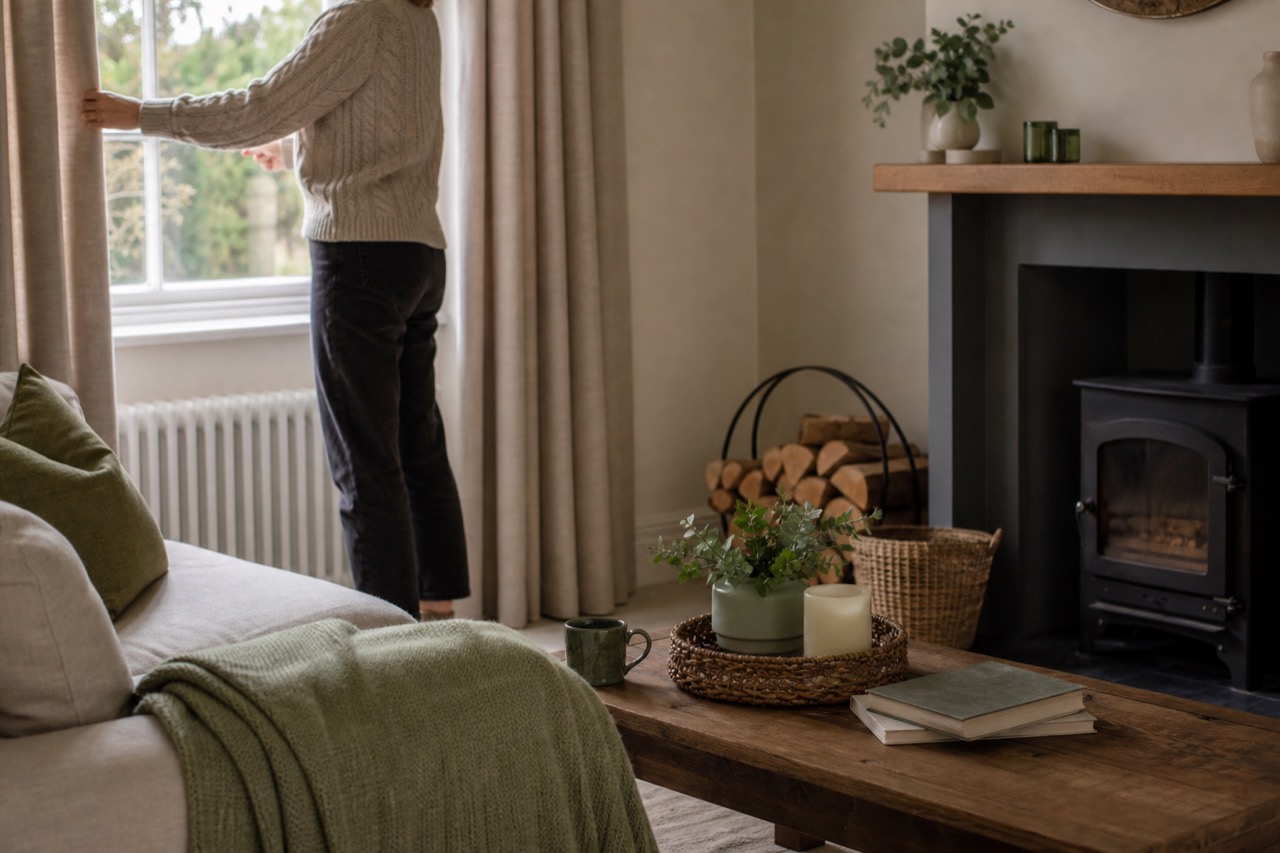
Heat the rooms you use
The guidance to aim for at least 18°C in the rooms you use most is about health as well as comfort, because cold homes can raise the risk of heart and lung problems, especially for older people. If money is tight, focus heat where you spend your time:
- Living room during the day.
- Bedroom shortly before bed, with windows closed at night.
- Close the doors to rooms you are not using.
Layers, bedding and warm food
- Several thin layers trap heat better than one thick jumper. Thermal socks, a hat and slippers make a noticeable difference.
- Extra blankets on the bed, or a heavier duvet, help you stay warm overnight.
- Regular hot drinks and at least one hot meal a day keep you warm from the inside. A reliable kettle, such as the Russell Hobbs Brushed Stainless Steel Electric Kettle, and a batch of homemade soup from something like the Daewoo 2-in-1 Soup Maker & Smoothie Blender, 1.6 L can make warm food easy when it is bitterly cold outside.
- Keep moving where you can. Even getting up and walking around every hour helps.
Use heat safely
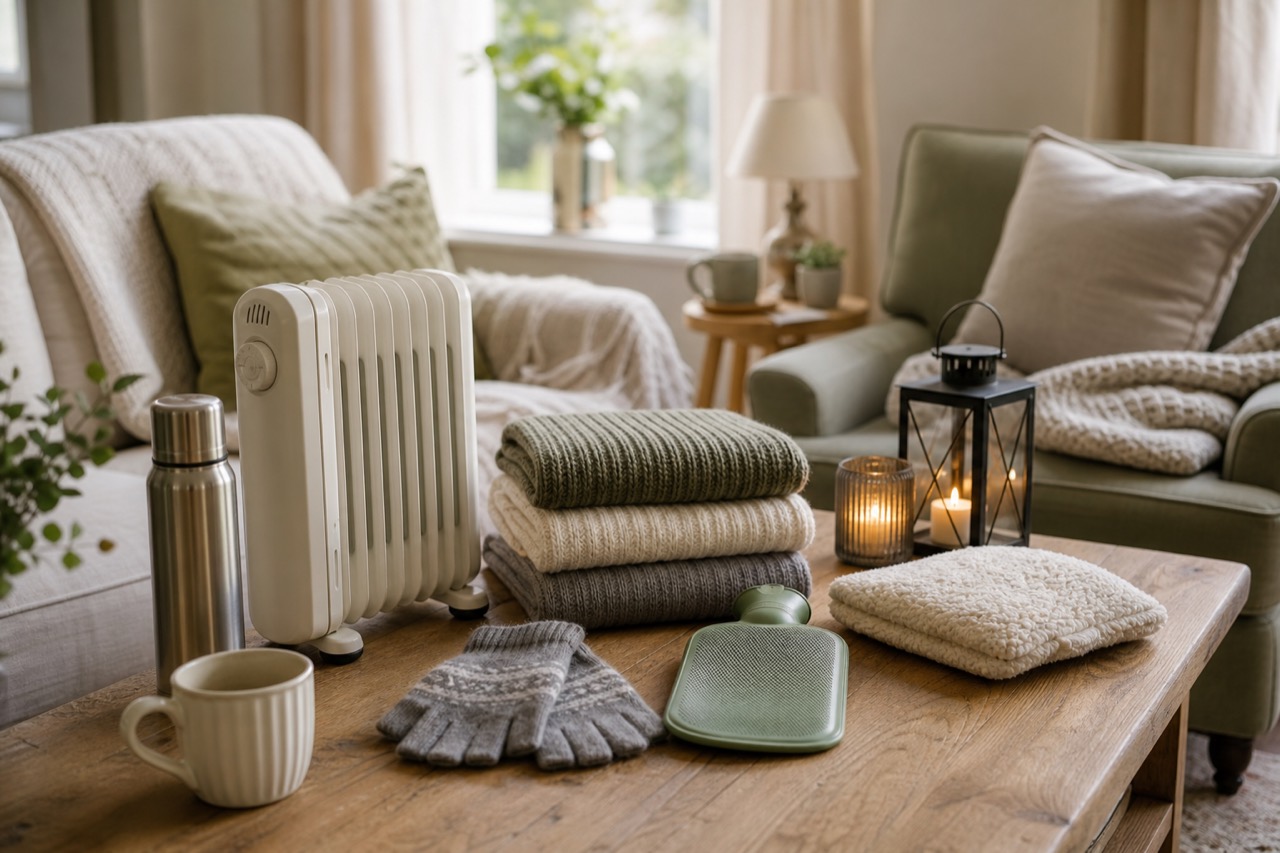
- Hot water bottles: never fill with boiling water, use a cover, and replace them if they are perished or past their life. Many UK hot water bottles carry a small “daisy wheel” mark that shows the month and year they were made.
- Electric blankets: check for wear, follow the instructions, and do not use one together with a hot water bottle.
- Portable heaters: keep them clear of curtains, bedding and clothes, never cover them, and do not use them to dry laundry.
- Never use gas cookers or outdoor heaters to heat a room.
Out and about in the cold
Cold snaps are hard on cars as well as people. Cold weather can drain a weak car battery, and tyre pressures drop as the temperature falls, so it is worth checking both.
- A portable jump starter, such as the AstroAI Car Jump Starter Power Bank, can help if your battery struggles on a frosty morning. Always follow the instructions for connecting it.
- A digital tyre inflator, such as the AstroAI Portable Tyre Inflator, 12V Digital Air Compressor, makes it easy to check and top up pressures to the figures in your car’s handbook.
- Keep a blanket, a torch, a phone charger, water and a snack in the car in winter.
Comparison: cold snap helpers
| Product | Best for | What to look for | Deal |
|---|---|---|---|
| Electric kettle | Quick hot drinks and hot water bottles | Capacity that suits your household, a clear water window | Russell Hobbs Brushed Stainless Steel Kettle |
| Soup maker | Easy hot meals from basic veg | Capacity, simple programmes, easy cleaning | Daewoo 2-in-1 Soup Maker, 1.6 L |
| Power bank | Keeping phones charged in power cuts | Capacity for your phones, the right cables | INIU 20000mAh Power Bank |
| Jump starter | Cars that struggle on frosty mornings | Suits your engine type, clear instructions | AstroAI Car Jump Starter |
| Tyre inflator | Keeping tyre pressures right as temperatures drop | Digital gauge, 12V plug, auto-stop | AstroAI Portable Tyre Inflator |
Help with heating costs
If heating bills are a worry, you are not alone, and there is free help available. Your energy supplier can talk to you about payment plans, and the Simple Energy Advice service offers free advice on energy efficiency and grants in England and Wales. Citizens Advice can also help you check what support you might be entitled to. Do not sit in the cold to save money without first finding out what help exists.
Look out for others
The UK Health Security Agency regularly urges people to check on older or frail friends, relatives and neighbours during cold weather, especially those who live alone or have a serious illness. A quick knock, a phone call, or offering to pick up some shopping can make a big difference. If you are worried someone is very unwell, call NHS 111, or 999 in an emergency.
Frequently asked questions
What temperature should I heat my home to in winter?
UK health advice is to aim for at least 18°C in the rooms you use most, particularly if you are over 65, have reduced mobility or a health condition.
How can I stop my pipes freezing?
Lag exposed pipes in lofts and outside walls, keep some heating on during freezing weather even when you are away, and know where your stopcock is so you can turn the water off quickly if a pipe bursts.
Is it safe to use a hot water bottle and an electric blanket together?
No. Use one or the other. Fill hot water bottles with hot, not boiling, water, use a cover, and replace any that look worn or are past their life.
Who do I call in a power cut?
In Great Britain, call 105 free to report a power cut or get updates from your local network operator. In an emergency, always call 999.
About the author
Daily Offer Deals editorial team
The Daily Offer Deals team checks UK deals by hand and writes practical buying guides. We never claim hands-on testing we have not done.