Ad: this guide contains affiliate links. If you buy through them we may earn commission, at no extra cost to you.
Food & Grocery
Batch cooking and meal prep on a budget: a week of freezer meals
How to batch cook a week of cheap freezer meals in one session, with a sample plan, a shopping list approach and Food Standards Agency storage times so it's safe as well as thrifty.
By Daily Offer Deals editorial team6 min read
On this page 11 sections
Quick answer
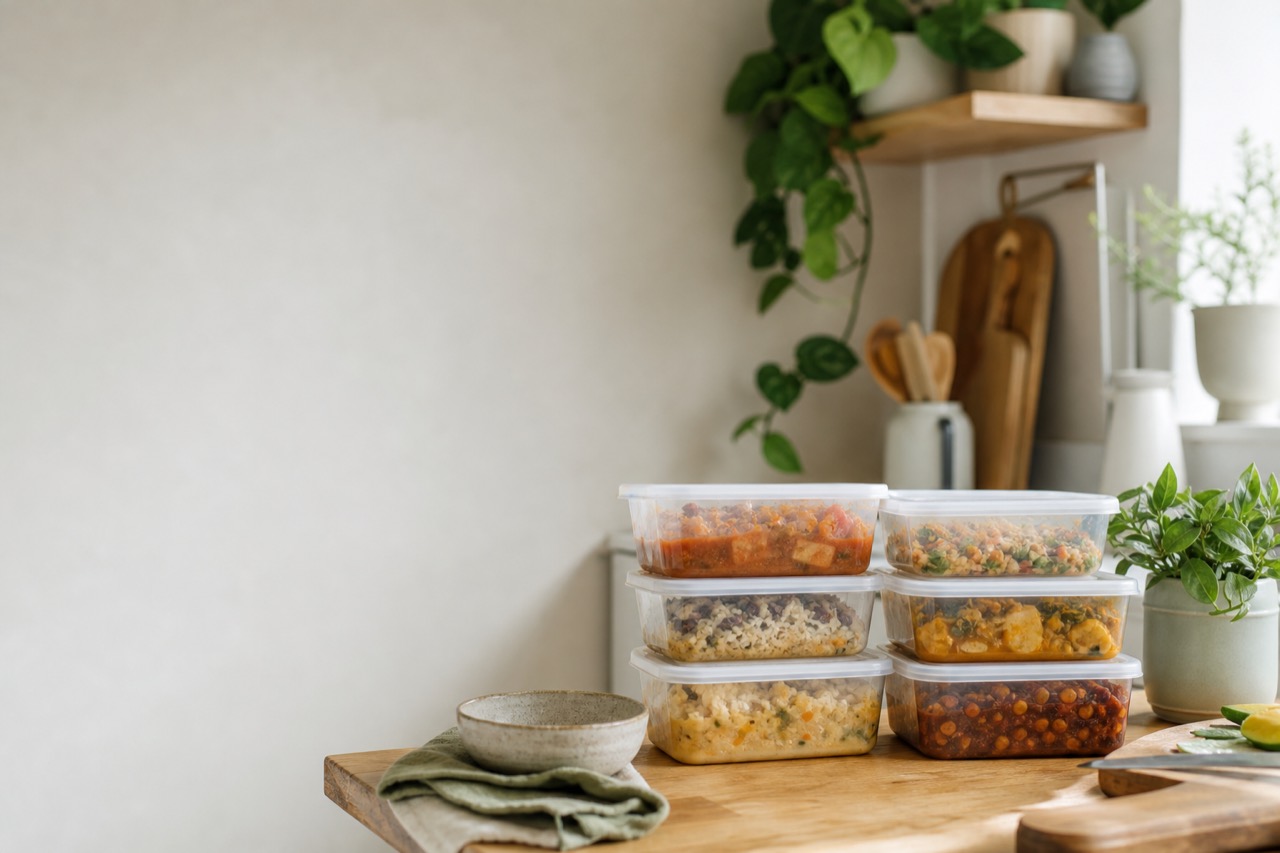
Batch cooking means cooking several meals’ worth in one session, then chilling or freezing portions to eat later. To do it on a budget, build meals around cheap staples (lentils, beans, oats, rice, pasta, potatoes, frozen veg and cheaper cuts of meat), cook three or four big bases that share ingredients, and cool and freeze them quickly. The Food Standards Agency says to refrigerate cooked food within one to two hours, eat fridge leftovers within 48 hours, and keep your freezer around -18°C.
Why batch cooking saves money
- Less waste. You buy ingredients for specific recipes and use them up.
- Bigger, cheaper packs. Large bags of onions, carrots, rice and lentils usually have a lower unit price.
- Less energy per portion. Cooking eight portions of chilli uses barely more energy than cooking two.
- Fewer takeaways. A ready meal in the freezer is the best defence against a tired Friday night order.
Kit you’ll need
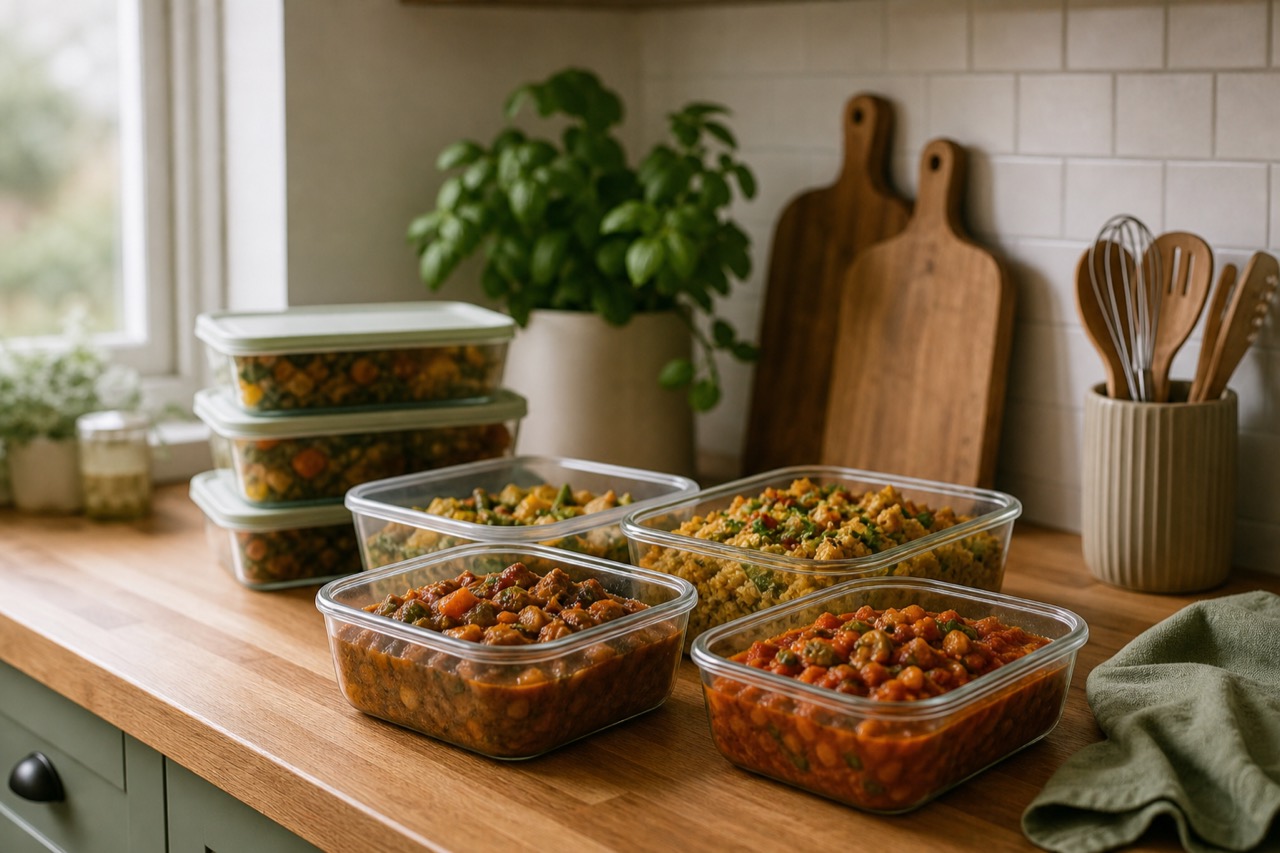
You probably have most of it already:
- One or two large pans or a casserole dish
- A slow cooker (optional but handy for big batches). Browse slow cookers on Amazon.
- Freezer-safe containers or bags. Browse freezer food containers on Amazon or freezer bags.
- A marker pen and labels
- Baking trays for spreading food out to cool quickly
A sample week of freezer meals
This plan uses four bases cooked in one session of around two to three hours. Quantities will depend on how many people you’re feeding, so scale each recipe to give at least two meals.
| Base (cook once) | Main ingredients | Meals it makes |
|---|---|---|
| Big pot of chilli | Mince or lentils (or half and half), tinned tomatoes, kidney beans, onions, peppers, spices | Chilli with rice; jacket potato topping; filling for wraps |
| Vegetable and lentil curry | Red lentils, chickpeas, onions, frozen spinach, tinned tomatoes, curry paste | Curry with rice; curry with naan or flatbread |
| Tomato and veg pasta sauce | Tinned tomatoes, carrots, courgettes, onions, garlic, herbs | Pasta bake; pizza topping; base for a quick soup |
| Soup | Root veg, split peas or lentils, stock | Lunches for several days |
How the week might look
| Day | Meal |
|---|---|
| Monday | Chilli with rice (fresh from the batch) |
| Tuesday | Curry with rice (fresh from the batch) |
| Wednesday | Pasta with tomato and veg sauce |
| Thursday | Jacket potatoes with chilli (from the freezer) |
| Friday | Curry with flatbreads (from the freezer) |
| Saturday | Pasta bake using sauce (from the freezer) |
| Sunday | Leftovers night, or a simple roast if you prefer |
Soup covers lunches. Anything you won’t eat within 48 hours goes straight in the freezer once cooled.
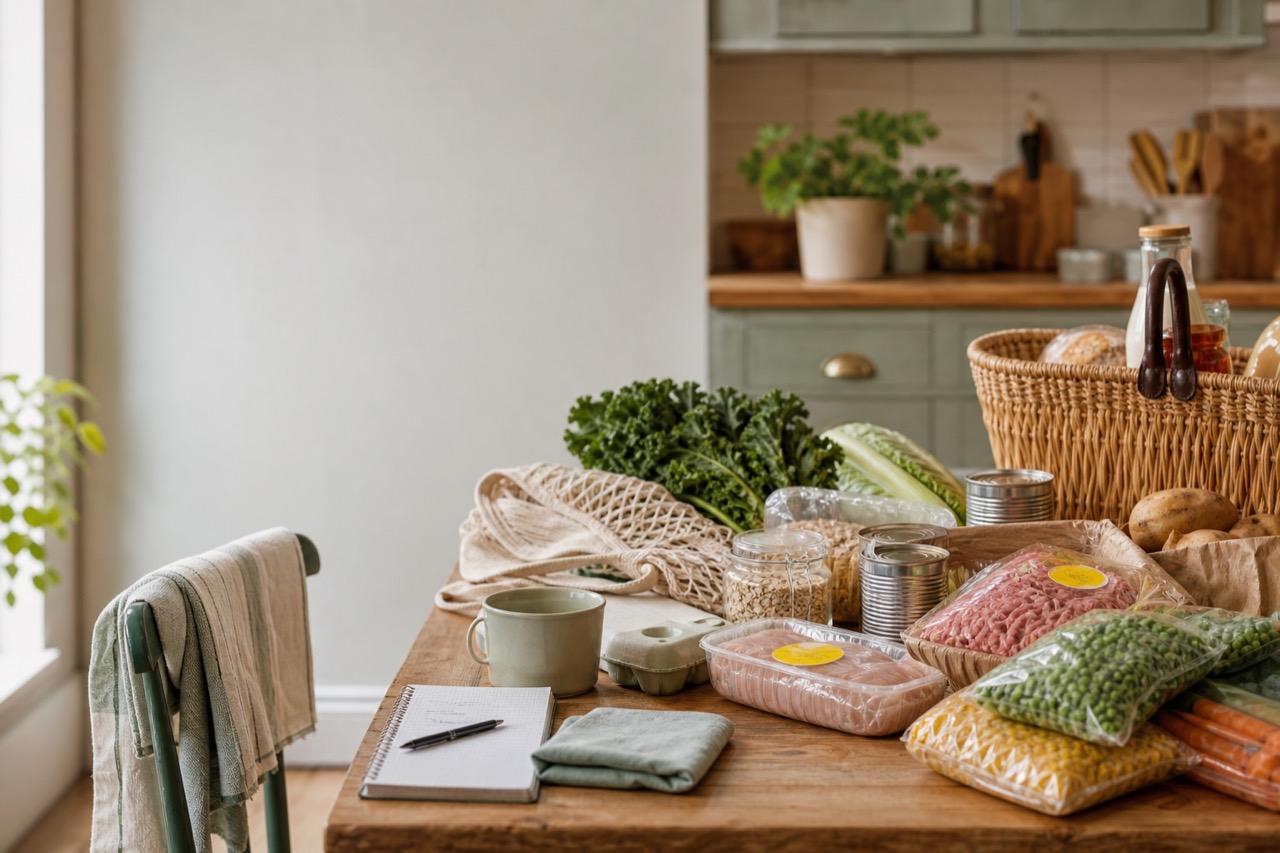
Shopping for batch cooking on a budget
- Plan around overlap. Onions, garlic, tinned tomatoes and spices appear in every base above, so you can buy them in bigger packs.
- Bulk out meat with pulses. Replacing half the mince with lentils or beans stretches it further.
- Use frozen veg. Frozen spinach, peas, peppers and mixed veg are pre-prepared and won’t go off.
- Compare unit prices and try own-brand versions of staples. Our guide to cutting your food shopping bill has more.
- Look for reduced meat you can cook straight away.
Budget-friendly swaps
- Dried lentils and split peas instead of some of the meat: they need no soaking and thicken sauces and soups.
- Tinned or dried beans in chilli, stews and curries.
- Chicken thighs rather than breasts for slow-cooked dishes.
- Frozen onions and peppers if you’re short on time; chopping is the slowest part of batch cooking.
- Stock cubes and dried herbs rather than fresh herbs that wilt before you use them.
- Oats for breakfast, and to bulk out meatballs or crumble toppings.
The batch cooking session, step by step
- Clear space in the fridge and freezer before you start.
- Chop all the onions and veg at once. Most of the time goes on prep.
- Start the longest cook first. The chilli or soup can simmer (or go in the slow cooker) while you make the rest.
- Cook the quickest last. The pasta sauce only needs 20 to 30 minutes.
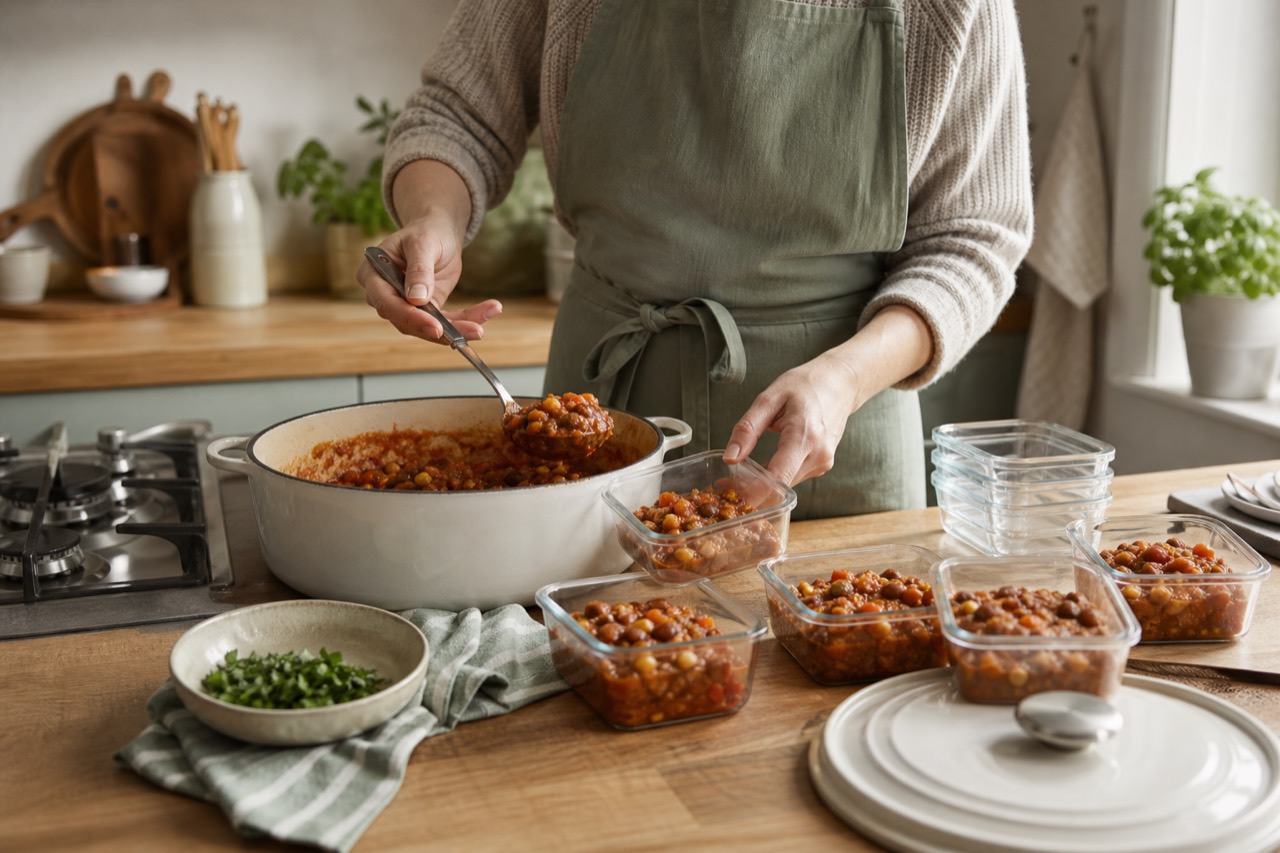
- Cool quickly. Spread food out in shallow containers or trays. Get it into the fridge or freezer within one to two hours of cooking, as the Food Standards Agency advises. Cool rice especially fast: ideally within one hour.
- Portion and label. Write the name and date on every container.
- Freeze flat. Bags laid flat freeze faster and stack neatly.
How long it keeps: Food Standards Agency guidance
| Food or situation | Food Standards Agency guidance |
|---|---|
| Fridge temperature | Between 0°C and 5°C |
| Freezer temperature | Around -18°C |
| Cooling cooked food | Refrigerate within one to two hours |
| Leftovers in the fridge | Eat within 48 hours, or freeze |
| Cooked rice | Chill ideally within one hour; keep in the fridge no more than one day before reheating |
| Freezing before the date | You can freeze food up until midnight on the use-by date |
| Frozen meat | Usually best eaten within 2 to 3 months (quality, not safety) |
| Frozen baked goods, fruit and veg | Usually best within 3 to 4 months (quality, not safety) |
| After defrosting | Defrost in the fridge and use within 24 hours |
| Reheating | Reheat until steaming hot all the way through; reheat rice and previously frozen cooked meat only once |
Freezing keeps food safe, but quality slowly drops over time, which is why the FSA gives “best within” guidance rather than hard limits for frozen food.
Defrosting and reheating safely
- Defrost in the fridge, ideally overnight, so food doesn’t get too warm. Use it within 24 hours.
- In a hurry? Use the microwave’s defrost setting directly before cooking.
- Make sure it’s fully defrosted in the middle before cooking from thawed.
- Reheat until steaming hot all the way through, stirring halfway.
- Reheat once. Don’t reheat the same portion twice, which is why freezing in single or family-meal portions helps.
Energy-saving cooking tips
- Use a slow cooker or the hob for big batches rather than running the oven for hours.
- Keep lids on pans.
- Boil water in the kettle before adding it to the pan.
- Use the microwave to reheat single portions.
See our comparison of air fryer, oven, slow cooker and microwave running costs for the numbers.
Frequently asked questions
How long can I keep batch-cooked food in the fridge?
The Food Standards Agency advises eating leftovers within 48 hours. Cooked rice should be kept in the fridge for no more than one day before reheating. Freeze anything you won’t eat in time.
How long do frozen meals last?
Frozen food stays safe at around -18°C, but quality drops over time. The FSA says meat is usually best within 2 to 3 months, and baked goods, fruit and veg within 3 to 4 months.
Can I put hot food straight in the freezer?
Cool it first, then refrigerate or freeze it within one to two hours. Spreading it into shallow containers speeds up cooling.
Can I refreeze defrosted food?
The FSA says food can be refrozen once it has been cooked, but you’ll only be able to reheat it once after that. Raw food that has been defrosted should be cooked before refreezing.
Is batch cooking actually cheaper?
It usually is, because you buy in larger quantities, waste less, use less energy per portion and are less likely to buy takeaways. How much you save depends on what you’d otherwise eat.
About the author
Daily Offer Deals editorial team
The Daily Offer Deals team checks UK deals by hand and writes practical buying guides. We never claim hands-on testing we have not done.