Ad: this guide contains affiliate links. If you buy through them we may earn commission, at no extra cost to you.
Food & Grocery
How to store food safely so less goes in the bin
Fridge and freezer temperatures, where to put things, date labels and leftovers rules from the Food Standards Agency, plus simple Love Food Hate Waste habits to cut food waste.
By Daily Offer Deals editorial team6 min read
On this page 12 sections
Quick answer
Keep your fridge between 0°C and 5°C and your freezer around -18°C, as the Food Standards Agency (FSA) advises. Refrigerate cooked food within one to two hours, eat leftovers within 48 hours or freeze them, and remember that “use by” is about safety while “best before” is about quality. Storing food well and using the freezer as a pause button are the two easiest ways to waste less and save money.
Why it matters
Every bit of food that goes in the bin is money spent for nothing. WRAP, the charity behind the Love Food Hate Waste campaign, has found that household food waste is the largest source of food waste in the UK. The good news is that most of it is avoidable with a few simple habits.
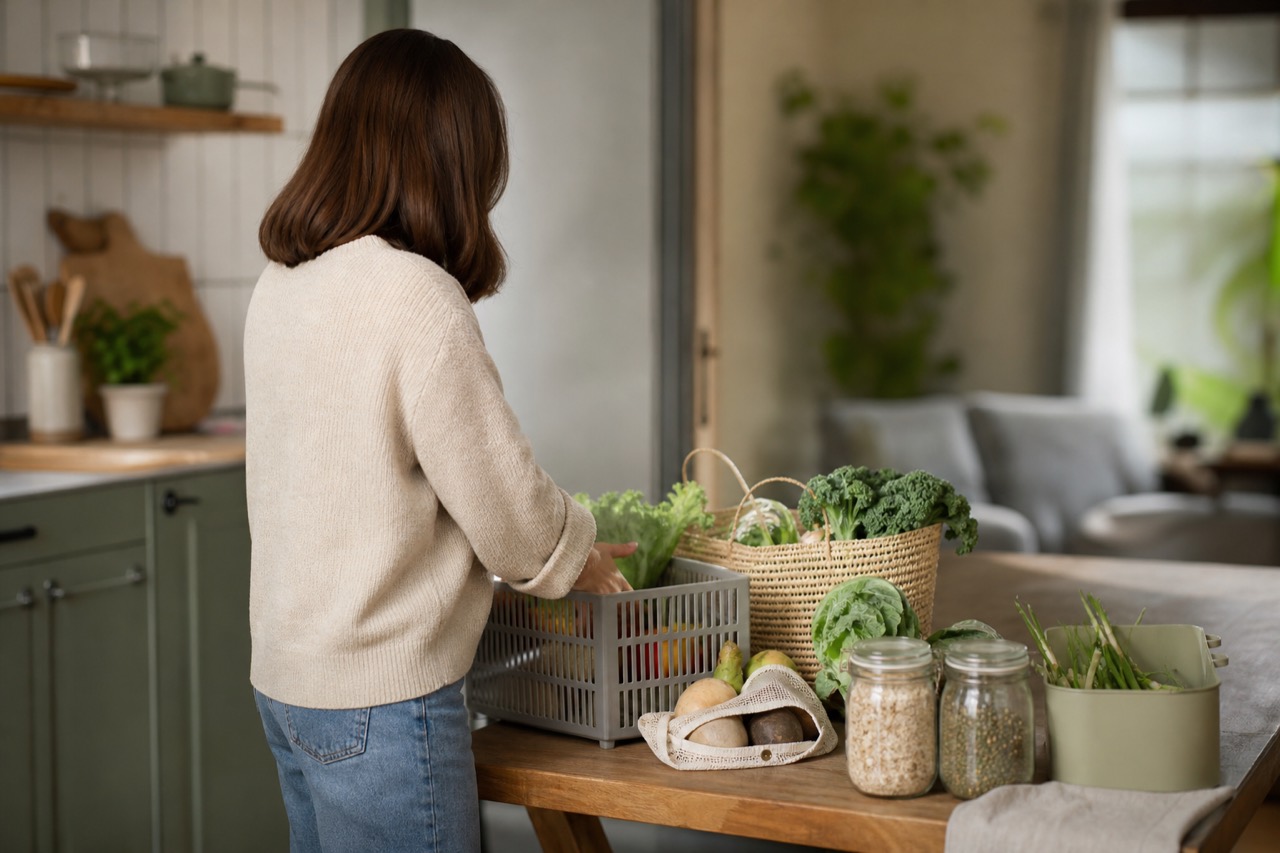
Get the temperatures right
| Appliance | Food Standards Agency guidance |
|---|---|
| Fridge | Between 0°C and 5°C |
| Freezer | Around -18°C |
Many fridge dials show numbers (1 to 5, say) rather than temperatures, and built-in displays aren’t always accurate. A cheap fridge thermometer on the middle shelf tells you what’s really going on. Browse fridge thermometers on Amazon.
Tips for keeping the fridge cold:
- Don’t overfill it: cold air needs to circulate.
- Close the door quickly.
- Let hot food cool before putting it in, but don’t leave it out for more than one to two hours.
- Defrost the freezer if ice builds up, and check door seals are clean and closing properly.
What goes where in the fridge
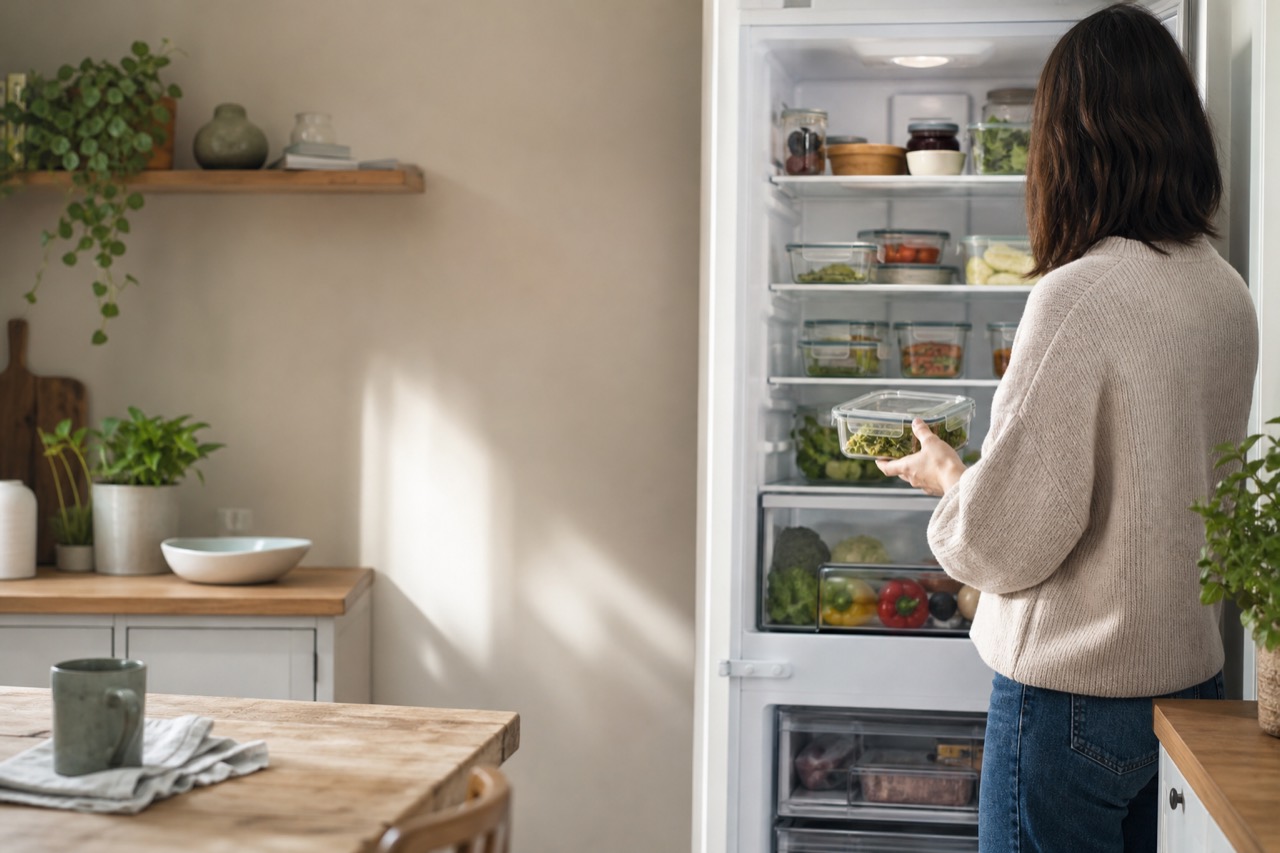
A common approach to fridge layout:
- Top and middle shelves: ready-to-eat food such as leftovers, cooked meats, dairy and anything that doesn’t need cooking.
- Bottom shelf: raw meat and fish, in sealed containers, so juices can’t drip onto other food.
- Salad drawer: fruit and vegetables (washed before eating, not before storing, unless the pack says otherwise).
- Door: the warmest part, so keep it for condiments, juices and drinks.
Love Food Hate Waste has a handy A to Z guide to storing specific foods.
Understand date labels
| Label | What it means | What to do |
|---|---|---|
| Use by | Safety | Don’t eat after this date, even if it looks and smells fine. You can freeze it up to midnight on the use-by date. |
| Best before | Quality | Safe to eat after the date if stored properly, though it may not taste as good. |
| Display until / sell by | For shop staff | Ignore these at home. |
The FSA’s home food fact checker says the “sniff test” isn’t safe for any food with a use-by date. It also says eggs are safe to eat for a couple of days after their best before date if they’re cooked well.
Leftovers: the 1-2-48 rule
From FSA guidance:
- Cool cooked food and refrigerate it within one to two hours.
- Eat leftovers within 48 hours.
- Reheat until steaming hot all the way through, and only once.
Rice is the exception that catches people out. The FSA says to chill leftover rice as quickly as possible, ideally within one hour, and keep it in the fridge for no more than one day before reheating. Never reheat rice more than once.
Clear containers help you see what’s there. Browse glass food storage containers on Amazon.
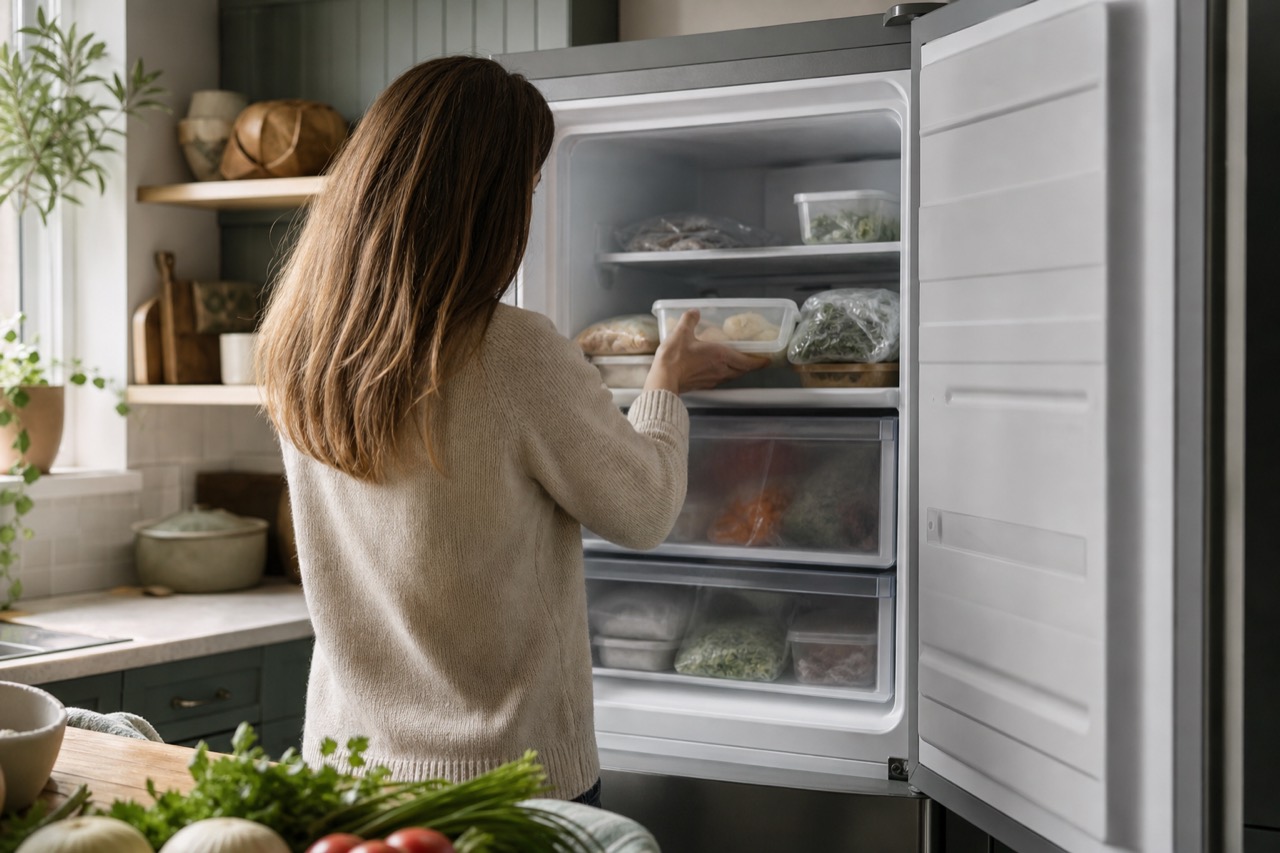
Use the freezer as a pause button
Freezing is one of the best tools for cutting waste:
- Bread: freeze sliced and toast straight from frozen.
- Milk: can be frozen (leave room for it to expand).
- Cooked or parboiled potatoes: the FSA says these freeze well if parboiled for about 5 minutes first.
- Eggs: the FSA says eggs can be frozen and used later (crack them first; don’t freeze in the shell).
- Leftovers and batch-cooked meals: cool, portion, label and freeze.
- Ripe bananas and soft fruit: freeze for smoothies and baking.
The FSA’s guide to how long frozen food is best:
| Frozen food | Usually best within |
|---|---|
| Meat | 2 to 3 months |
| Baked goods, fruit and veg | 3 to 4 months |
These are quality guidelines. Food kept frozen at around -18°C stays safe, but texture and flavour drop over time. Label everything with what it is and the date. Browse freezer bags on Amazon.
Defrosting safely
- Defrost in the fridge so food doesn’t get too warm, and use it within 24 hours.
- If you can’t, use the microwave defrost setting directly before cooking.
- Make sure the centre is fully thawed before cooking, or bacteria may survive.
- Refreezing: the FSA says defrosted food can be refrozen once it’s been cooked, but you’ll only be able to reheat it once after that.
A five-minute weekly fridge check
Pick a regular time, such as the evening before your food shop, and:
- Check the thermometer reads between 0°C and 5°C.
- Pull out anything near its use-by date and plan to eat it in the next day or two, or freeze it.
- Check leftovers against the 48-hour rule, and freeze or bin anything that’s past it.
- Wipe up spills, especially on the bottom shelf where raw meat is kept.
- Write down what needs using up and build the next few meals around it.
The same check for the freezer, once a month, stops things getting lost at the bottom. Keep a simple list on the freezer door of what’s inside and when it went in.
Simple habits that cut waste
- Shop your fridge first. Before writing a shopping list, check what needs using up.
- First in, first out. Move older food to the front when you unpack.
- Plan a “use it up” meal each week: omelettes, soups, stir-fries and pasta bakes take almost anything.
- Buy loose when you only need a little.
- Portion pasta and rice to avoid cooking too much.
- Keep an “eat me first” box in the fridge for things that need using soon.
Our guides to batch cooking a week of freezer meals and cutting your food shopping bill build on these habits.
Frequently asked questions
What temperature should my fridge be?
The Food Standards Agency says between 0°C and 5°C. Use a fridge thermometer to check, as the dial numbers aren’t temperatures.
How long do leftovers last in the fridge?
The FSA advises eating leftovers within 48 hours. Cooked rice should be kept for no more than one day before reheating.
Can I eat food after the best before date?
Yes. Best before is about quality, not safety, so food can be eaten after the date if stored properly. Use-by dates are about safety, so don’t eat food after its use-by date.
Can I freeze food on its use-by date?
Yes. The FSA says you can freeze food right up until midnight on the use-by date.
How long does food last in the freezer?
Frozen food stays safe at around -18°C, but quality declines. The FSA says meat is usually best within 2 to 3 months, and baked goods, fruit and veg within 3 to 4 months.
Can I reheat leftovers more than once?
No. FSA guidance is to reheat until steaming hot all the way through and only once. Rice and previously frozen cooked meat should only be reheated once.
About the author
Daily Offer Deals editorial team
The Daily Offer Deals team checks UK deals by hand and writes practical buying guides. We never claim hands-on testing we have not done.