Ad: this guide contains affiliate links. If you buy through them we may earn commission, at no extra cost to you.
Home & Kitchen
How to stop condensation and mould this winter on a budget (UK)
Cheap, practical ways to cut condensation and mould this winter: reduce moisture, ventilate, heat smartly, measure humidity, clean safely, and what renters can ask for.
By Daily Offer Deals editorial team9 min read
On this page 12 sections
Quick answer
To keep condensation and mould down this winter, cut the moisture you add (lids on pans, doors shut when cooking or showering, laundry dried outside or in a closed, ventilated room), let it out (extractor fans on, trickle vents open, windows opened regularly), and keep the home steadily warm enough that walls and windows don’t get cold. The Centre for Sustainable Energy suggests keeping relative humidity between 40% and 60%. If you rent, report damp and mould to your landlord in writing straight away; fixing the cause is usually their job.
Mould isn’t just ugly. The UK government’s guidance on damp and mould says it mainly affects the airways and lungs and can cause or worsen conditions such as asthma, and that children, older people, pregnant women and people with existing health conditions are most at risk. Here’s how to tackle it without spending much.
Why winter makes it worse
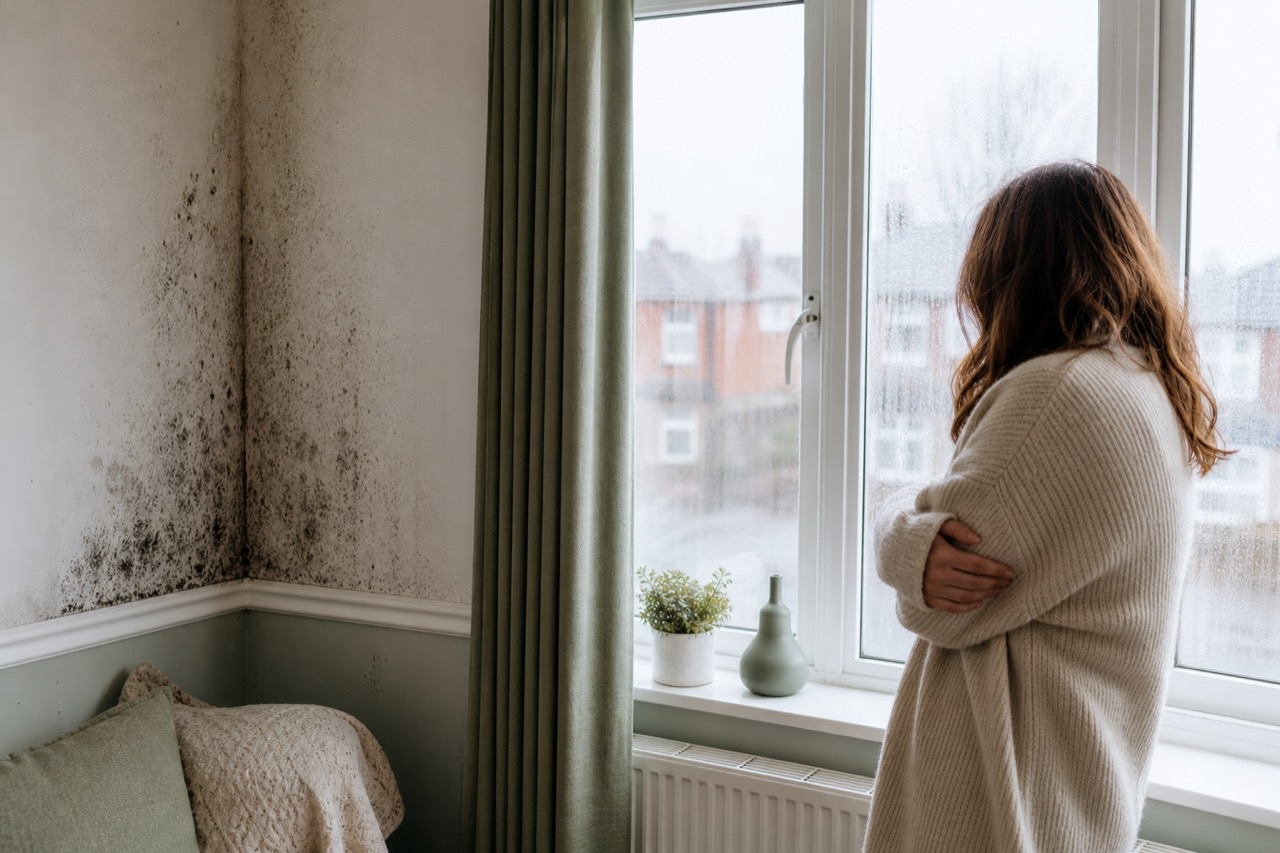
Most damp in ordinary homes is condensation. Everyday things like cooking, showering, drying clothes and even breathing put moisture into the air. When that warm, damp air touches a cold surface, such as a window, an outside wall or the corner behind a wardrobe, it turns back into water. Mould then grows on the wet patches.
In winter we close windows, heat less to save money and dry more washing indoors, so moisture builds up and surfaces stay cold. The government’s guidance is clear that cooking, bathing and drying laundry are normal, and that it’s unreasonable to blame damp and mould on “lifestyle choices”. The fixes below help, but they don’t replace repairs a landlord should make.
Work out what kind of damp you have
| Type | What it looks like | Usual cause | Who usually fixes it (if you rent) |
|---|---|---|---|
| Condensation | Water on windows, black spots in corners, behind furniture and on window frames | Moist air meeting cold surfaces | Often shared: you can reduce moisture, but your landlord may be responsible if heating, ventilation or insulation is the problem |
| Penetrating damp | Damp patches that grow after rain, often on outside walls or ceilings | Leaking roofs, gutters, pipes, cracked walls, rotten windows | Usually the landlord |
| Rising damp | Tide marks low on ground-floor walls | Ground moisture, often a failed damp-proof course | Usually the landlord |
| Leaks | Sudden wet patches near pipes, baths or ceilings | Burst or leaking pipes, overflowing appliances | Usually the landlord, and get it looked at fast |
Damp types can be hard to tell apart, so if a patch doesn’t behave like condensation, ask your landlord or a specialist to check it.
Step 1: Add less moisture
These cost nothing.
- Put lids on pans when cooking.
- Close the kitchen or bathroom door while cooking or showering so steam doesn’t spread to colder rooms.
- Dry laundry outside whenever you can.
- If you must dry indoors, the Centre for Sustainable Energy (CSE) suggests spinning the washing twice first, then drying it in one room with the door closed and a window open, or using a tumble dryer.
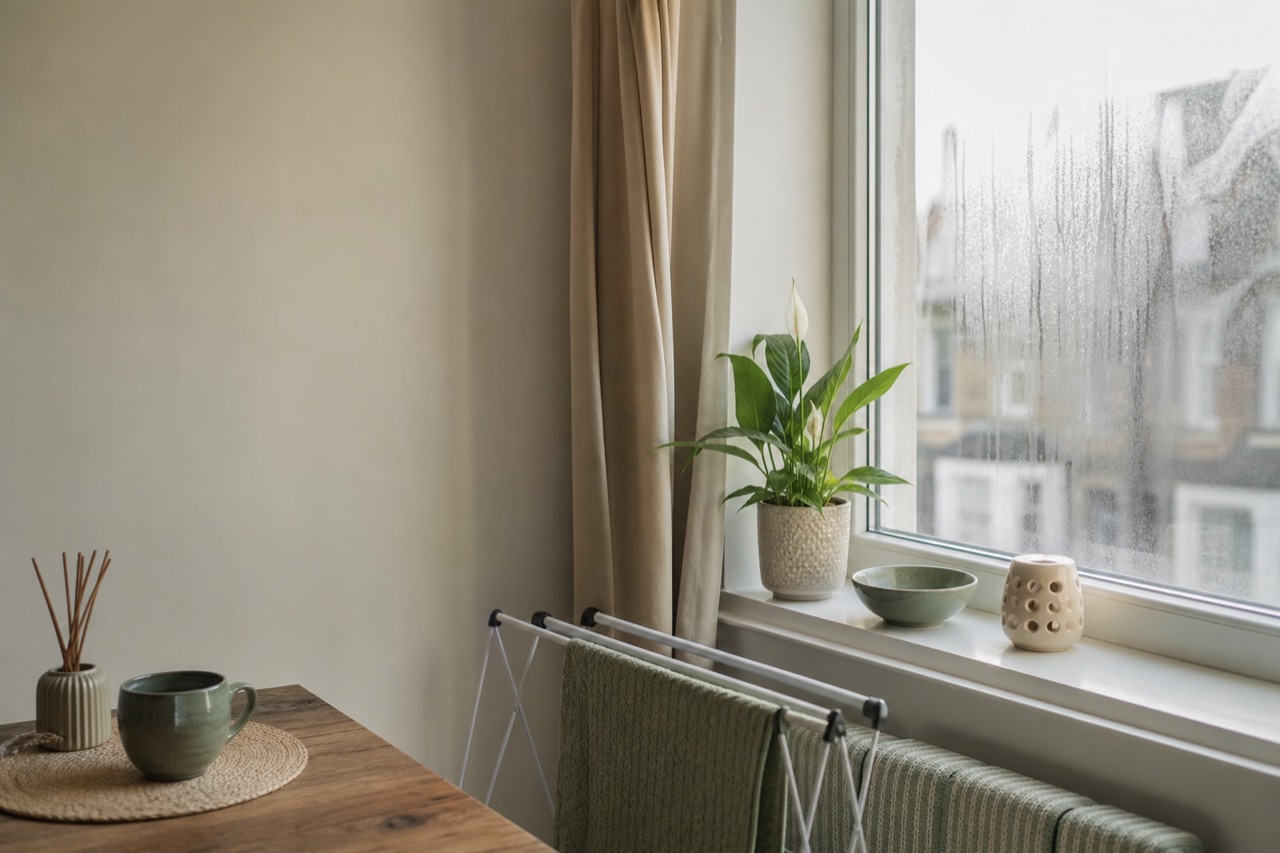
- Don’t dry clothes on radiators with the window shut. Citizens Advice gives this advice, along with venting tumble dryers outside unless they’re the condensing type.
- Avoid portable gas or paraffin heaters, which both Citizens Advice and CSE say add a lot of moisture to the air.
- Make sure clothes are fully dry before putting them away.
Step 2: Let the moisture out
- Use extractor fans every time you cook or shower, and keep them clean. If yours doesn’t work, report it.
- Open trickle vents at the top of windows and leave them open, or leave the kitchen or bathroom window slightly open on the security latch.
- Open windows regularly, especially during and after cooking and showering.
- Keep air bricks and vents clear of furniture, boxes and plants.
- Leave a gap between furniture and outside walls so air can move. Wardrobes against cold walls are a classic mould spot.
- Wipe condensation off windows each morning with a cloth, then wring it out in the sink rather than leaving it to dry on the radiator.
Step 3: Keep surfaces warm (without wasting money)
Cold walls attract condensation, so very low or stop-start heating can make mould worse. CSE advises running the heating regularly in colder months, enough to keep the home dry, and getting the heating serviced and radiators bled.
To keep costs down while doing this:
- Use a timer and thermostatic radiator valves so heat goes where and when you need it.
- Stop draughts around doors and windows, but don’t block vents. Our draught-proofing guide for renters and owners explains the difference.
- Check our guide to saving money on energy bills this winter, and see if you qualify for the Warm Home Discount and other winter payments or Household Support Fund help.
Step 4: Measure, then decide if you need a dehumidifier
A cheap hygrometer shows the humidity in each room. CSE says to aim for 40% to 60% relative humidity, notes mould risk rises above 60%, and says hygrometers can cost as little as £8. Watching the reading for a few days shows you what’s causing the problem, such as drying washing or cooking, and what helps, like opening a window. You can browse digital hygrometers on Amazon.
If the readings stay high after the steps above, a dehumidifier can help. CSE’s advice:
| CSE guidance on dehumidifiers | What it says |
|---|---|
| When to use one | Severe cases, or when you can’t do all the other steps |
| Capacity to look for | At least 5 litres of water removed every 24 hours |
| Humidity setting | Under 60% if possible |
| Best use | Close the doors and windows of the room it’s in |
| Cost | Decent models start at around £100 and cost about 17p an hour to run, based on November 2023 electricity prices |
Running costs depend on the model and your tariff, so check the wattage on the listing. Running a dehumidifier in the room where you dry washing can do two jobs at once. See our dehumidifier deals if you decide you need one.

Step 5: Clean small patches of mould safely
For small areas of surface mould, CSE suggests spraying with a bleach-based mould product, letting it dry and repeating, treating an area at least 1 metre wider than the visible patch, and treating again whenever it comes back. Follow the product label, keep the room ventilated, and wear gloves. Never mix bleach with other cleaning products. You can browse mould remover spray on Amazon.
Throw away soft furnishings or wallpaper that are too badly affected to clean. For large areas, mould that keeps coming back, or if anyone in the home is unwell, don’t keep scrubbing. Get the cause investigated. The government’s guidance says landlords should use professionals for larger areas.
If you rent: report it, and keep a record
Citizens Advice says your landlord shouldn’t blame you for damp in your home, and that it’s the landlord’s job to find the cause. Landlords are usually only responsible once they know about the problem, so:
- Report it straight away using your landlord’s official contact method, in writing if you can.
- Take dated photos and note any health problems in the household.
- Keep copies of everything you send and receive.
- Report again if it gets worse.
Social housing in England. The gov.uk guidance for social housing tenants explains Awaab’s Law. It says significant damp and mould hazards must be investigated within 10 working days and made safe within 5 working days after the investigation, and emergency hazards must be dealt with within 24 hours. Landlords must send a written summary within 3 working days of an investigation. If you’re unhappy with your landlord’s complaint response, you can go to the free Housing Ombudsman.
Private renters. The gov.uk Awaab’s Law tenant guidance says it covers social housing tenants, not private renters. If your private landlord doesn’t act, it suggests free advice from Shelter, Citizens Advice or your council’s environmental health team.
Rules differ in Wales, Scotland and Northern Ireland, so check the Citizens Advice page for where you live.
Deals we found this week
These were showing a deal badge on Amazon UK when we last checked. We don’t show prices because they change through the day.
- AEOCKY 25L/D Compressor Dehumidifier for Home, Laundry Drying, Drain: check today’s price on Amazon
- Pro Breeze® OmniDry 12L/Day Dehumidifier with Automatic Humidity Sensor &: check today’s price on Amazon
- Pro Breeze® 12L/Day Dehumidifier with Automatic Humidity Sensor & Display,: check today’s price on Amazon
- Pro Breeze 6L Compressor Dehumidifier with 2L Water Tank, Laundry Drying &: check today’s price on Amazon
- Pro Breeze Dehumidifier 1500ml Portable Air Dehumidifier for Damp, Mould,: check today’s price on Amazon
- Pro Breeze Osmo® Dehumidifier - Silent & Refillable Moisture Absorber for Damp: check today’s price on Amazon
Frequently asked questions
Does leaving the heating on low stop mould?
Keeping the home steadily warm helps because surfaces stay warmer and condensation forms less. CSE advises running the heating regularly in colder months, enough to keep the home dry. Combine it with ventilation, as heat alone won’t remove moisture.
Is it safe to dry clothes indoors in winter?
It’s common, but it adds a lot of moisture. If you have to, dry them in one room with the door closed and a window open or extractor fan on, or use a dehumidifier or tumble dryer. Avoid drying on radiators with the windows shut.
What humidity level should my home be?
The Centre for Sustainable Energy suggests between 40% and 60% relative humidity, with mould risk rising above 60%. A cheap hygrometer will tell you where each room sits.
Can damp and mould make you ill?
Yes. The government’s guidance says the main effects are on the airways and lungs, including coughing, wheezing and worsened asthma, and that children, older people, pregnant women and people with existing conditions are most at risk. Speak to a GP or pharmacist if you’re worried about symptoms.
Is my landlord responsible for condensation mould?
Often, yes. Citizens Advice says landlords may be responsible if the damp is caused by unrepaired heating or ventilation, if your tenancy requires the home to be fit to live in, or if it has caused damage they must repair. Report it in writing and keep a record.
Do I need a dehumidifier?
Not always. Try reducing moisture and improving ventilation first. CSE suggests a dehumidifier for severe cases or when you can’t do the other steps, and recommends one that removes at least 5 litres a day.
About the author
Daily Offer Deals editorial team
The Daily Offer Deals team checks UK deals by hand and writes practical buying guides. We never claim hands-on testing we have not done.