Ad: this guide contains affiliate links. If you buy through them we may earn commission, at no extra cost to you.
Toys & Kids
Kids' toys for Christmas 2026 by age: a safety-first buying guide
Choose toys by age, check UKCA or CE marks, and avoid hidden hazards like button batteries, magnets and water beads, with OPSS advice for buying on marketplaces.
By Daily Offer Deals editorial team7 min read
On this page 9 sections
Quick answer
The safest way to buy toys this Christmas is to choose by age label, buy from sellers you can identify, and check for a UKCA or CE mark on the toy or its packaging. Be especially careful with toys containing button batteries, small powerful magnets or water beads, and keep anything marked “not suitable for children under 36 months” away from babies and toddlers. If something seems unsafe when it arrives, stop using it and check GOV.UK’s product recalls.
Toys are one of the most bought categories around Black Friday and Christmas, and most are perfectly safe. But cheap toys from unknown sellers on online marketplaces can slip through without meeting UK safety rules. This guide covers what to look for at every age.
How toy safety works in Great Britain
Toys sold in Great Britain must meet the Toys (Safety) Regulations 2011. Among other things, these cover choking hazards, chemicals, electrical safety, flammability and labelling. Toys must carry a recognised conformity marking. In Great Britain, both the UKCA mark and the CE mark are currently recognised, and the government’s Office for Product Safety and Standards (OPSS) tells shoppers to look for them.
The UK government has been reviewing toy safety rules, including how they apply to online marketplaces and connected toys, so the details may change. Check GOV.UK for the latest.
The OPSS checklist for online marketplaces
OPSS’s 2026 guidance on shopping safely on online marketplaces suggests:
- Check the seller: their name, location and how long they’ve been selling.
- Read reviews carefully: look for detailed reviews mentioning quality or safety, and read some negative ones.
- Look for safety markings such as UKCA or CE.
- See if the product has been recalled by searching “product recalls” on GOV.UK.
- Check the listing has clear descriptions and any instructions or warnings.
- When it arrives, check it matches the description and follow the safety guidance.
The hazards to know about
Small parts and choking
Toys with small parts carry a warning that they’re not suitable for children under 36 months, often shown as a symbol with a child’s face and “0-3” crossed out. This isn’t about how clever a child is. It’s about the risk of choking on small pieces. Siblings’ toys are a common source of small parts in homes with babies.
Button batteries
Button and coin batteries are found in many toys, remote controls, cards and decorations. If swallowed, they can cause serious internal burns very quickly. Child safety charities such as the Child Accident Prevention Trust (CAPT) advise:
- choosing toys where the battery compartment is secured with a screw
- keeping spare and used batteries out of reach
- going to A&E immediately if you think a child has swallowed one
Magnets
Small, powerful magnets can attract each other inside the body if more than one is swallowed, causing serious injury. Be wary of magnetic building sets and novelty magnets from unknown sellers, and check pieces regularly for damage.
Water beads
OPSS issued a Product Safety Alert in 2024 warning about water beads (also sold as water crystals, jelly beads and similar names). It says they should be kept away from children under 5, and that older children should only use them under close adult supervision. They expand when exposed to liquid, and if swallowed can cause serious harm. Seek medical help immediately if you suspect a water bead has been swallowed.
Cords, strings and ride-ons
Long cords can be a strangulation risk for young children. Ride-on toys, scooters and bikes need the right safety gear, such as a helmet.
Electrical and connected toys
Rechargeable toys should come with a suitable charger and UK plug. Connected toys (with apps, cameras or microphones) should let you change default passwords and come with information about security updates.
Toys by age: what to look for
| Age | Good toy types | Safety focus |
|---|---|---|
| 0-12 months | Soft toys, rattles, activity gyms, stacking cups, board books | No small parts; no long cords; washable; check seams |
| 1-2 years | Push-along toys, shape sorters, chunky blocks, simple puzzles | Sturdy; no small parts; secure battery compartments |
| 3-4 years | Role play, dressing up, large construction bricks, art kits, balance bikes | Age labels matter; check costumes are flame-resistant; helmet for bikes |
| 5-7 years | Board games, building sets, craft kits, scooters, science kits | Small parts are fine but keep away from younger siblings |
| 8-11 years | Strategy games, model kits, coding toys, sports kit | Magnets in sets; electrical safety; online features |
| 12+ | Hobby kits, tech gadgets, sports equipment | Chargers and batteries; app privacy settings |
0-12 months
Babies explore with their mouths, so choose toys that are too big to fit in the mouth, have no detachable parts, and are easy to wash. Avoid toys with long ribbons or cords.
1-2 years
Toddlers love toys they can push, pull, stack and sort. Look for robust toys that won’t break into small pieces when thrown. Check any battery-operated toy has a screwed-shut compartment. Browse toddler toys.
3-4 years
Imaginative play takes off. Dressing-up costumes should be labelled as meeting the relevant flammability standard and kept away from candles and fires. A balance bike or scooter should come with a helmet. Our Christmas gifts page has more ideas.
5-7 years
Construction sets, board games and craft kits are popular. Small parts become fine for this age, but keep them away from younger siblings. Look at building sets for kids and family board games.
8-11 years
Science kits, coding toys, model kits and sports equipment suit this age. Check chemistry sets are age-appropriate and follow supervision guidance. For connected toys, set up parental controls before the big day.
12 and over
Teens often want tech, hobby kits or sports gear. Check chargers are genuine and suitable, and that any gadget has privacy settings you’re both comfortable with. A STEM kit for teens can be a good alternative to another screen.
Buying toys on Black Friday safely
- Stick to sellers you can identify, with a UK address and returns policy.
- Be suspicious of famous-brand toys at very low prices. Counterfeit toys may not meet safety rules.
- Check the age label on the listing and the box.
- Look for UKCA or CE markings and instructions in English.
- Check recalls on GOV.UK before buying popular toys from unfamiliar sellers.
- Keep receipts. Your usual consumer rights apply.
Browse the Black Friday deals for toy offers from well-known retailers.
After Christmas Day
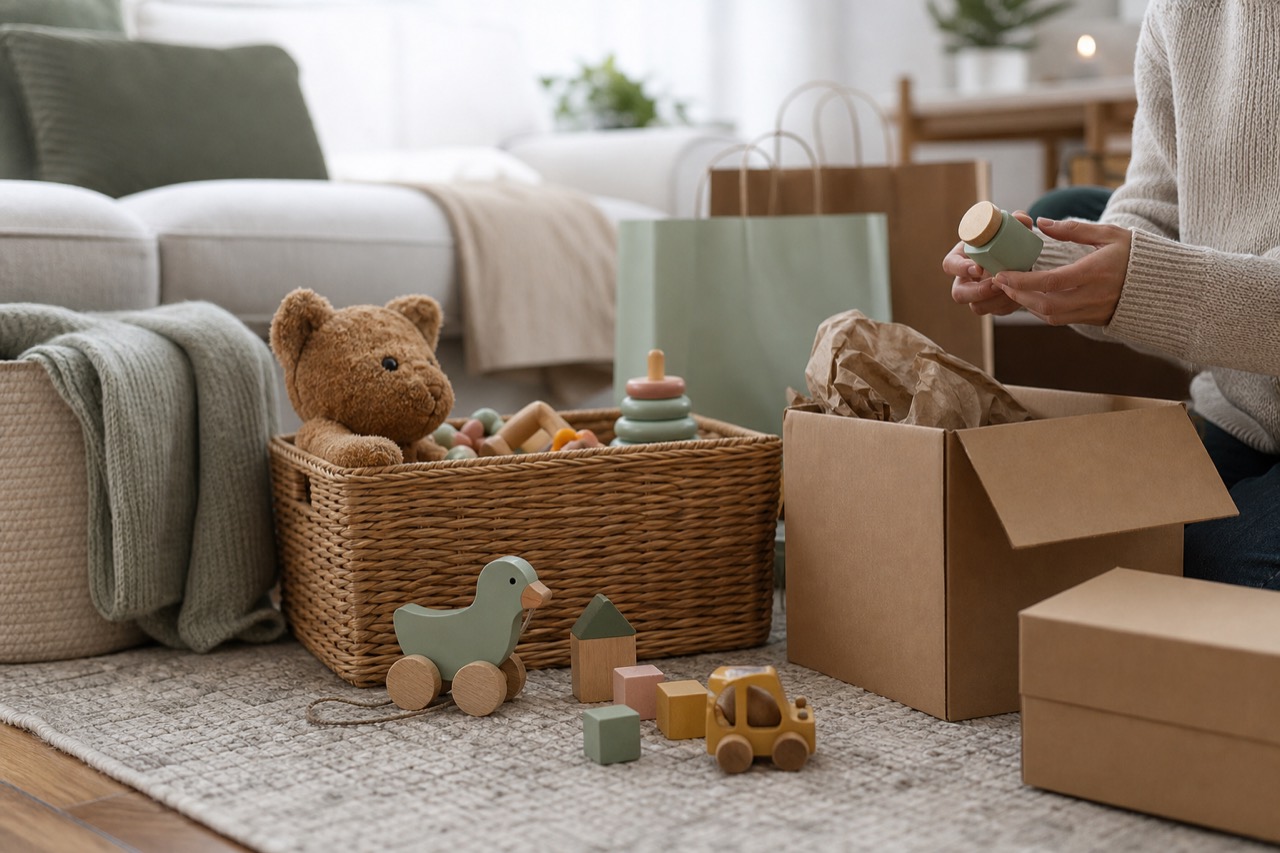
- Remove and recycle packaging promptly. Plastic bags and ties are hazards for small children.
- Read the instructions and follow assembly guidance.
- Supervise new ride-on toys, science kits and anything with water or heat.
- Store older children’s toys separately from babies’ and toddlers’.
- Register products with the manufacturer, where offered, so you hear about recalls.
What to do if a toy seems unsafe
- Stop using it and keep it out of reach.
- Check GOV.UK’s product safety alerts, reports and recalls.
- Contact the seller or marketplace.
- Report it to Trading Standards through the Citizens Advice consumer helpline (or Advice Direct Scotland in Scotland).
Sources
- GOV.UK: Consumer product safety advice for staying safe
- GOV.UK (OPSS): Shopping safely on online marketplaces leaflet, 2026
- GOV.UK: Product Safety Alert: Water beads (PSA7)
- GOV.UK: Product safety alerts, reports and recalls
- The Toys (Safety) Regulations 2011 (legislation.gov.uk)
- GOV.UK: Toys safety regulations call for evidence
- RoSPA: Home safety
- Child Accident Prevention Trust: Button batteries
Frequently asked questions
What does the UKCA mark mean on toys?
It’s the UK conformity mark showing the manufacturer says the toy meets GB safety rules. The CE mark is also currently recognised in Great Britain. OPSS advises looking for UKCA or CE markings when buying online.
Are toys from online marketplaces safe?
Many are. But OPSS advises checking the seller, reading detailed reviews, looking for safety markings and checking for recalls, because unsafe products from unknown sellers can appear on marketplaces.
Why do toys say “not suitable for children under 36 months”?
Usually because they contain small parts that could be a choking hazard for babies and toddlers. It’s a safety warning, not a judgement about ability.
Are water beads safe for children?
OPSS has warned that water beads should be kept away from children under 5 and only used by older children under close supervision. Seek medical help straight away if you think one has been swallowed.
What should I do if my child swallows a button battery?
Go to A&E immediately, taking the battery packaging if you have it. Don’t wait for symptoms. Child safety organisations such as CAPT have more guidance on preventing button battery injuries.
About the author
Daily Offer Deals editorial team
The Daily Offer Deals team checks UK deals by hand and writes practical buying guides. We never claim hands-on testing we have not done.