Ad: this guide contains affiliate links. If you buy through them we may earn commission, at no extra cost to you.
Toys & Kids
Toddler Cups Explained: Sippy, Straw and 360 Cups by Age
Open, free-flow, straw or 360? A simple age-by-age guide to toddler cups, what NHS advice says about valves and bottles, and how to choose.
By Daily Offer Deals editorial teamUpdated 6 min read
On this page 10 sections
Quick answer
NHS guidance suggests introducing a cup from around 6 months, offering sips of water from an open cup or a free-flow cup without a valve, because sipping is better for developing teeth than sucking. Straw cups and 360 cups (which let a child drink from any point around the rim) can be handy at home and out and about. Aim to move away from bottles around your child’s first birthday. Many families use a mix: an open cup for practice at meals, and a spill-resistant cup for nappy bags and car journeys.
Why cups matter
Learning to drink from a cup is a skill, a bit like learning to use a spoon. NHS advice is to start offering a cup from around 6 months, when your baby begins solid foods. At this stage they will only take small sips of water with meals; milk remains their main drink.
The reason open and free-flow cups are recommended is simple: they encourage sipping rather than sucking. Long periods of sucking from a bottle or valved cup, particularly with anything other than water or milk, can be harder on teeth. Dental guidance also suggests keeping juice and sugary drinks to a minimum.
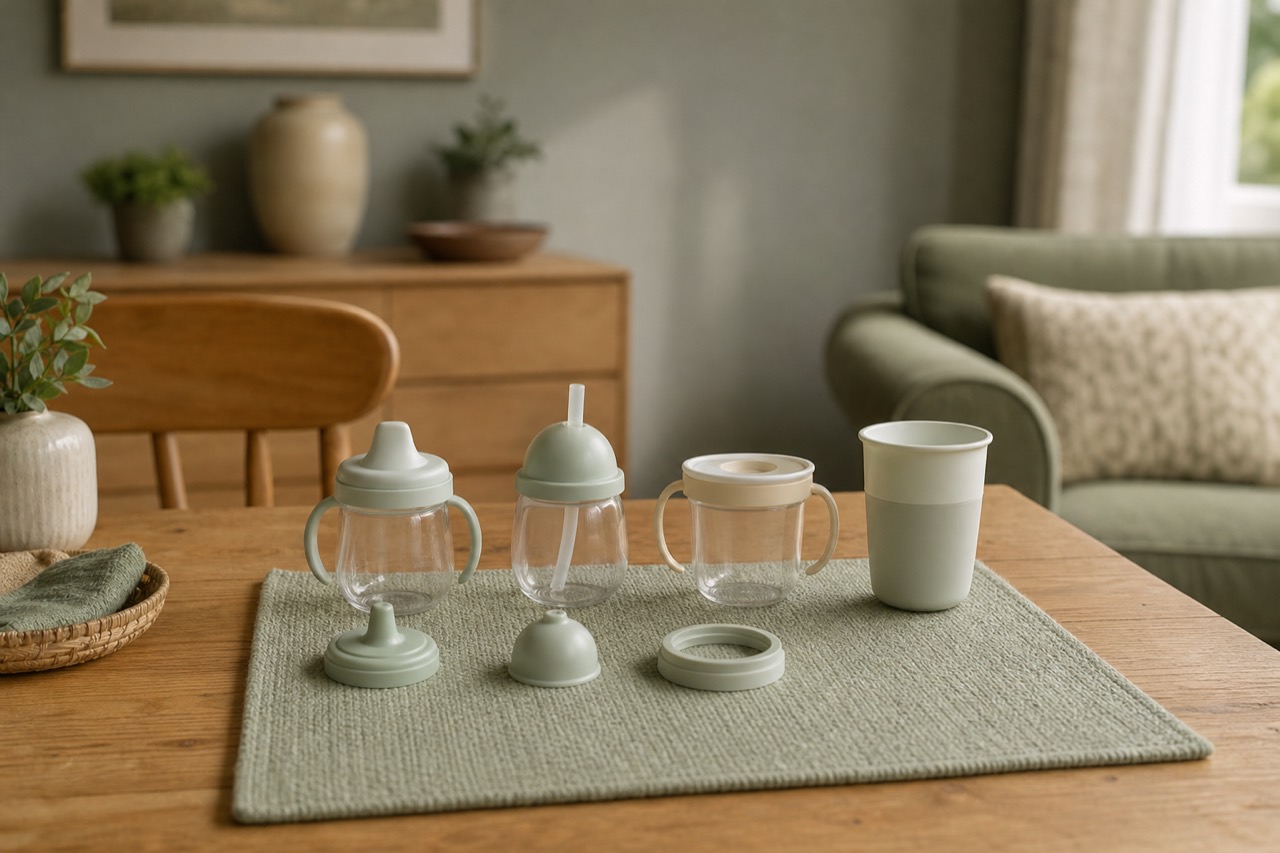
The main types of toddler cup
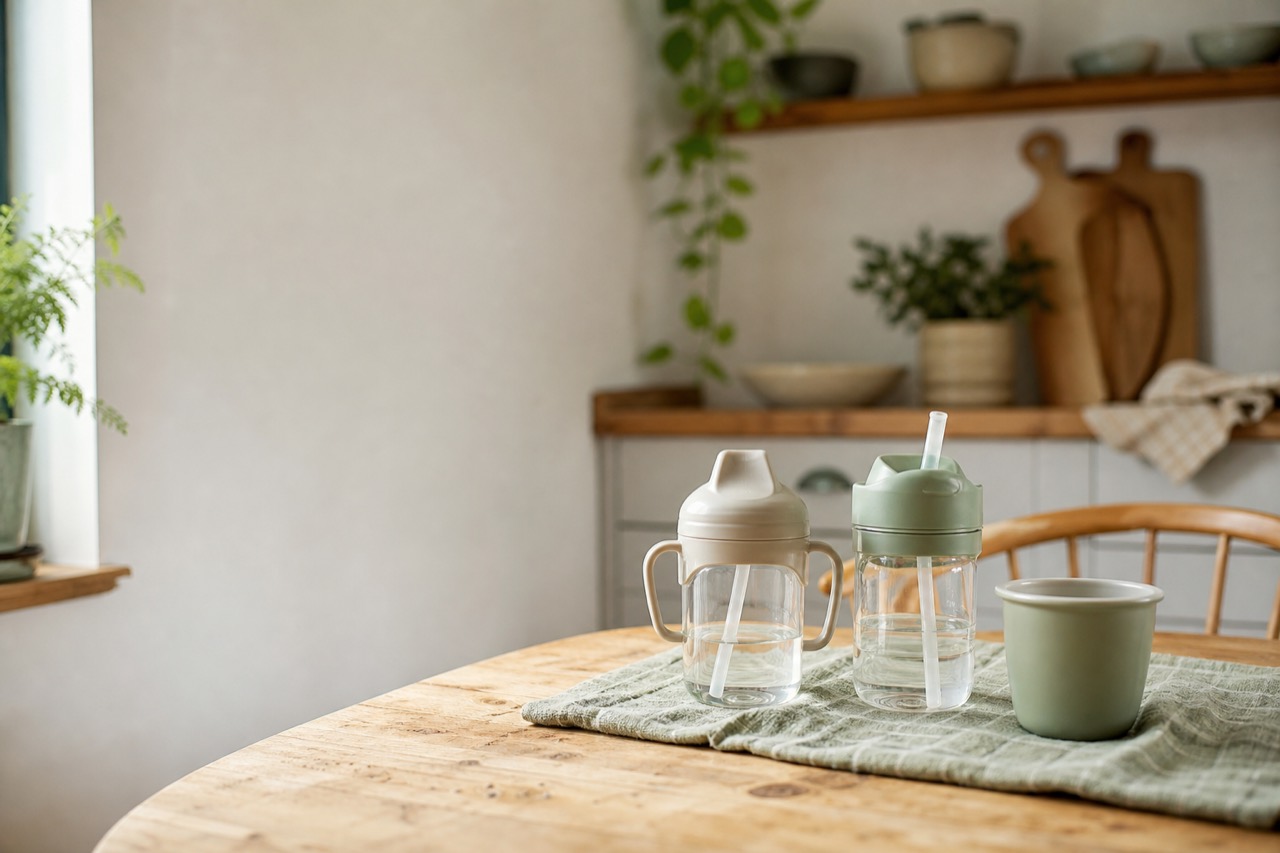
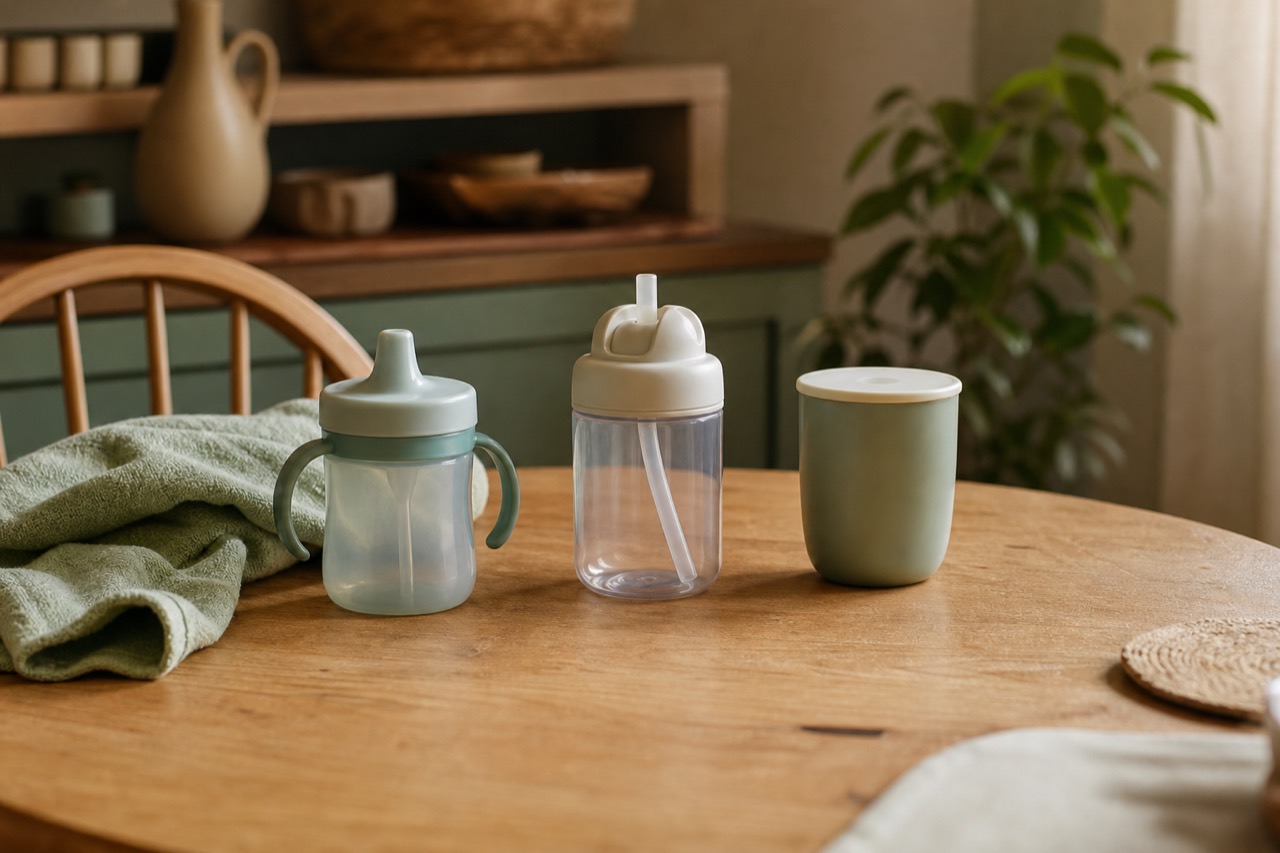
Open cups
A small, regular cup without a lid. It is messy at first but teaches the most natural drinking technique. Start with a tiny amount of water and expect spills.
Free-flow beakers (spouted, no valve)
These have a lid and spout, but water flows without sucking. They are a gentle step between a bottle and an open cup. Look for “free-flow” or “no valve” on the packaging if you are following NHS advice.
Valved “non-spill” sippy cups
These have a valve that stops leaks but means your child has to suck to drink. They are convenient for travel, but guidance generally prefers free-flow options for everyday use.
Straw cups
Your child sips through a straw. Straw drinking is a different mouth movement to sucking from a teat and many parents find it a useful skill. Weighted straws let a child drink even when the cup is tipped.
360 cups
These have a rim that seals until your child puts their lips on it and tips the cup, a bit like drinking from an open cup. They can be less messy than an open cup while encouraging a similar technique.
Cups by age: a rough guide
Every child is different, so treat these as general stages rather than rules. Always follow the age guidance on the product.
| Age | Cup types to try | What to look for | Tips |
|---|---|---|---|
| Around 6 months | Open cup, free-flow beaker | Small, light, easy-grip handles | Offer sips of water with meals; help hold the cup |
| 6 to 12 months | Free-flow beaker, 360 cup, straw cup | Soft spout or rim, handles | Practise at every meal; keep milk as main drink |
| 12 months+ | Open cup, straw cup, 360 cup | Bigger capacity, sturdy build | NHS suggests moving from bottles around now |
| 2 years+ | Open cup, straw bottle | Leak-resistant lid for days out | Water and milk are the best everyday drinks |
Cups on our radar
| Product | Best for | What to look for | Deal |
|---|---|---|---|
| Munchkin Miracle 360 Sippy Cup, 2 Pack (6m+, 207 ml) | Practising open-cup style drinking with fewer spills | The 360 rim seals when not in use; check cleaning parts | Munchkin Miracle 360 Sippy Cup, 2 Pack |
| Munchkin Perfect Angle Toddler Straw Cup (12m+) | Toddlers learning to use a straw | Angled straw design; check how the straw parts come apart | Munchkin Perfect Angle Toddler Straw Cup |
| Munchkin Tip and Sip Straw Cup, 2 Pack | Spares for nursery and home | Check the age guidance and valve design on the listing | Munchkin Tip and Sip Straw Cup |
| Tommee Tippee Insulated Active Spout Toddler Sippy Cup | Days out when you want cooler water for longer | Check whether the spout is valved, and the age guidance | Tommee Tippee Insulated Active Spout Sippy Cup |
| NUK Kiddy Cup Toddler Cup, 300 ml (12+ months) | A simple spouted cup for toddlers | Spout type, capacity and handle options | NUK Kiddy Cup Toddler Cup |
| Munchkin Stay Cool Water Bottle with Straw (24m+) | Older toddlers and nursery bags | Insulation, leak-resistant lid, easy-clean straw | Munchkin Stay Cool Water Bottle with Straw |
Product listings explain whether a cup is valved or free-flow. If you want to follow NHS advice closely, check this detail before you buy.
What to look for when choosing
- Age suitability. The manufacturer’s age guide reflects spout or straw design and size.
- Valve or free-flow. Free-flow is generally preferred for everyday drinking; valved cups are handy for travel.
- Handles. Two handles help younger babies grip; older toddlers often prefer no handles.
- Easy cleaning. Fewer parts, wide openings and dishwasher-safe components (check the listing) make life easier. Small valves and straws need a little brush.
- Materials. Look for clearly labelled BPA-free plastics, stainless steel or silicone.
- Capacity. Smaller cups are lighter for tiny hands; bigger ones suit older toddlers.
Moving away from bottles
NHS advice is to start moving from bottles to cups from around 6 months, and to encourage your baby to stop using bottles by around 12 months. If your toddler is attached to a bedtime bottle, a gradual approach often works: swap one bottle feed at a time for a cup, starting with the daytime feeds. Your health visitor is a good source of tailored advice.
Keeping cups clean
Straws and valves can trap milk and moisture, so take cups apart after each use. Wash with hot soapy water and a small bottle or straw brush, and let all parts air-dry fully before reassembling. Check regularly for cracks, splits or bite marks in spouts and straws, and replace parts that look worn.
Avoid these common mistakes
- Using juice to “encourage” cup use. Water and milk are the best drinks for toddlers’ teeth.
- Letting a toddler carry a cup all day. Constant sipping of anything other than water is harder on teeth.
- Expecting no mess. Spills are part of learning. A bib and a wipeable floor help.
FAQ
When should my baby start using a cup?
NHS guidance suggests introducing a cup from around 6 months, alongside solid foods, offering small sips of water at mealtimes.
Are sippy cups bad for teeth?
Valved sippy cups require sucking, so guidance generally prefers open or free-flow cups for everyday use. What goes in the cup matters too: stick to water and milk, and keep sugary drinks to a minimum.
Is a 360 cup the same as an open cup?
Not quite, but it is similar. A 360 cup encourages your child to tip and sip from the rim like an open cup, with a seal that reduces spills. Many parents use both.
How do I clean a straw cup properly?
Take it apart after each use, wash all parts in hot soapy water with a straw brush, and let them air-dry fully. Replace straws and valves if they crack or discolour.
About the author
Daily Offer Deals editorial team
The Daily Offer Deals team checks UK deals by hand and writes practical buying guides. We never claim hands-on testing we have not done.