Ad: this guide contains affiliate links. If you buy through them we may earn commission, at no extra cost to you.
Electronics
Smartwatch vs fitness tracker vs smart ring: which wearable should you buy? (UK 2026)
Smartwatch, fitness tracker or smart ring? Compare features, comfort, charging and subscription costs to pick the right wearable for yourself or as a Christmas gift.
By Daily Offer Deals editorial team9 min read
On this page 12 sections
Quick answer
Pick a smartwatch if you want notifications, apps, maps, contactless payments and fitness tracking in one device, and you don’t mind charging it often. Pick a fitness tracker if you mainly want steps, heart rate, sleep and workouts on a simple, slim band. Pick a smart ring if you want discreet sleep and recovery tracking with no screen at all. Before you buy any of them, check whether the full features need a monthly subscription, because that can change the real cost a lot.
Wearables are one of the most searched-for gifts in the run-up to Black Friday (27 November 2026), Cyber Monday (30 November) and Christmas. The three main types look alike in adverts but suit very different people. This guide sets out the trade-offs so you can match the device to the person, not the hype.
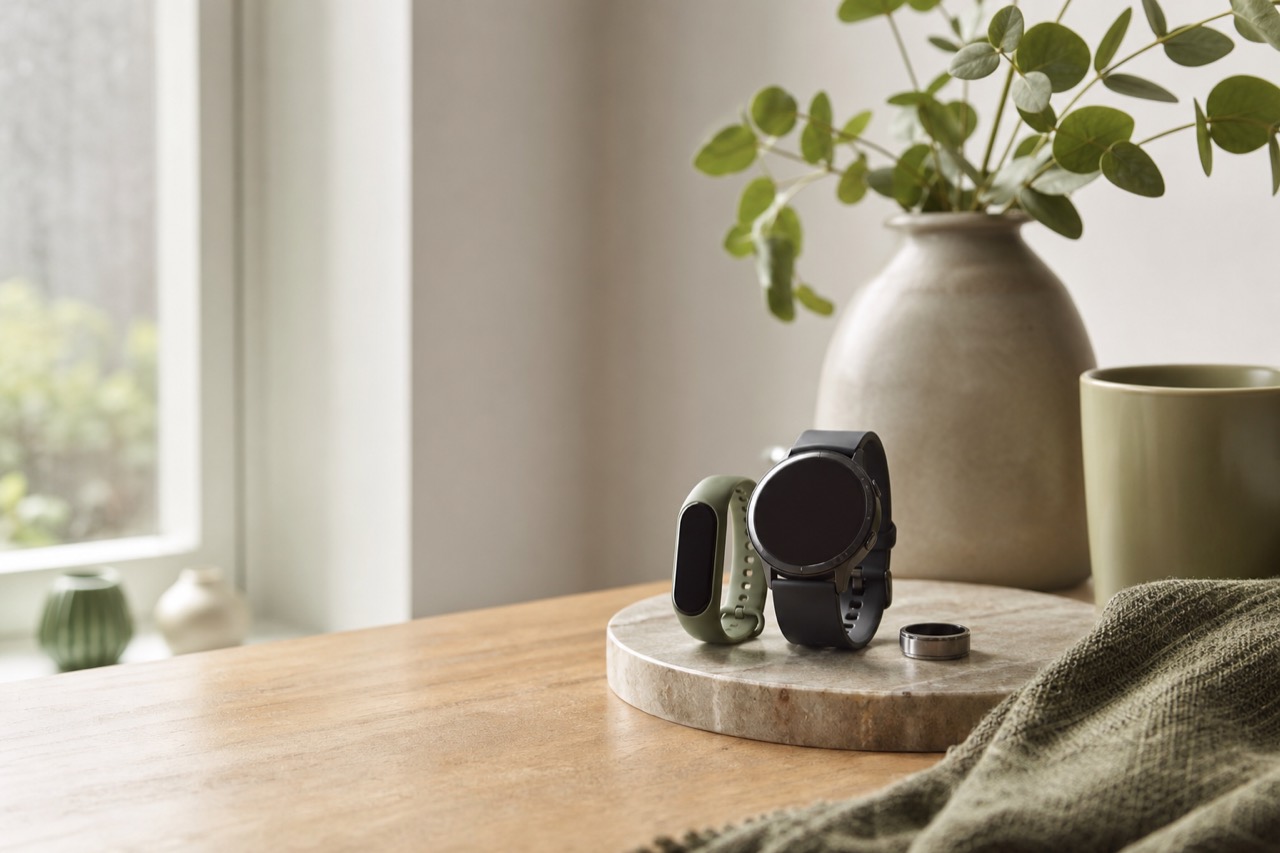
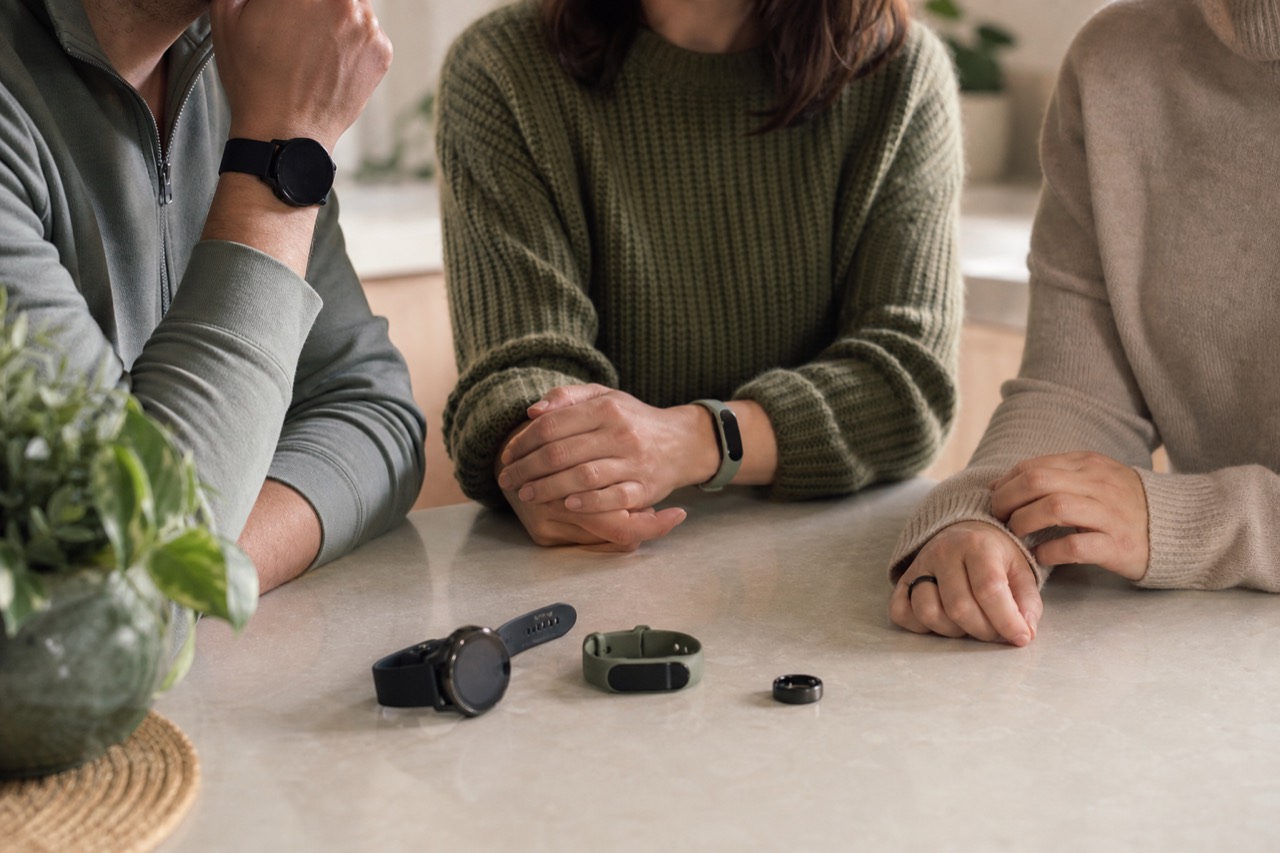
The three types at a glance
| Smartwatch | Fitness tracker | Smart ring | |
|---|---|---|---|
| What it is | A small wrist computer with a full screen | A slim band with a small screen, focused on health and activity | A ring with sensors and no screen |
| Best for | People who want phone features on the wrist plus fitness | People who want simple, all-day activity and sleep tracking | People who want discreet sleep and recovery data |
| Screen | Large, usually touch | Small | None, you read everything in the app |
| Notifications | Full, often with replies | Basic alerts on many models | Usually none, or very limited |
| Workout tracking | Strong, often with GPS built in on many models | Good for everyday exercise; GPS varies by model | Possible, but you can’t see live stats on the device |
| Charging | Often every day or few days (varies a lot) | Often less often than a smartwatch | Varies; small battery, small charger |
| Comfort in bed | Can feel bulky | Usually fine | Usually the least noticeable |
These are general patterns, not test results. Battery life, sensors and features vary widely between brands and models, so always check the product listing for the exact model you are looking at.
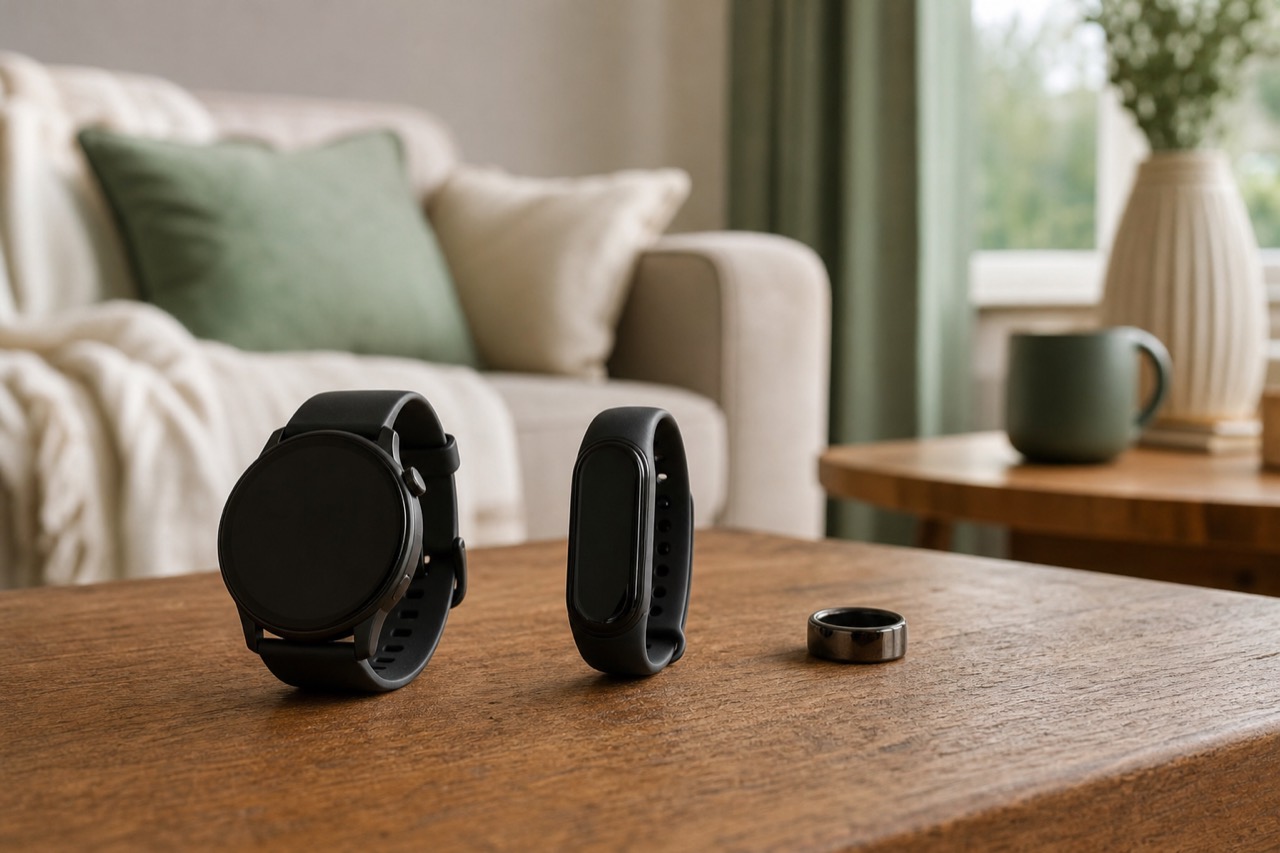
Smartwatch: the all-rounder
A smartwatch is the most capable of the three. As well as counting steps and tracking heart rate, it can show messages and calls, run apps, give turn-by-turn directions and, on many models, pay for things with a tap.
Good for: someone who already lives on their phone, runners and cyclists who want maps or GPS on the wrist, and people who like seeing information at a glance.
Watch out for:
- Phone compatibility. Some smartwatches only work fully with one phone platform. Check that it supports the phone the person actually has.
- Charging. A bigger, brighter screen usually means charging more often. If someone forgets to charge things, a tracker or ring may suit them better.
- Size. Watch cases come in different sizes. Smaller wrists, and children, may find large models uncomfortable for sleep tracking.
Browse a range on Amazon: smartwatches.
Fitness tracker: the simple, slim option
A fitness tracker is a slim band that does the health basics well: steps, active minutes, heart rate, sleep and workouts. Many show basic phone notifications, but they don’t try to replace your phone.
Good for: someone starting a fitness habit, people who want a gentle nudge to move more, older relatives who want something simple, and anyone who finds smartwatches too big.
The NHS recommends adults aged 19 to 64 do at least 150 minutes of moderate intensity activity a week (or 75 minutes of vigorous activity), plus strength exercises on at least 2 days a week. A tracker that counts active minutes can make that target easier to follow. It doesn’t do the exercise for you, though, so it works best for people who already want to build the habit.
Watch out for:
- Small screens can be hard to read for some people.
- GPS. Some trackers have their own GPS, others borrow your phone’s. If the person runs without their phone, check this.
- App features behind a paywall. Some brands sell optional premium plans for deeper insights or guided workouts. Check what the free app shows.
Browse a range on Amazon: fitness trackers.
Smart ring: the screen-free option
A smart ring tracks things like sleep, heart rate and activity from your finger, with no screen. You check everything in the phone app.
Good for: people who mainly care about sleep and recovery, people who don’t like wearing a watch (including in bed), and anyone who wants tracking that others won’t notice.
Watch out for:
- Sizing. A ring must fit snugly to read well. Many brands offer a sizing kit before you buy. For a gift, that can be tricky to do in secret.
- No live display. You can’t glance at your heart rate mid-workout. For runners and gym-goers, a watch or tracker is usually more practical.
- Subscriptions. Some rings need a paid membership for their full features. For example, Oura’s own support page says that without an active membership you get your three daily scores (Readiness, Activity and Sleep) and basic settings, while detailed sleep analysis, 24/7 heart rate and many other features need membership. Oura lists US and EU prices of $5.99 or €5.99 a month and says other regions vary, so check the UK price in the app before buying.
Browse a range on Amazon: smart rings.
The real cost: price plus subscription
The sticker price is only part of it. Use this table to think about what you’ll pay over two years.
| Cost to check | Smartwatch | Fitness tracker | Smart ring |
|---|---|---|---|
| Upfront price | Widest range, from budget to premium | Often the lowest of the three | Varies widely by brand |
| Subscription | Usually optional, depends on brand | Optional premium plans on some brands | Required for full features on some brands |
| Extra straps or chargers | Common, optional | Common, optional | Spare chargers are model-specific |
| Repairs | Screens can crack | Bands wear out | Hard to repair; check the warranty |
Our general view: a £0 subscription device you’ll use every day is better value than a cheaper device that needs a monthly plan to be useful. Work out the device price plus 24 months of any plan before comparing.
Which one suits who?
| Person | Best match | Why |
|---|---|---|
| Busy parent who lives on their phone | Smartwatch | Alerts and quick replies without picking up the phone |
| Runner or cyclist | Smartwatch or tracker with built-in GPS | Live pace and distance on the wrist |
| Beginner who wants to move more | Fitness tracker | Simple, slim, focused on steps and active minutes |
| Light sleeper curious about their sleep | Smart ring or tracker | Comfortable to wear in bed |
| Someone who dislikes watches | Smart ring | No screen, discreet |
| Teenager | Tracker or entry-level smartwatch | Check the brand’s minimum age for accounts |
| Older relative | Simple tracker or smartwatch | Big, clear screen and easy charging matter most |
For more gift ideas by person, see our Christmas gifts for her and Christmas gifts for him pages, or the current Black Friday deals.
A word on health data
Wearables are consumer gadgets, not a replacement for medical advice. Treat readings as a rough guide to trends, and speak to a GP or pharmacist if you’re worried about your heart, sleep or other symptoms. Don’t ignore symptoms just because a gadget says everything is fine.
These devices also collect a lot of personal data. The National Cyber Security Centre (NCSC) advises setting smart devices up through the maker’s official app, using a strong password (for example, three random words), turning on two-step verification if it’s offered, and switching on automatic updates. It also suggests checking how long the maker will support a device with updates before you buy.
Buying tips for Black Friday and Christmas
- Decide the type first, then the model. It stops you being swayed by a big discount on the wrong kind of device.
- Check the phone works with it. This is the most common reason wearables get returned.
- Check what the free app includes and the cost of any plan.
- Look at older models. Last year’s version often does the basics well. Our guide to refurbished vs new tech explains grades if you’re considering a refurbished one.
- Keep the gift receipt. Fit and comfort are personal, especially with rings. Read up on your consumer rights for online shopping and returns.
- Watch for fakes. Very cheap “branded” wearables from unknown sellers can be counterfeit. See our guide to Black Friday scams.
If they’re getting into fitness at home, our walking pads and home gym guide may help too.
Deals we found this week
These were showing a deal badge on Amazon UK when we last checked. We don’t show prices because they change through the day.
- 2026 AI Smart Watch, 1.91" ChatGPT Smartwatch Men Women Bluetooth 5.4: check today’s price on Amazon
- Smart Watch for Men Women Answer/Make Calls, 1.96"HD Fitness Watch with Heart: check today’s price on Amazon
- Smart Watch for Men Women Answer/Make Call, 1.85" Smartwatch, Fitness Watch: check today’s price on Amazon
- Fitness Tracker with 24/7Heart Rate, Blood Pressure, Sleep Tracking,: check today’s price on Amazon
- Fitness Tracker, 1.47" Smart Watch for Women Men, Health Activity Trackers with: check today’s price on Amazon
- Samsung Galaxy Watch9 AI Smartwatch, 40mm, Cushion Design, LTE,: check today’s price on Amazon
Frequently asked questions
Is a fitness tracker or a smartwatch better for a beginner?
For most beginners a fitness tracker is enough. It covers steps, active minutes, heart rate and sleep, and is usually simpler and cheaper. Choose a smartwatch if they also want apps, maps or full notifications.
Do smart rings need a subscription?
Some do and some don’t. Oura, for example, says full features need an active membership, with only basic daily scores available without it. Check the brand’s own page before you buy and add the plan cost to the price.
Can I sleep with a smartwatch on?
Yes, many smartwatches track sleep. Some people find a large watch uncomfortable in bed, and you may need to charge it at a different time of day. A slim tracker or a ring is often more comfortable for sleep tracking.
Will a wearable work with my phone?
Not always. Some smartwatches only work fully with one phone platform. Check the compatibility section of the listing, and confirm the person’s phone model if you’re buying a gift.
Are wearables accurate enough to rely on for health?
They’re useful for spotting trends in your own activity and sleep, but they’re not medical devices in the everyday sense. If you have symptoms or a health concern, speak to a GP or pharmacist rather than relying on a reading.
What’s the best wearable for a Christmas gift?
It depends on the person. A tracker is a safe, simple choice, a smartwatch suits people who want phone features, and a ring suits people who dislike watches. Because rings need exact sizing, a watch or tracker is often easier to buy as a surprise.
About the author
Daily Offer Deals editorial team
The Daily Offer Deals team checks UK deals by hand and writes practical buying guides. We never claim hands-on testing we have not done.