Ad: this guide contains affiliate links. If you buy through them we may earn commission, at no extra cost to you.
Sports & Outdoors
Home Fitness in a Small Footprint: Walking Pads, Treadmills and Home Gyms
Short on space? Compare walking pads, treadmills and multi-gyms for home, with what to measure, safety tips and how to pick kit you'll actually use.
By Daily Offer Deals editorial teamUpdated 5 min read
On this page 10 sections
Quick answer
A foldable walking pad is the most compact option and suits steady walking, including under a standing desk. A full treadmill takes more space but suits jogging, running and incline training. A multi-function home gym machine covers strength training in one footprint. Measure your space (including ceiling height and clearance behind the machine), check floor strength and noise, and choose the kit that matches the exercise you actually enjoy. NHS guidance suggests adults aim for at least 150 minutes of moderate activity a week, plus strength activities on two days.
Start with your goals, not the gadget
Home fitness kit works best when it fits your routine. Ask yourself:
- Do you want to walk more, run, or build strength?
- When will you use it? Early mornings with sleeping housemates call for quieter kit.
- Where will it live? A spare room, garage, living room corner or under a bed?
- Who else will use it? Height, weight limits and settings may need to suit several people.
NHS physical activity guidelines suggest adults do at least 150 minutes of moderate-intensity activity a week, such as brisk walking, or 75 minutes of vigorous activity, along with strength exercises that work all major muscle groups on at least two days. If you have a health condition, are pregnant or have not exercised for a while, speak to your GP before starting a new routine.
The three main options
Walking pads
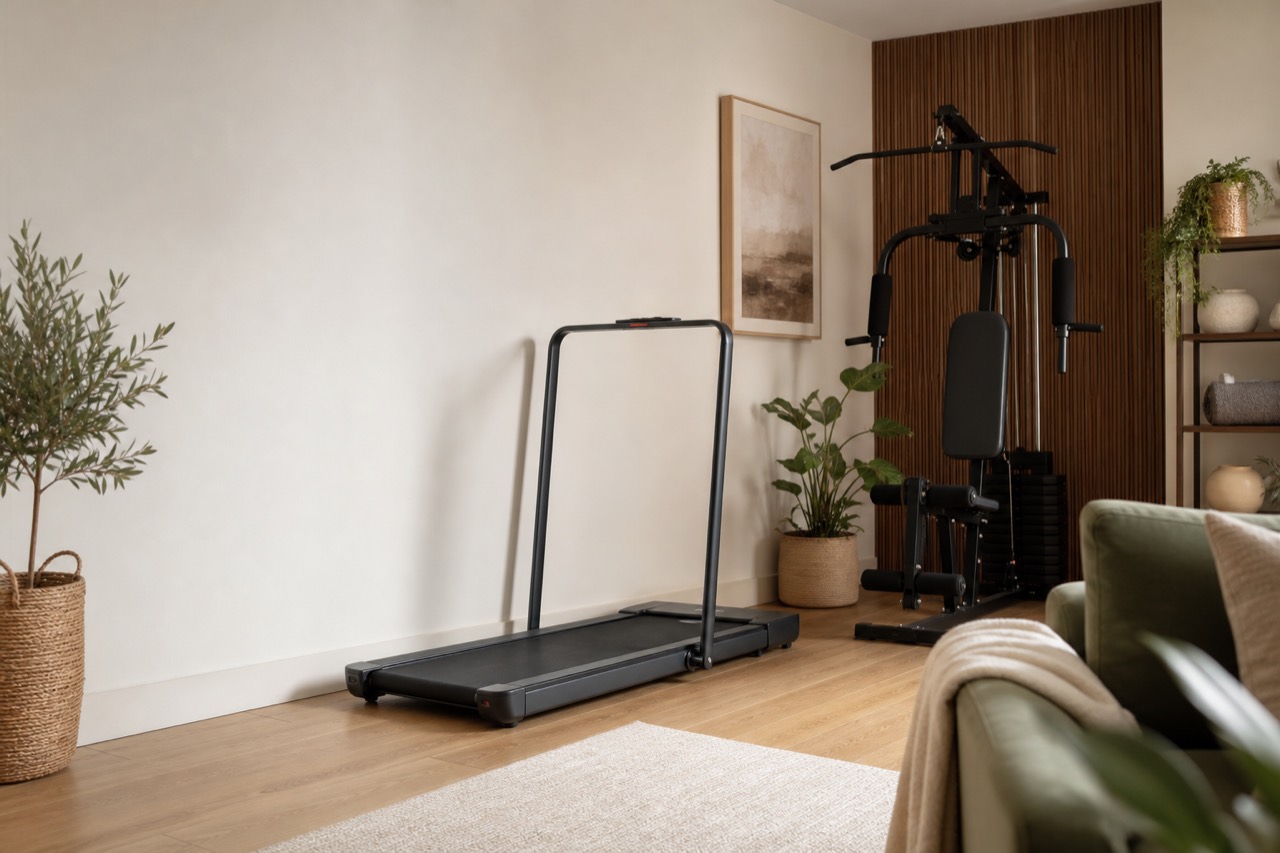
A walking pad is a slim, motorised belt without the tall handrails of a traditional treadmill. Many fold or slide under a bed or sofa. They are designed mainly for walking, so top speeds are usually lower than a treadmill’s.
Good for: adding steps during the working day, under-desk walking, small flats.
Watch out for: limited speed and incline, a shorter deck, and fewer safety rails. Not usually designed for running.
Treadmills
A full treadmill has a longer, wider deck, a console, handrails and often motorised incline. Some connect to subscription-based classes.
Good for: jogging and running, interval and incline training, households where several people train.
Watch out for: footprint, weight, the need for a nearby socket, and noise for neighbours below. Ongoing subscription costs if you want classes.
Multi-function home gym machines
These combine several strength exercises, such as chest press, lat pulldown and leg extension, into one frame using a weight stack or resistance system.
Good for: structured strength training at home without a rack of free weights.
Watch out for: height (many need a reasonably high ceiling), assembly time and the floor space needed to use every station.
Comparison at a glance
| Option | Best for | What to look for | Space needs |
|---|---|---|---|
| Walking pad | Walking and under-desk use | Foldability, remote or app control, safety stop, max user weight | Smallest; can store flat |
| Treadmill | Running, incline and varied training | Deck length and width, motor power, incline, safety key, folding | Largest; needs clearance behind |
| Home gym machine | Full-body strength training | Stations included, weight stack, adjustability, assembly | Medium to large, plus ceiling height |
Deals on our radar
| Product | Best for | What to look for | Deal |
|---|---|---|---|
| Foldable Walking Pad Treadmill for Home | Adding steps at home or under a standing desk | Max user weight, top speed, folded size, remote and safety features in the listing | Foldable Walking Pad Treadmill for Home |
| Peloton Treadmill (Matte Black) | Runners who want a full treadmill with guided classes | Dimensions, ceiling height needed, delivery and what membership is required for classes | Peloton Treadmill |
| Strongway Multi-Function Home Gym Machine | Strength training in one frame | Stations included, weight or resistance system, assembled height and footprint | Strongway Multi-Function Home Gym Machine |
Always check the manufacturer’s dimensions, weight limit and safety guidance in the listing before you buy.
Measure before you buy
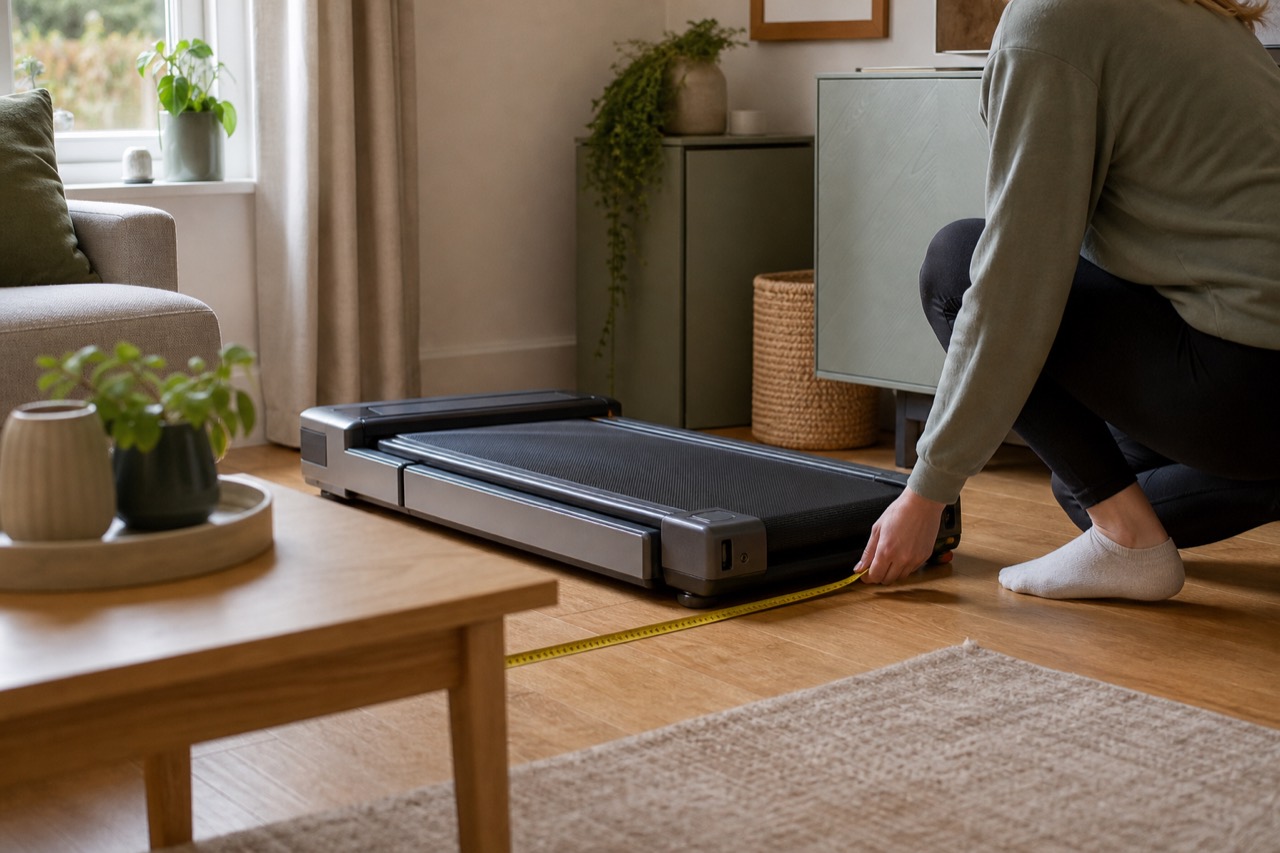
- Footprint: measure the length and width of the machine, then add space around it. Treadmill manufacturers usually specify clearance behind and at the sides; follow their guidance.
- Ceiling height: for treadmills, add the deck height and your own height, plus room for your stride. For home gyms, check the assembled height.
- Doorways and stairs: large machines arrive in heavy boxes. Measure the route to the room.
- Power: treadmills and walking pads need a nearby socket. Avoid running them from extension leads unless the manufacturer says it is fine.
- Floor: a rubber mat protects floors, reduces vibration and can help with noise. Upstairs rooms and flats may need extra thought.
Noise and neighbours
Motor hum and footfall carry, especially in flats. A good mat helps. Walking is usually quieter than running, and strength machines with weight stacks can clank. If you live above someone, think about when you will train.
Safety basics
- Use the safety key or clip on treadmills and walking pads, which stops the belt if you slip.
- Keep children and pets well away from moving belts and weight stacks. Unplug or remove the safety key after use.
- Start slowly and build up gradually.
- Wear proper trainers, not socks or bare feet.
- Follow assembly instructions carefully. If a machine is very heavy, consider professional assembly.
- Stop if you feel unwell, dizzy or in pain, and seek medical advice.
Making it a habit
The most effective kit is the one you use. Small things help:
- Keep it visible and ready to use, not buried behind boxes.
- Pair it with something you enjoy, such as a podcast or TV series.
- Schedule sessions like appointments.
- Mix it up: walking on weekdays, strength at weekends.
FAQ
Can I run on a walking pad?
Most walking pads are designed for walking, with lower top speeds and shorter decks than treadmills. Check the manufacturer’s guidance; if you want to run, a full treadmill is usually more suitable.
How much space do I need for a treadmill?
It depends on the model. Measure the machine itself and add the clearance the manufacturer recommends, especially behind the belt. Check ceiling height too.
Is a home gym machine enough for strength training?
A multi-function machine can cover many major muscle groups. NHS guidelines suggest strength activities on at least two days a week. If you are new to it, a qualified trainer can help with technique.
Are walking pads noisy?
They are generally quieter than running on a treadmill, but motor noise and footsteps can still travel, especially in flats. A rubber mat can help.
About the author
Daily Offer Deals editorial team
The Daily Offer Deals team checks UK deals by hand and writes practical buying guides. We never claim hands-on testing we have not done.