Ad: this guide contains affiliate links. If you buy through them we may earn commission, at no extra cost to you.
Electronics
Winter Car Kit: Tyre Inflators, Jump Starters and What Else to Carry
Build a sensible UK winter car kit: what the Highway Code suggests carrying, how tyre inflators and jump starters help, and checks to do before you set off.
By Daily Offer Deals editorial teamUpdated 6 min read
On this page 10 sections
Quick answer
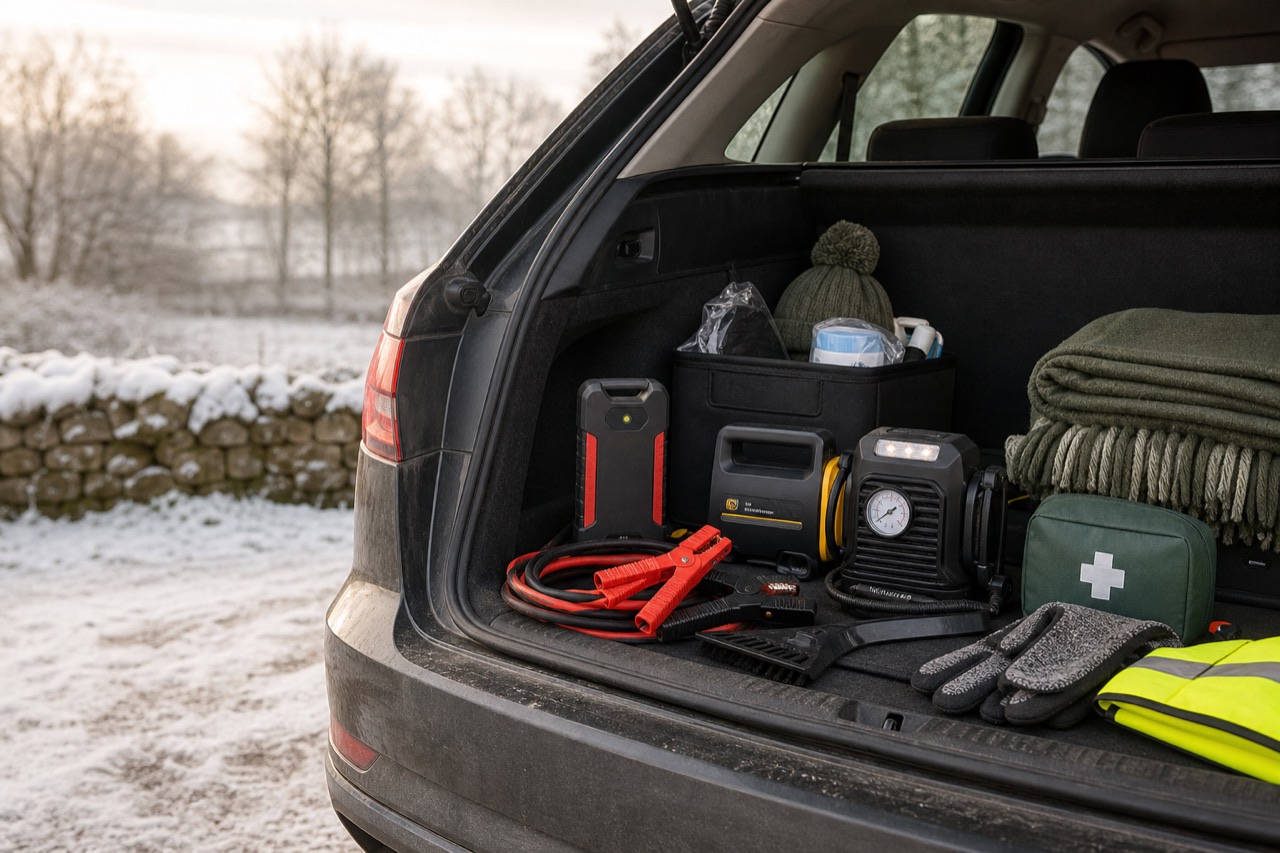
The Highway Code suggests that in icy or snowy weather you carry an emergency kit of de-icer and an ice scraper, a torch, warm clothing and boots, a first aid kit, jump leads and a shovel, together with a warm drink and emergency food. A portable jump starter can replace jump leads if there is no one to help, and a 12V tyre inflator helps you keep tyres at the right pressure. Before any winter journey, check the forecast, clear all snow and ice from your windows, lights and number plates, and only travel if your journey is essential in severe conditions.
Why a winter kit matters
Cold weather is hard on cars. Batteries struggle to start engines in low temperatures, tyre pressures drop as the air cools, and ice and snow can leave you stranded for longer than you expect. A small, well-packed kit means you can deal with common problems, stay warm and safe while you wait for help, and get moving again sooner.
There is no law in the UK requiring you to carry an emergency kit in a private car, but it is sensible advice, and the Highway Code recommends one for icy and snowy weather.
The Highway Code winter kit
Rule 228 of the Highway Code suggests carrying:
- De-icer and an ice scraper
- A torch
- Warm clothing and boots
- A first aid kit
- Jump leads
- A shovel
- A warm drink and emergency food
It also advises checking the weather forecast before you set off and not driving in icy or snowy weather unless your journey is essential.
Useful extras
| Item | Best for | What to look for | Why it helps |
|---|---|---|---|
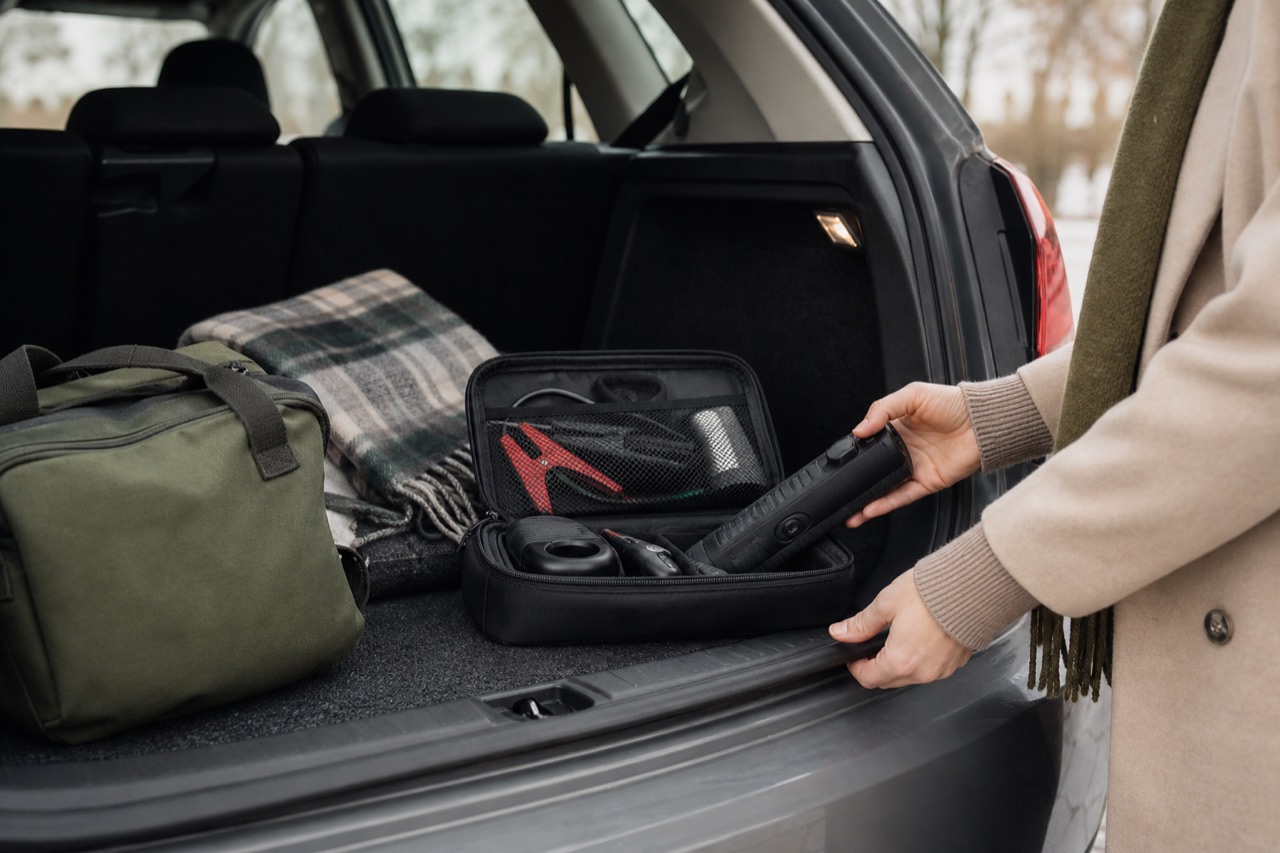
| Portable jump starter | Flat batteries when no one is around to help | Suitable for your engine type and size, clear instructions, safety protections | No second car needed |
| 12V tyre inflator | Topping up tyre pressure at home or roadside | Digital gauge, auto shut-off, cable long enough to reach all tyres | Cold weather lowers tyre pressures |
| Phone power bank | Keeping your phone charged to call for help | Enough capacity for at least one full phone charge | Your phone is your lifeline |
| Hi-vis vest | Visibility if you have to leave the car | Fits over a coat | Helps others see you |
| Blanket | Staying warm while waiting | Wool or fleece, plus a foil emergency blanket | Engines can’t always be kept running |
| Spare batteries | Torches and small gadgets | Fresh, in-date alkaline batteries | Cold drains batteries faster |
| Screenwash | Clear visibility | A winter-rated screenwash | Water alone can freeze |
Deals on our radar
| Product | Best for | What to look for | Deal |
|---|---|---|---|
| AstroAI Car Jump Starter Power Bank | Starting a car with a flat battery, and charging a phone | Check it suits your engine, read the connection steps, keep it charged | AstroAI Car Jump Starter Power Bank |
| AstroAI Portable Tyre Inflator, 12V Digital Air Compressor | Keeping tyres at the right pressure through winter | Plugs into a 12V socket; check the gauge, preset and cable length | AstroAI Portable Tyre Inflator |
| 220-Piece First Aid Kit Bag | A compact kit for the boot | Check the contents list includes dressings, bandages and gloves | 220-Piece First Aid Kit Bag for Travel, Car and Home |
| Energizer Alkaline Power AA Batteries, 32 Pack | Spare power for torches and gadgets | Check which battery size your torch needs | Energizer Alkaline Power AA Batteries |
Using a jump starter safely
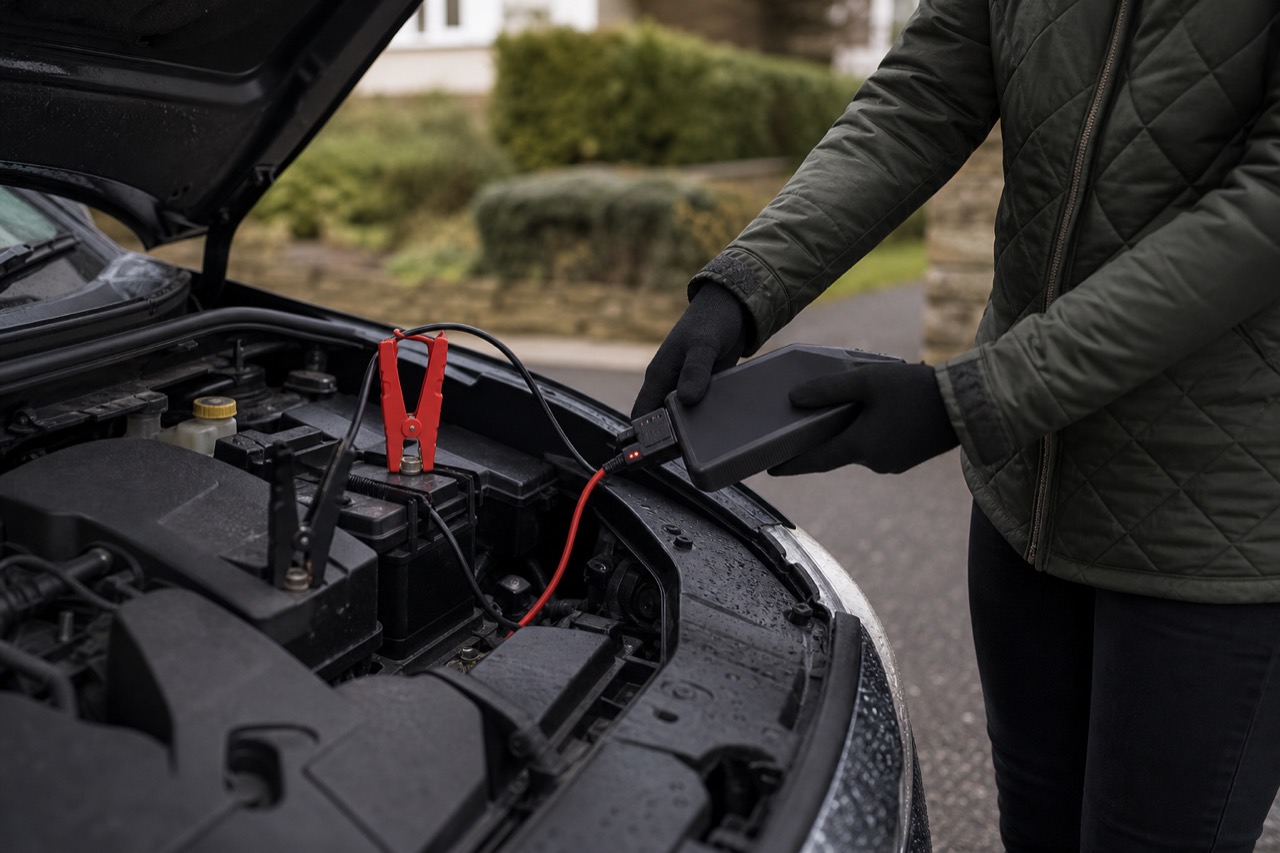
A portable jump starter is a battery pack with clamps that can give your car’s battery enough power to start the engine. The key steps differ by model, so always follow the manual. General points:
- Check it suits your vehicle. Jump starters are rated for different engine sizes and fuel types.
- Keep it charged. It is no use flat. Top it up every few months and before long winter trips.
- Connect the clamps in the order the manual specifies, making sure they don’t touch each other.
- Don’t use it on a damaged, leaking or frozen battery. Call your breakdown provider instead.
- Store it as the manufacturer advises. Extreme heat or cold can affect lithium batteries.
If your car battery keeps going flat, it may need testing or replacing. Many garages and parts retailers can check it.
Tyres in winter
Tyres are your only contact with the road, so they matter even more in cold, wet and icy conditions.
Tyre pressure
Cold air lowers tyre pressure. Check your tyres at least once a month and before long journeys, ideally when they are cold. The correct pressures are in your vehicle handbook and often on a sticker inside the driver’s door or fuel filler flap. A 12V digital inflator makes this quick to do at home.
Tread depth
The legal minimum tread depth for cars in the UK is 1.6mm across the central three-quarters of the tread, around the whole circumference. More tread helps with grip in wet and slushy conditions, so many drivers choose to replace tyres before they reach the legal limit.
Condition
Look for cuts, bulges and objects stuck in the tread. If in doubt, ask a tyre specialist.
Before you set off in winter
The Highway Code says that before setting off in icy or snowy weather you must be able to see, so clear all snow and ice from all your windows. You must also make sure your lights are clean and number plates are clearly visible and legible. It also advises clearing snow from the roof, as it can fall onto the windscreen or into the path of other road users.
Other quick checks:
- Fuel or charge: keep at least a quarter of a tank, or plenty of battery charge in an EV, in case of delays.
- Screenwash and wipers: top up with winter-rated screenwash and replace worn blades.
- Lights: check all bulbs work.
- Phone: fully charged, with your breakdown provider’s number saved.
- Tell someone your route and expected arrival time on longer journeys.
If you break down
- Get to a safe place if you can, and switch on your hazard warning lights.
- On a motorway, if it is safe to do so, leave by the passenger-side door, move behind the safety barrier and call for help.
- Wear warm clothing and your hi-vis vest if you have one.
- Call your breakdown provider, or 999 if you or anyone else is in danger.
FAQ
Is it a legal requirement to carry a winter kit in the UK?
No, but the Highway Code recommends an emergency kit for icy and snowy weather. Some European countries require items such as warning triangles or hi-vis vests, so check before driving abroad.
Can I use a jump starter on any car?
Jump starters are rated for different engine sizes and fuel types. Check that the model suits your vehicle and follow the manufacturer’s instructions exactly.
How often should I check my tyre pressures in winter?
At least once a month and before long journeys, when the tyres are cold. Use the pressures in your vehicle handbook or on the door or fuel flap sticker.
Can I drive with snow on my car roof?
The Highway Code advises removing snow that might fall off into the path of other road users, and you must be able to see clearly through all windows. Clear the roof, windows, lights and number plates before you set off.
About the author
Daily Offer Deals editorial team
The Daily Offer Deals team checks UK deals by hand and writes practical buying guides. We never claim hands-on testing we have not done.