Quick answer
For a heated, lived-in room, buy a compressor dehumidifier: it is the common type in UK homes and generally the cheaper one to run. For an unheated space that sits below about 10°C, such as a garage, conservatory or caravan in winter, buy a desiccant model, because compressor units lose effectiveness in the cold. Don’t take the “litres per day” number on the box literally: it is a maximum under the maker’s own test conditions, so use it to compare models rather than to predict what you will collect. Then choose on tank size, noise, a humidistat and a laundry mode.
Compressor vs desiccant: how they differ
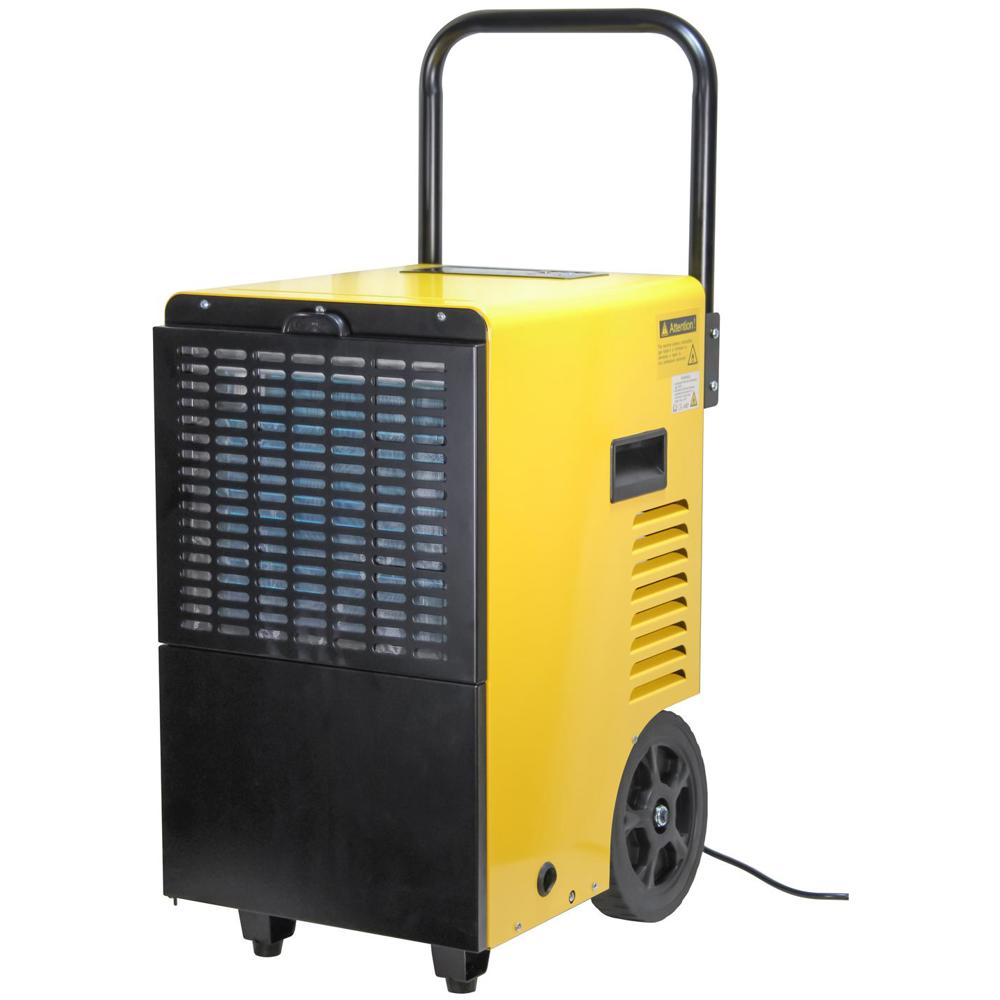
A compressor (refrigerant) dehumidifier works like a small fridge. It draws air over cold coils, water condenses and drips into a tank. A desiccant dehumidifier passes air over a moisture-absorbing wheel, then uses a heater to drive the water off into the tank.
|
Compressor |
Desiccant |
| Works best |
In rooms above 10°C; best at 16°C and above |
In cold spaces below 10°C |
| Typical power draw |
About 150 to 260 watts, depending on size |
About 330 watts or more |
| Air coming out |
Around room temperature |
Slightly warmer, which can take the chill off a cold room |
| Weight and size |
Heavier and bulkier |
Usually lighter |
| Good for |
Bedrooms, living rooms, drying laundry in a heated home |
Garages, conservatories, boats, caravans, unheated utility rooms |
The temperature guidance and power figures come from Meaco, a UK dehumidifier maker, measured at 20°C and 60% relative humidity. Other brands will differ, so check the specification of the model you are considering. We have not tested any dehumidifiers ourselves.
Between 10°C and 15°C either type can work; Meaco suggests a larger compressor model in that range.
What “litres per day” really means
The headline figure (10L, 12L, 20L and so on) is the extraction rate: how much water the machine can remove in 24 hours. It is not the tank size: a 12-litre machine does not hold 12 litres. It is also not a promise of what you will collect. Makers measure it under their own stated test conditions, which are often warmer and more humid than a UK home in winter, so look in the small print for the temperature and humidity used. In a cooler, drier room the same machine removes less.
So use the number as a size class:
| Rating class |
Typically suggested for |
| Up to about 10 litres |
One or two rooms in a flat |
| About 12 to 20 litres |
A typical two or three-bedroom house |
| 20 litres and above |
A larger home, or one badly affected by damp |
These ranges are from retailer Appliances Direct’s buying guide. Manufacturers publish their own room-size guidance for each model, which is the better figure to follow.
Running costs, with the sums shown
Cost = power in kW × hours used × unit rate
Under the Ofgem price cap for 1 October to 31 December 2026 the average electricity unit rate on Direct Debit is 26.32p per kWh. Using the power figures above as examples, not any specific model:
| Example |
Cost per hour |
4 hours a day for 30 days |
| Small compressor, 150W |
0.15 × 26.32 = about 3.9p |
about £4.74 |
| Larger compressor, 260W |
0.26 × 26.32 = about 6.8p |
about £8.21 |
| Desiccant, 330W |
0.33 × 26.32 = about 8.7p |
about £10.42 |
Real use is usually lower than this, because a dehumidifier with a humidistat switches its compressor or heater off once the air reaches the target humidity. Uswitch uses an average of 185W for a dehumidifier, which is just under 5p an hour at the same rate. Check the wattage on the rating plate of any model you are comparing, and put it through the formula with your own tariff.
What a dehumidifier will and will not fix
A dehumidifier removes moisture from the air. It helps with condensation on windows, slow-drying laundry and that damp feeling in a closed room. It does not fix the cause of structural damp, such as a leaking gutter, a failed damp-proof course or a plumbing leak. If you have mould that keeps returning, peeling plaster or a tide mark on a wall, find the source. If you rent, report damp and mould to your landlord in writing.
Ventilation and heating matter as much as the machine. Our guide to stopping condensation and mould on a budget covers the free and cheap steps to try first.
Buying in the sales
Dehumidifiers are in demand in a cold, wet November, and popular models can go out of stock. Decide the type and size class first, then compare two or three models by wattage, tank size and noise. Check the exact model’s price at more than one retailer and against its history; our Deal Checker gives a quick view.
Browse dehumidifier deals, winter warmth deals and the heating and energy section, or describe your room to the deal finder.
Amazon search links (Ad): 12 litre compressor dehumidifiers, 20 litre dehumidifiers, desiccant dehumidifiers, digital hygrometers and window vacuums. We don’t quote prices because they change through the day.